A radon system is the kind of home safeguard that rarely earns attention when it works. It sits in a basement corner or utility area, humming quietly, pulling air from beneath the slab and sending it safely above the roofline. In a culture that treats home maintenance as a series of visible projects—fresh paint, a new roof, a renovated kitchen—radon mitigation asks for a different kind of discipline: trust, verification, and a willingness to respond to problems you cannot see.
That mindset can feel especially relevant right now, when public life runs on noisy signals and immediate outcomes. Radon does the opposite. It poses a long-term health risk that does not announce itself with a smell, a stain, or a leak. The gas forms naturally from uranium in soil and rock, seeps into buildings through cracks and openings, and can accumulate to unsafe levels indoors. The practical question for homeowners becomes less philosophical and more urgent: how do you know when your home needs a radon fan, or when the one you already have needs attention?
Start with the simplest truth: the only reliable way to know your radon status is to test. A mitigation system exists to keep radon levels down, but it does not grant a lifetime guarantee. Weather changes, settling foundations, renovations, and equipment wear can all shift system performance.
A radon fan is a mechanical device with a motor, bearings, and an expected service life. When it struggles or fails, the system may still look intact, the pipe still runs up the wall, and the caulked gaps still appear sealed. The warning hides in the numbers you did not measure.
A homeowner who has never installed mitigation faces a slightly different version of the same lesson. Many people assume radon belongs to certain regions or certain types of houses. In reality, radon shows up across the United States, including in states with plenty of older housing stock and seasonal temperature swings. Michigan homes are just as likely to face radon exposure risks as houses in any state.
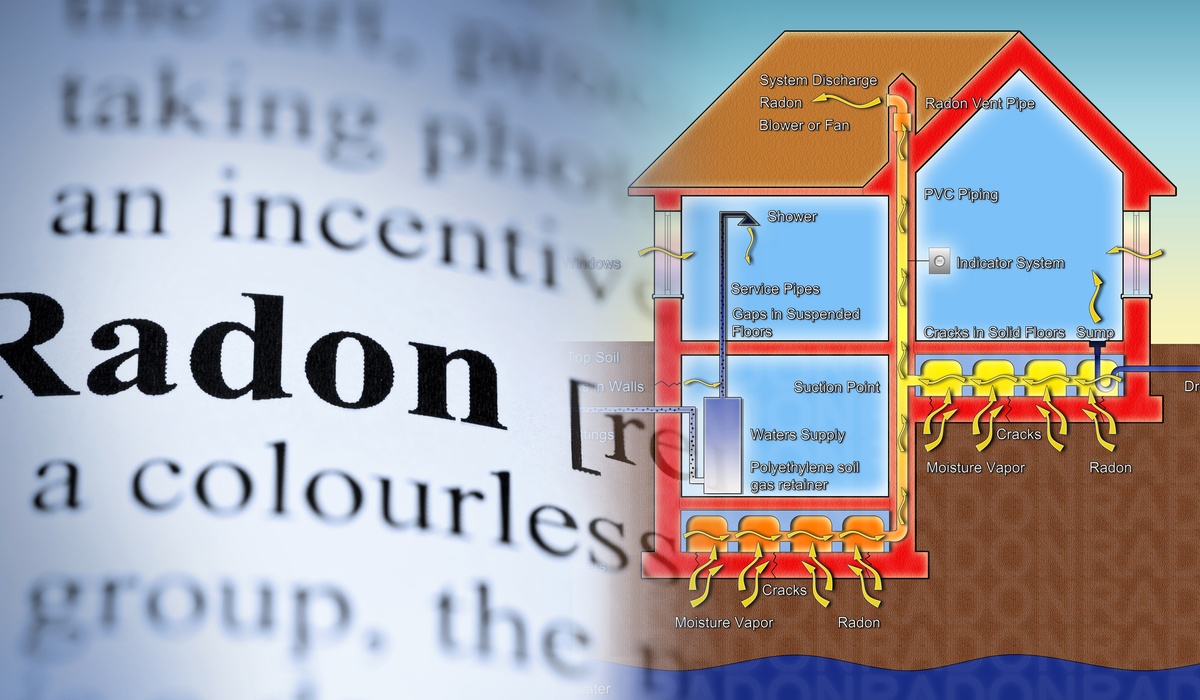
Pressure differences explain why radon mitigation relies on a fan in the first place. A house acts like a vacuum when warm indoor air rises and escapes at the top of the structure. That “stack effect” pulls replacement air from below, which can draw soil gases into the lowest level through small openings. A mitigation fan changes the equation.
It creates suction beneath the slab or in a crawlspace, capturing radon before it enters living areas. The fan’s performance matters because it sustains that pressure field day and night. When the fan loses strength, the system loses its grip, and indoor radon can climb without any visible clue.
So, what can a homeowner notice without special tools? Sound tops the list. A healthy radon fan typically produces a steady, low hum that fades into the background. However, a loud, rattling bearing noise is one of the common radon fan problems to avoid. Those noises signal worn bearings or imbalance.
A fan that vibrates can transmit that movement into the mounting points and the PVC piping, turning a previously quiet system into an irritant that you can hear from the living space. You should treat new noise as more than an annoyance. Mechanical wear rarely improves on its own, and a fan that seizes may stop without warning.
You can also watch for changes in the system’s visual indicators. Many mitigation installations include a U-tube manometer—a small gauge with colored liquid—that shows whether the system maintains suction. The column heights reflect pressure. A sudden change to a neutral or near-equal level suggests the system has lost suction, which can happen if the fan stops, the pipe disconnects, or a major leak develops.
Homeowners sometimes ignore this gauge because it looks like an unfamiliar science experiment. It serves as the closest thing to a dashboard warning light. If the liquid levels match when they used to differ, treat that as a prompt to investigate.
Electrical clues can also let you know when your home needs a new radon fan. A radon fan should run continuously; turning it off to “save energy” defeats the system’s purpose. If the fan shares a circuit that trips or a switch that someone flips by mistake, radon levels can rise while the pipe remains in place.
Check for a labeled disconnect and verify that the fan receives power. A fan that feels unusually hot at the housing, trips breakers, or fails to start consistently may be nearing the end of its life. This is not a reason to DIY wiring, but it is a reason to document what you see and call a qualified mitigation professional.
The strongest signal, though, comes from testing results. If you installed mitigation years ago and have not retested, you do not have current information. The same goes for a home purchase: a radon disclosure and a mitigation note in the inspection report do not replace a fresh measurement. Short-term tests provide a snapshot, and long-term tests provide a clearer picture across seasons.
If you see results at or above 4.0 pCi/L—the EPA’s action level—you should treat that as an invitation to take mitigation seriously. If you already have mitigation and your results trend upward rather than with earlier readings, the system may need service. A radon system can fail partially, not just completely, and the line between “working” and “working well” matters.
Home changes can create the need for a fan where none existed, or change the demands on an existing one. Finishing a basement, sealing cracks, adding new insulation, replacing windows, installing a powerful range hood, or altering HVAC can shift pressure dynamics and airflow. Those upgrades may improve comfort and energy efficiency, but they can also change how the home pulls air from below. When you remodel, treat radon like a measurement you revisit when the building changes, not a box you check once in the homeownership journey.
Age provides another practical cue. While fan lifespans vary by model and installation, mechanical devices wear out. If your system is approaching a decade in service, you should pay closer attention to sound, vibration, and gauge readings, and you should schedule a retest if you have not done one recently. A mitigation professional can evaluate whether the installation still matches best practices for your home’s conditions.
When homeowners look up symptoms online, they encounter a swirl of advice: “Any noise means failure,” “Noise is normal,” “Just replace it yourself,” “Never touch it.” The truth lives in practical specifics. A new sound that did not exist before matters. A gauge that changes state matters. Treat measurable signals and mechanical changes as your guideposts.
You do not need to become a technician to respond responsibly. You need to treat radon the way you would treat smoke detectors or a furnace: a safety system that deserves periodic confirmation.
In a world with loud risks, radon remains a silent one. That silence does not mean safety. It means you must supply the signal yourself—through testing, observation, and timely repair—so that the system meant to protect your household does not become decorative plumbing.
About The Author