He’s Disabled… But That Slur Wasn’t: the Somerville Perkins Showdown
- Emma Ansah
- U.S.A
- March 23, 2026
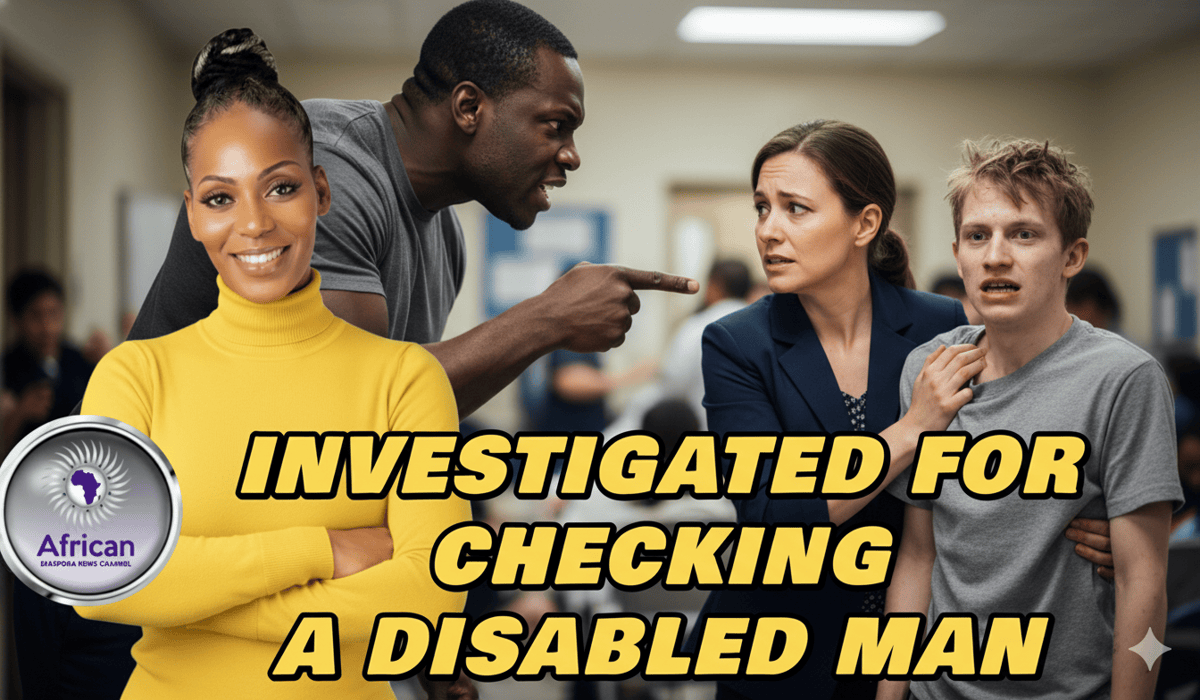
Emma Ansah is live with a breakdown of a situation that’s got the whole community arguing, side-eyeing, and asking some uncomfortable questions. A Black man in Somerville, South Carolina is officially under investigation after confronting a disabled young man and his caregiver at a Perkins Restaurant after the young man who called him an anti-Black slur loud enough for the whole room to hear.
And while folks online are already fighting in the comments like it’s a holiday sale at Walmart, Emma is cutting through the noise and getting straight to what matters, what actually happened, where’s the line between accountability and compassion, and how a disabled youth managed to confidently weaponize an anti-Black slur in public.
This is where the debate kicks up. A lot of people jump straight to, “He didn’t know any better,” “He’s disabled, you can’t confront him,” “You should’ve just let it go.” But Emma asks the questions society avoids, if he didn’t know any better, who failed him, who normalized using anti-Black slurs in his orbit, and why some people only care about “context” when the disrespect lands on Black folks.
Having a disability doesn’t magically create racism. Prejudice is taught. Language is modeled. Environment is everything. This didn’t come from nowhere, and the fact that he felt safe enough to use it in public tells us a lot about what’s happening at home, in his social circles, or in the community around him.
Emma breaks it down with clarity and zero sugar-coating, you can approach disabled individuals with patience and still demand respectful boundaries. Those two things aren’t enemies. Compassion doesn’t mean being silent when you’re dehumanized. The real conversation here isn’t about whether you “should” confront a disabled person, it’s about why Black people are expected to swallow disrespect to keep everybody else comfortable.
Let’s be real, Black people are consistently asked to “be the bigger person” even when the disrespect cuts deep. We’re expected to be emotionally bulletproof, morally perfect, and endlessly patient, even in situations where no one else would be.
And here’s the question that should be keeping Somerville up at night.
A disabled man didn’t wake up one morning and invent a racial slur. He learned it, from someone, somewhere, and probably from people who say it so casually that he didn’t recognize the danger in repeating it. This is a community issue, not a one-off incident.
This incident exposes a deeper truth, racism doesn’t need full comprehension to function. Even children, teens, and disabled individuals can wield it because it’s something they absorbed from the world around them.
Emma emphasizes that building a community where everyone feels safe means addressing the root, not just the reaction. That means families, caregivers, teachers, and community leaders must be part of the conversation.
We can offer grace, we can offer understanding, but we cannot let anti-Blackness slide just because calling it out makes people uncomfortable.
Watch the Livestream: https://www.youtube.com/live/7i8-AcJC0UU?si=CxdWFFJKpymNUfJ-
About The Author