He Changed the Equation and 21,000 Black Lives Moved Closer to Survival
- Emma Ansah
- U.S.A
- April 11, 2026
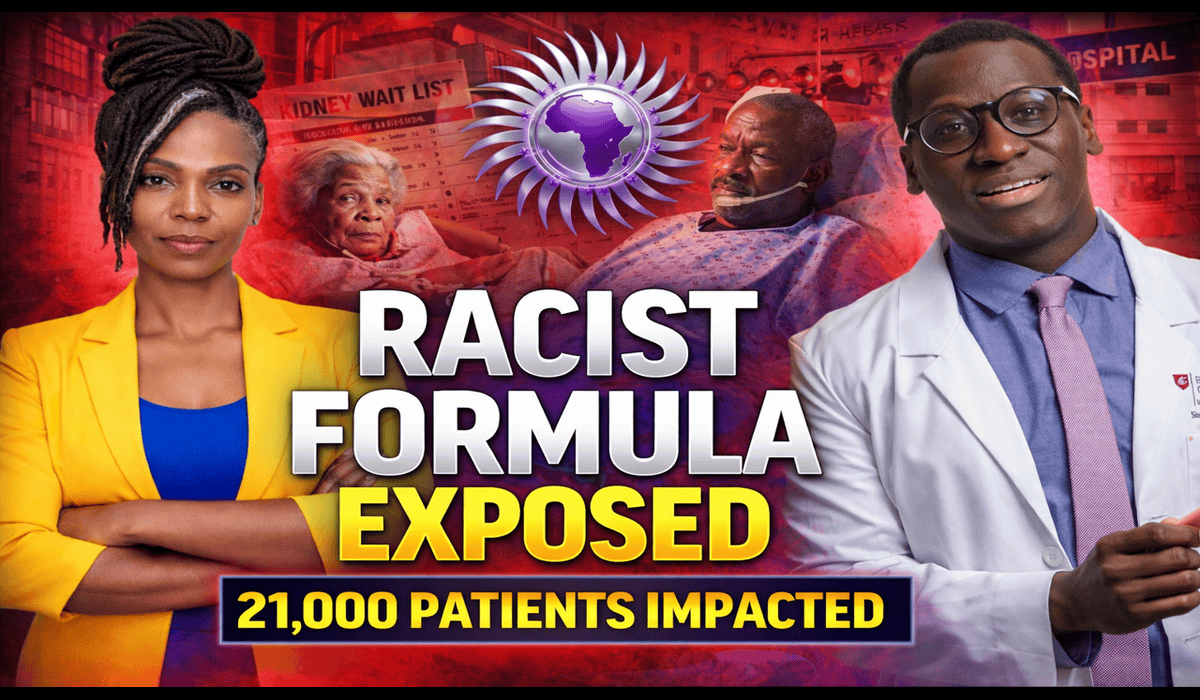
A quiet but powerful shift in modern medicine began with a question that should have never needed asking. Why were Black patients being treated differently by a formula that was supposed to save lives?
That question followed Dr. Joel Bervell from his days as a medical student into his work today as an internist. What he uncovered was not just a technical flaw but a systemic issue rooted in long standing assumptions about race and biology. At the center of it all was a widely used kidney function calculation known as the estimated glomerular filtration rate, or eGFR.
For years, this formula included a race based adjustment that assumed Black patients naturally had higher muscle mass. On paper, that adjustment made kidney function appear better than it actually was. In real life, it meant delayed diagnoses, delayed specialist referrals, and delayed access to transplant lists for thousands of Black patients suffering from kidney disease.
The consequences were not theoretical. They were measurable and devastating.
When Dr. Joel Bervell began speaking out about the issue, he brought attention to how deeply embedded this practice was across hospitals and medical institutions in the United States. His message gained national traction after appearing on The Kelly Clarkson Show, where he broke down the science and the impact in terms everyday people could understand.
The response was swift.
Medical institutions began reevaluating the use of race in kidney function calculations. Advocacy groups amplified the call for change. Health systems started removing the race correction from their equations. And most importantly, thousands of patients saw their medical status reassessed.
According to reporting from organizations such as the National Kidney Foundation and the American Society of Nephrology, the shift away from race based eGFR calculations has already had a measurable impact. An estimated 21,000 Black patients became eligible for improved placement on kidney transplant waitlists after their kidney function was recalculated without the racial adjustment.
That number represents more than statistics. It represents time regained, access restored, and in many cases, lives extended.
The debate around race in medicine is not new, but this moment has forced a deeper reckoning. Critics of race based algorithms argue that they often rely on broad generalizations rather than individualized care. Supporters once claimed these adjustments improved accuracy, but growing evidence suggests they may do more harm than good, especially when applied without context.
What makes this case different is the clarity of its outcome.
A single correction in how data is interpreted has shifted access to life saving treatment for tens of thousands of people. It is a reminder that bias in medicine does not always look like overt discrimination. Sometimes it is hidden in formulas, embedded in systems, and accepted as standard practice until someone decides to challenge it.
For Dr. Joel Bervell, that challenge has already changed lives. But the broader implication is even more significant. It raises questions about how many other medical practices may still be quietly shaping outcomes along racial lines.
And more importantly, who will be next to speak up.
Watch the live broadcast here:
https://www.youtube.com/live/2DUi470gIzo?si=Y-iDhenAzPqHrNEG
About The Author