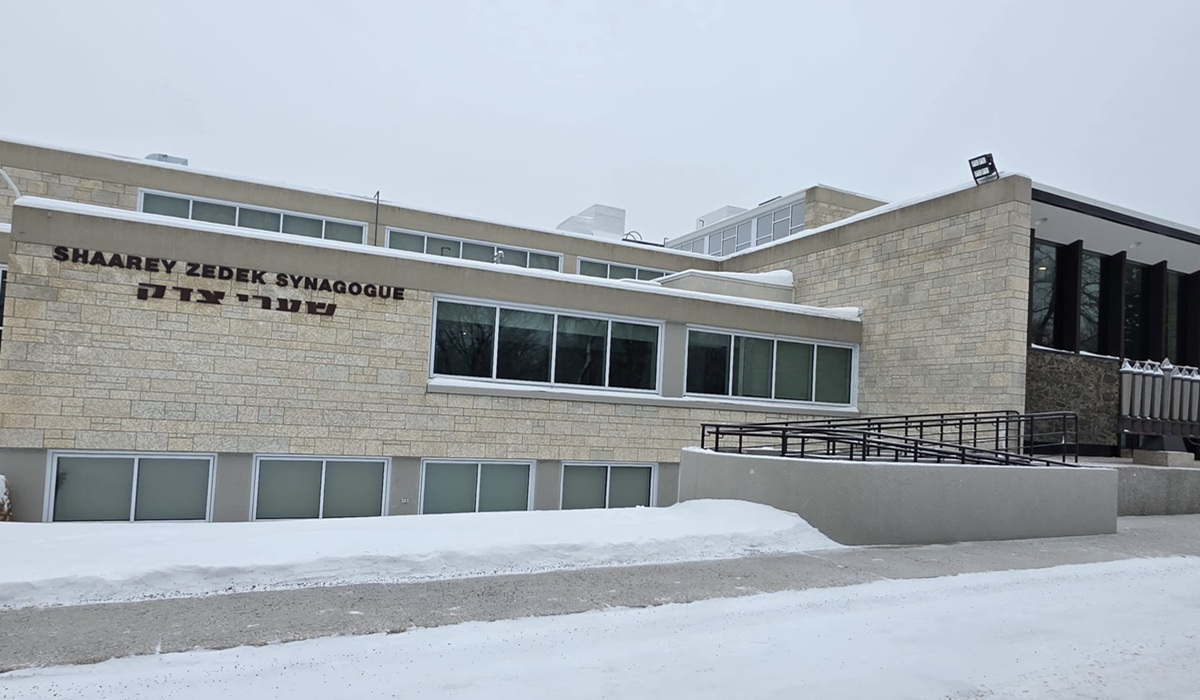
What happened at the Shaarey Zedek Synagogue in Winnipeg this past week was disturbing, not because it was unprecedented, but because it unfolded at a time when acts of hate and intimidation feel increasingly normalized. Hate symbols and language were smeared on the building, an act meant to provoke fear, division, and outrage. It was not the first time something like this has occurred in the city, and that reality alone should give Winnipeg pause.
Dr. Rena Secter Elbaze, Executive Director of Shaarey Zedek Synagogue, spoke with clarity and resolve in the aftermath. There is never a time for violence. There is never a justification for hate speech. These are not situational values or opinions shaped by circumstance. They are principles that either hold or they do not. What occurred, she emphasized, does not define the community, nor will it deter people from gathering, commemorating, celebrating, or being present. There was a large turnout at the Synagogue the next morning. The message was steady and unmistakable: intimidation will not succeed, and fear will not dictate how we live.
What makes this moment particularly significant is the broader context in which it occurred. Winnipeg has experienced a series of vandalism and hate-related incidents across the city in recent weeks. None of these events exist in isolation. The real danger is not only the act itself, but the slow erosion that follows when repeated incidents stop shocking people. Communities do not fracture suddenly. They fracture gradually, when outrage fades into fatigue and silence begins to feel easier than response.
This is why moments like this matter. Not because they are new, but how Winnipeg responds determines what becomes acceptable next.
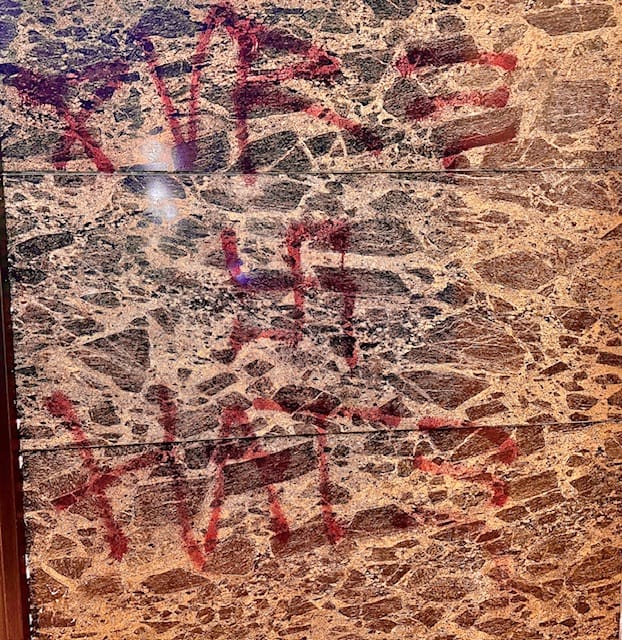
This is also not about one community standing alone. It is about the responsibility of all communities to stand together. Minority groups understand this instinctively. Silence has never been neutral. When hate is directed at one group and others look away, the message received is not restraint, but permission. Just like in Ray Charles’ song “None of us are free if one of us is in chains.” The community’s response following after the vandalism showed that many in Winnipeg understand that distinction. People showed up the next morning not because they were obligated, but because they felt compelled to be present. That quiet solidarity carried more weight than any statement.
That response matters. It signals that acts meant to intimidate will be met not with retreat, but with collective resolve. Winnipeg is a large, diverse city with room for every culture, every belief system, and every identity. That has long been one of its strengths. It is also why incidents like this feel so jarring. They stand in direct opposition to the lived experience of so many residents who know this city as one defined by generosity, resilience, and an unspoken commitment to looking out for one another.
There is also a necessary conversation about leadership. Dr. Rena’s Call to Action is timely. All three levels of government must come out jointly with consistent messaging. “Free Speech Yes – Hate Speech No! Political leadership, civic leadership, and institutional leadership all shape the boundaries of what is tolerated. Leadership is not defined by statements issued in the immediate aftermath, but by consistency once the attention fades. Accountability means consequences that are visible, predictable, and applied without hesitation. When aggressive language, intimidation, or vandalism are met with ambiguity or delay, boundaries blur. People test limits. When those limits are not reinforced, they move.
The Judicial system with Law enforcement has a role to play here as well, not only in response, but in prevention and trust-building. Communities are more likely to report incidents when they believe their concerns will be taken seriously and addressed consistently. Trust is not built through one-off actions, but through patterns of response that demonstrate care for people’s safety, dignity, and shared spaces. When trust exists, accountability follows more naturally.
At the same time, it is important not to let moments like this define Winnipeg as a whole. Our city is more than its worst incidents. It is also its neighbours checking in on one another, its community members showing up early on a cold morning, and its countless residents who believe deeply that respect is not optional. Winnipeg has so much to offer, and its character is not shaped by what is written on walls in the dark, but by what people choose to stand for in the light.
Moving forward does not mean retreating inward or becoming fearful of gathering, worshipping, celebrating, or being visible. Fear is often the objective of these acts. Granting it only gives them power. The response lies in continued presence, continued pride, and continued connection across communities. Rejecting hate is not passive. It requires speaking, showing up, and refusing indifference.
What happened at Shaarey Zedek should be taken seriously, remembered clearly, and addressed firmly. But it should also serve as a reminder that being “better than this” is not an identity we claim once. It is a choice Winnipeg must make again and again, through action, accountability, and an unwavering commitment to one another.
About The Author