Has Trump Just Manufactured the Next Largest Migrant Caravan Crisis?
- TDS News
- Breaking News
- January 6, 2026
By: Donovan Martin Sr, Editor in Chief
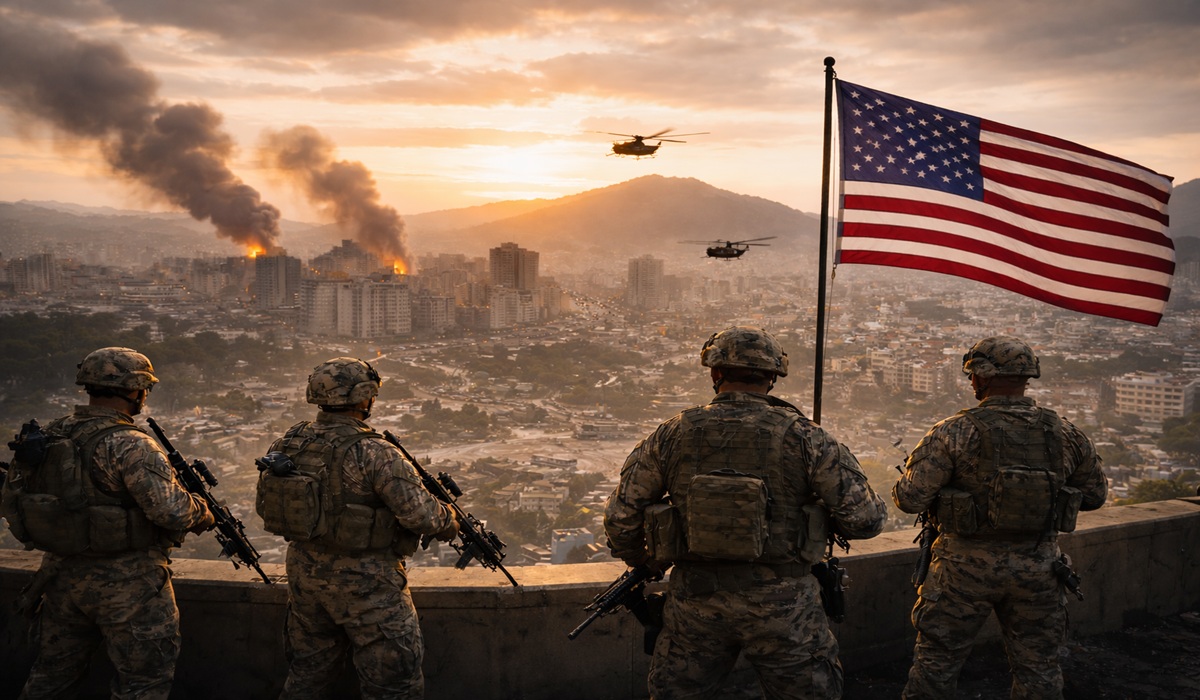
By forcibly removing Venezuela’s sitting president outside any transparent, internationally accepted legal process, Washington didn’t just ignite a diplomatic firestorm. It set the conditions for the next migration surge before the current one has even been stabilized. This was not a symbolic maneuver or a rhetorical flex. It was a structural shock to an already fragile country, and the consequences will not remain overseas.
This is how modern migrant crises begin. Not with caravans or asylum paperwork, but with power vacuums.
Venezuela has spent years under extreme pressure—economic sanctions, political isolation, and constant external attempts to reshape its leadership. Whatever one’s view of Nicolás Maduro, the removal of a central authority by force rather than through an internal political process almost never leads to order. It leads to fragmentation. It leads to struggle. It leads to fear.
Power does not vanish when a leader is taken out of the picture. It splinters. Competing factions rush in. Security forces fracture. Criminal networks expand. Daily life becomes unpredictable. When predictability disappears, ordinary people make the only rational choice left to them: they leave.
This pattern is not theoretical. It has repeated itself for decades. Iraq, Afghanistan, Libya, Syria, Haiti, and vast stretches of post-colonial Africa all tell the same story. Destabilization without a legitimate transition does not produce freedom. It produces displacement.
Venezuela will not be the exception.
Even before this moment, millions of Venezuelans had already fled over the past decade. If the country now enters a deeper power vacuum—if governance collapses further or violence escalates—the scale of movement will accelerate quickly. Families do not wait for political clarity when safety evaporates. They move while movement is still possible.
And they will not stop at the first border.
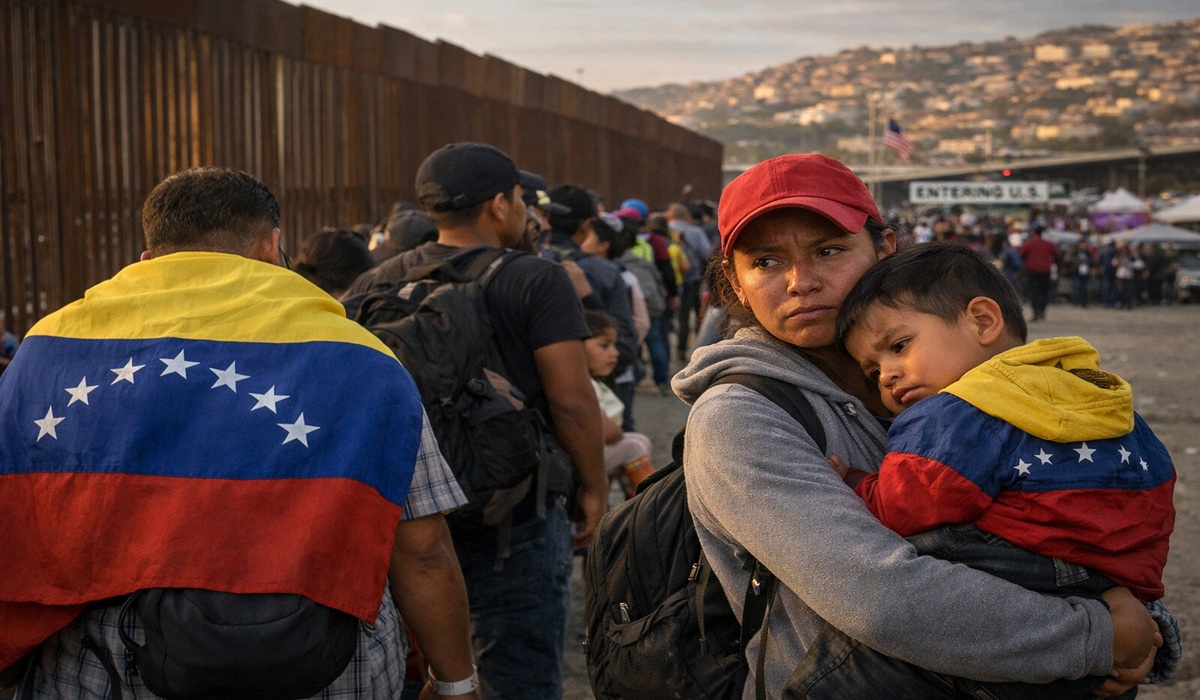
Venezuelans move into Colombia, then north through Central America, then through Mexico, and ultimately toward North America. Geography makes this unavoidable. History confirms it.
That is where this stops being an abstract foreign policy debate and becomes a kitchen-table issue at home.
Right now, communities across the country are already stretched thin. Major cities are spending billions to provide emergency shelter, food, healthcare, schooling, and basic services for asylum seekers. Those costs are real, ongoing, and growing. They are not absorbed by some distant federal ledger alone. They show up in local budgets, higher taxes, deferred infrastructure projects, and cuts to services residents already rely on.
This is where frustration among working Americans is not only understandable—it is justified.
People are tired. They are watching healthcare costs rise while access shrinks. Medicaid systems are strained. Student loan burdens remain unresolved. Housing is increasingly out of reach. Families want the chance to save, to travel, to enjoy the country they work hard to sustain. Instead, they are told—again—that there is money for emergency responses, but never enough for long-term stability at home.
None of this is anger at immigrants themselves. Most people understand that migrants are fleeing conditions they did not create. The resentment is directed at a political system that repeatedly manufactures crises abroad and then asks taxpayers to absorb the consequences without consent, planning, or accountability.
The reality is that the current immigration system is already overwhelmed. Courts are backlogged. Processing times stretch into years. Temporary shelters have become semi-permanent infrastructure. Emergency spending has become routine. Governments are no longer solving problems; they are managing perpetual emergencies.
Now add a destabilized country of nearly thirty million people into that equation.
Even a relatively small percentage of Venezuelans deciding that the situation has become unlivable would overwhelm existing systems. Legal pathways cannot scale at the speed of collapse. That gap is where irregular migration surges, smugglers profit, and enforcement systems buckle. It is also where public trust erodes.
And when trust erodes, the political consequences follow.
What makes this moment particularly reckless is that the crisis already underway has not been resolved. There has been no durable solution, no credible long-term plan, no honest conversation with the public about limits, tradeoffs, or responsibility. Instead, policy has lurched from one emergency to the next.
At the same time, officials continue to justify aggressive actions abroad in the name of security, drugs, or crime. But the logic collapses under scrutiny. Power vacuums are exactly where trafficking networks thrive. Fragmented states cannot control territory, coastlines, or supply routes. Disorder is not a deterrent to criminal organizations—it is their business model.
If Venezuela fractures further, drug flows will not diminish. They will adapt. They always do. Meanwhile, civilians caught in the middle will flee, not in search of opportunity, but in search of safety.
That is the contradiction too often ignored. Leaders speak of compassion while pursuing policies that generate displacement. They speak of fiscal responsibility while creating obligations that run into the tens of billions. They speak of borders while destabilizing the very regions that feed migration.
And the bill never lands on those who designed the policy.
It lands on cities trying to keep schools open. It lands on hospitals absorbing uncompensated care. It lands on working families watching their taxes rise while their quality of life stagnates. It lands on people who did not ask for a foreign policy that prioritizes spectacle over stability.
None of this requires hostility toward the country itself. In fact, the opposite is true. Wanting better outcomes—for citizens and migrants alike—requires acknowledging that endless intervention has costs that cannot be wished away.
If fewer migrants are the goal, stability must come before force. If fiscal responsibility is the goal, crisis manufacturing must stop. If fairness to working Americans matters, then policy decisions abroad must be measured not only by headlines, but by who pays when the fallout arrives.
Power vacuums do not stay empty. They fill with chaos. And chaos moves.
This time, it will not be abstract. It will be visible in budgets, classrooms, hospitals, and household finances. And once again, ordinary people will be asked to carry the weight of decisions they never voted on.
That is the part of this story that cannot be ignored.
About The Author