Gulf on the Brink: Iran’s Warning and the Risk of Regional Collapse
- TDS News
- Breaking News
- March 28, 2026

By: Donovan Martin Sr, Editor in Chief
Iran has delivered a message to the Gulf that is not subtle, not diplomatic, and not open to interpretation. The warning is sweeping in its scope and devastating in its implications. Any attempt by the United States to use coastal waters or regional staging grounds to strike Iranian territory—particularly the strategic energy hub at Kharg Island—will trigger a response that goes far beyond targeting ships or temporary military positions. The message extends directly to the governments of the United Arab Emirates and Bahrain: facilitating such operations will carry consequences not just for foreign forces, but for the states themselves.
The language being used is not calibrated for negotiation. It is designed to deter through fear of escalation. Iranian officials and aligned voices have made it clear that any offensive launched from Gulf waters or nearby territory will be treated as a collective act, not an isolated one. In that framing, bases, ports, logistics corridors, and any infrastructure seen as enabling such an operation would be considered legitimate targets. The warning expands further, suggesting that retaliation would not be limited to specific installations, but could extend across the broader network of American assets throughout the region.
What has intensified the tension is the apparent willingness of some Gulf states to continue allowing U.S. operational access despite these threats. This is not a quiet backchannel arrangement. It is a visible alignment that, in the current climate, carries enormous risk. The calculation appears to be that the strategic partnership with Washington outweighs the immediate danger posed by Tehran’s warnings. Yet, that assumption is being tested in real time, under conditions where the margin for error is shrinking rapidly.
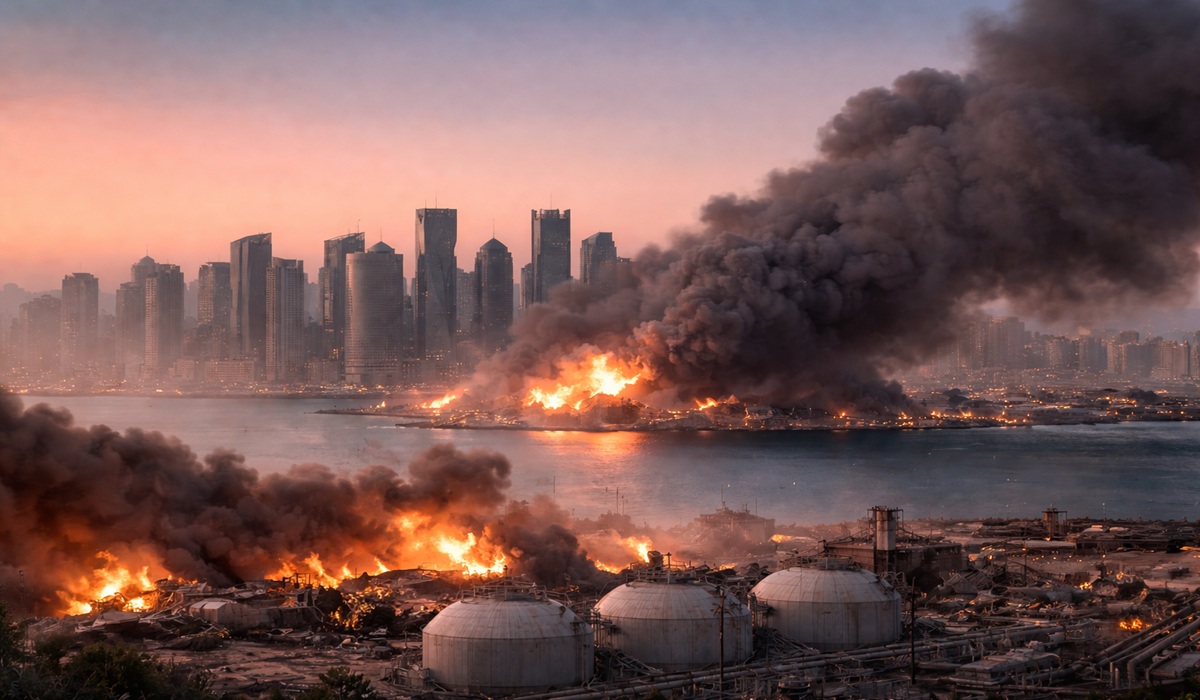
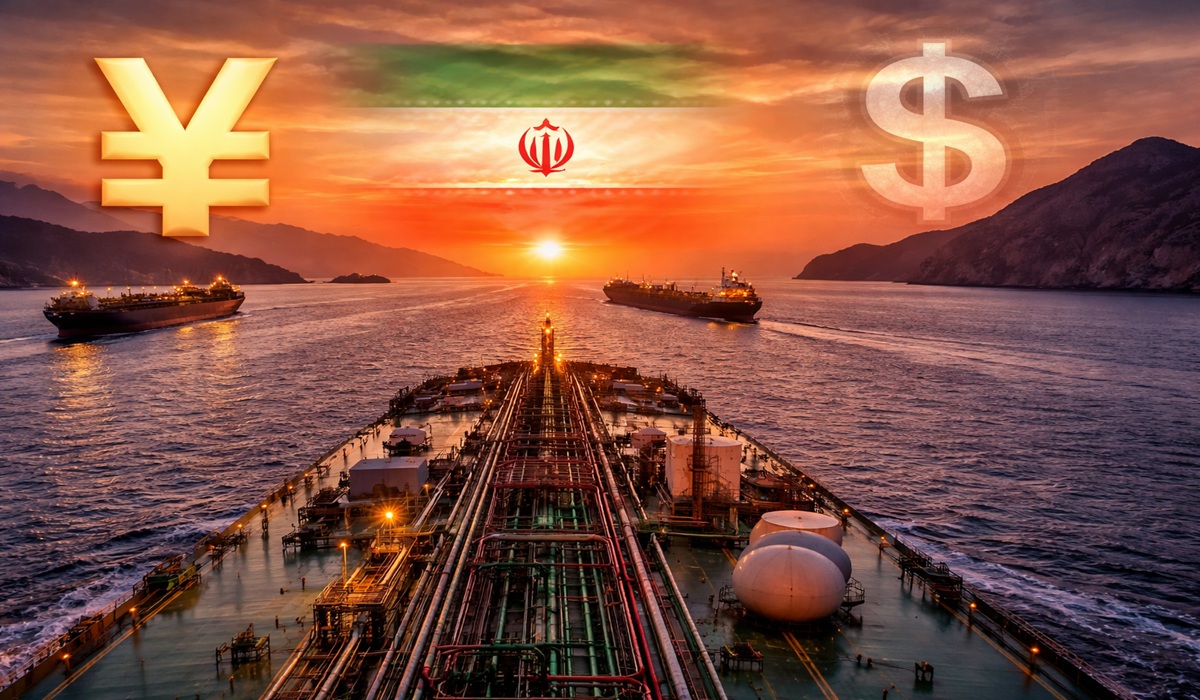
At the center of this standoff is Kharg Island, a critical node in Iran’s oil export system. Any move against it would not simply be a tactical strike. It would be interpreted as an attempt to choke off a primary artery of the Iranian economy. That alone elevates the stakes from a regional skirmish to something far more systemic. The Gulf, already one of the most militarized and economically sensitive waterways in the world, becomes the flashpoint for a confrontation that could ripple across global markets within hours.
The deeper issue now emerging is not just military risk, but political stability within the Gulf monarchies themselves. When a state knowingly places itself in the crosshairs of a potential regional war, it invites scrutiny from within. Populations that have long been accustomed to stability, economic prosperity, and tightly managed governance may begin to question decisions that appear to expose them to existential threats. The perception that external alliances are dictating internal risk tolerance can become a powerful destabilizing force.
Bahrain, in particular, sits in a uniquely vulnerable position. Its geography, its internal dynamics, and its proximity to Iran place it at the center of any potential escalation. If conflict were to erupt and spill onto its soil or infrastructure, the consequences would not remain confined to military damage. The political structure itself could face pressure from multiple directions at once, testing its durability in ways it has not experienced in recent years.
The United Arab Emirates, while more economically diversified and geographically expansive, is not insulated from these dynamics. Its global financial role, its infrastructure, and its reputation as a hub of stability are all tied to the perception that it can remain above regional volatility. A direct confrontation that reaches its territory would challenge that perception instantly, with cascading effects on investment, tourism, and internal confidence.
What makes this moment particularly volatile is the perception that deterrence is no longer functioning as intended. Iran’s warnings are escalating in intensity, while Gulf cooperation with U.S. operations appears to be continuing. That combination creates a narrowing window where miscalculation becomes more likely. Each side is signaling resolve, but the signals are no longer producing restraint. Instead, they are amplifying risk.
There is also a broader question unfolding beneath the surface. If regional states believe that external military backing will ultimately shield them, they may be underestimating the speed and scale of retaliation in a modern conflict environment. The assumption of protection is being tested against the reality of proximity. Geography cannot be relocated, and in the Gulf, proximity is everything.
The coming period will be defined by whether these warnings remain rhetorical or translate into action. If the current trajectory holds, the consequences will not be limited to military engagements. They will extend into political systems, economic structures, and the very foundations of governance in parts of the Gulf. The possibility that monarchies could face internal upheaval is no longer being dismissed in some circles. It is being discussed as a potential outcome of decisions made under pressure, in a moment where the stakes could not be higher.
This is no longer just a question of alliances or strategy. It is a question of survival, perception, and the limits of risk that states are willing to accept. The Gulf is entering a phase where every decision carries weight far beyond its immediate intent, and where the cost of misjudgment may be irreversible.
About The Author