Gaza Ceasefire in Name Only as Civilians Remain Trapped Between Violence and Uncertainty
- Hami Aziz
- Middle East
- Breaking News
- April 10, 2026
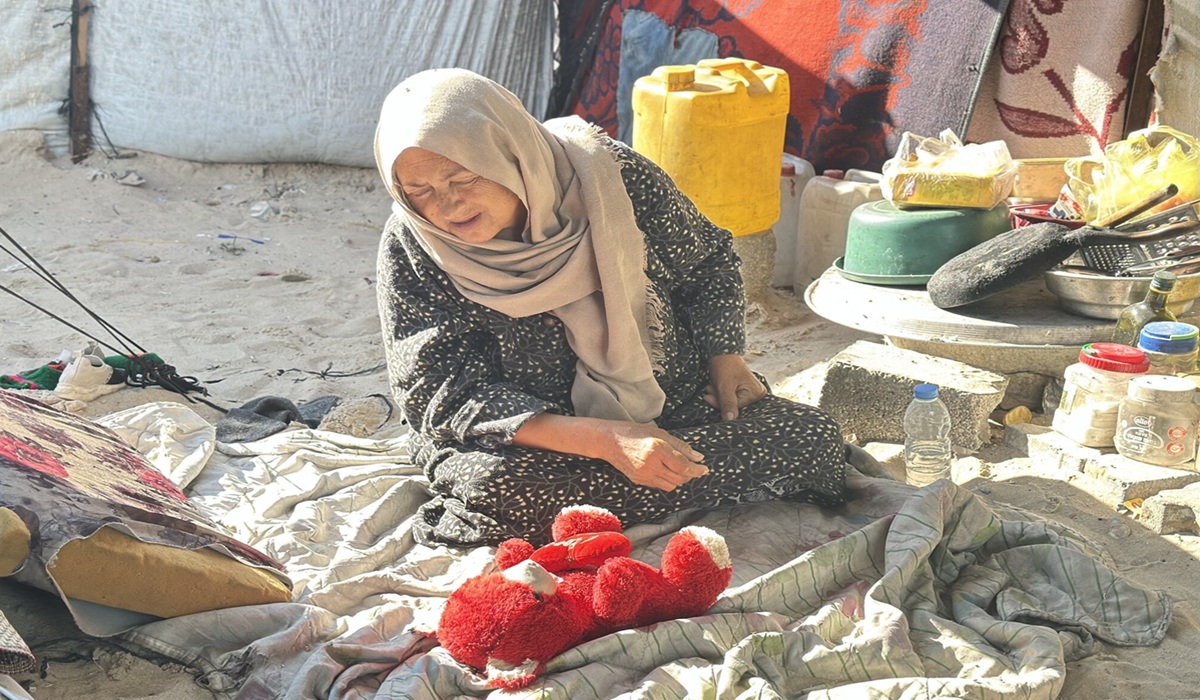
Six months after a ceasefire was declared in Gaza, the reality on the ground tells a far different story than the one suggested by official statements. While the agreement has technically held, it has not brought the kind of safety, stability, or recovery that civilians were promised. Instead, what has emerged is a fragile and deeply flawed pause, one where violence has not truly stopped and where the path forward remains uncertain at best.
Israeli strikes have continued throughout this period, killing and injuring civilians and further damaging already devastated communities. Homes that had survived earlier phases of the conflict have been destroyed, and families who had hoped for even a temporary sense of security are once again living with the constant threat of renewed attacks. The idea of a ceasefire, in this context, has become largely symbolic, offering little reassurance to those still caught in its shadow.
At the same time, humanitarian access remains severely restricted. Aid deliveries are falling well below what was agreed upon, with far too few trucks entering Gaza to meet even the most basic needs. Food, water, medical supplies, and essential goods are all in short supply, and the limited flow that does exist is often inconsistent and unpredictable. For families already struggling to survive, this has translated into rising prices, deepening shortages, and a daily battle to secure necessities.
What makes the situation even more precarious is the way humanitarian access and reconstruction have become entangled in political negotiations. The restoration of infrastructure, the entry of goods, and even the possibility of rebuilding homes are no longer treated as urgent humanitarian priorities. Instead, they are increasingly tied to broader discussions about Gaza’s future, including conditions related to disarmament and the withdrawal of military forces.
This linkage has created a dangerous dynamic. Progress on recovery is no longer driven by need, but by political outcomes that remain unresolved. As negotiations continue without clear resolution, civilians are left in a state of limbo, unable to rebuild their lives while also facing the constant risk that the ceasefire itself could collapse. The failure of these talks would not simply delay recovery, it could trigger a return to large-scale violence, compounding an already dire situation.
On the ground, the humanitarian reality continues to deteriorate despite ongoing efforts to provide support. Aid organizations are operating under extremely difficult conditions, working to reach large portions of the population with essential services such as shelter, water, sanitation, and legal assistance. Yet even with those efforts, the needs far exceed what can currently be delivered.
Families remain in makeshift shelters that offer little protection from the elements or from ongoing insecurity. Basic infrastructure is either damaged or nonexistent, and access to essential goods is limited. As supply remains restricted, prices continue to climb, placing even the most basic items out of reach for many. What was once considered temporary displacement is increasingly becoming a prolonged and unstable way of life.
The broader issue is that the current ceasefire has failed to address the conditions necessary for real recovery. A reduction in large-scale violence, while important, is not enough on its own. Without consistent humanitarian access, meaningful reconstruction efforts, and protections for those delivering aid, the situation cannot improve in any sustainable way.
There is also a growing recognition that recovery cannot remain conditional on political or military developments. When access to food, water, and shelter becomes tied to negotiations, civilians bear the consequences of delays and disagreements that are entirely beyond their control. This creates a system where the most vulnerable populations are effectively held in place, unable to move forward.
The people of Gaza are not simply waiting for the next phase of conflict to be decided. They are living through the consequences of a ceasefire that has yet to deliver on its most basic promises. For many, the difference between war and peace has become increasingly difficult to distinguish, as instability continues to define daily life.
What is needed now is not just the continuation of a ceasefire in name, but a shift toward something more credible and lasting. That means ensuring that humanitarian access is not restricted, that reconstruction begins immediately, and that civilians are given a genuine path toward safety and dignity.
Until those conditions are met, the current pause will remain exactly what it has been so far: fragile, incomplete, and far removed from the reality that people in Gaza continue to face every day.
About The Author