Four Years On: Displacement in Ukraine Deepens as Aid Falls Short
- Ingrid Jones
- Breaking News
- Europe
- February 19, 2026
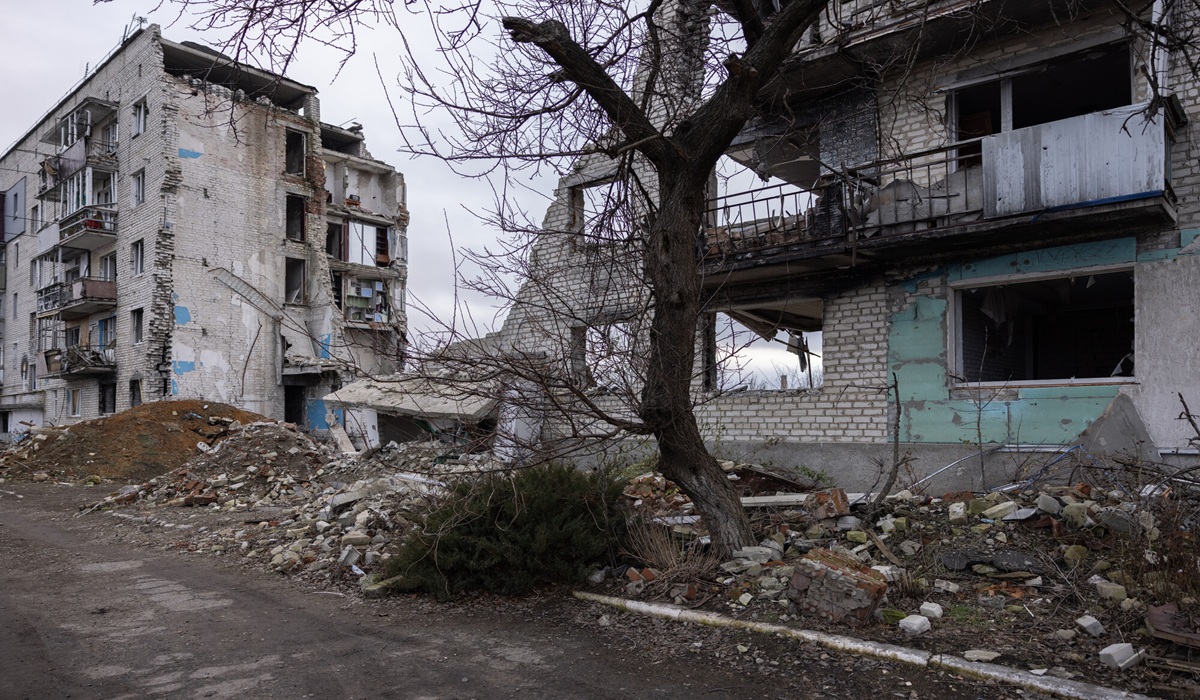
As Ukraine marks four years since the full-scale invasion began, the human cost of the war remains measured not only in frontlines and destroyed cities, but in millions of lives suspended in uncertainty. According to the Norwegian Refugee Council, internally displaced people across the country are now facing mounting pressure as humanitarian funding tightens, personal savings evaporate, and safe returns remain out of reach.
What began as emergency displacement in 2022 has, for many, become protracted exile within their own country. The numbers illustrate the scale of the crisis. As of January 2026, 3.7 million people remain internally displaced across Ukraine, according to data from the International Organization for Migration. A further 5.3 million Ukrainians are living as refugees across Europe, based on figures from the UNHCR. Moldova alone is hosting more than 139,000 Ukrainian refugees.
Behind those statistics are households struggling to reconcile sharply rising living costs with dramatically reduced income. Data collected in September 2025 from more than 113,000 internally displaced people applying for assistance found that vulnerable households reported an average monthly income of just 4,472 Ukrainian hryvnia, roughly 103 US dollars. By comparison, displaced renters reported a median monthly rent of 6,000 hryvnia, or about 140 US dollars, according to IOM figures. Rent alone consumes nearly all available income for many families, leaving little for food, medicine, transport, or heating.
The winter has intensified these pressures. Temperatures have fallen to minus 20 degrees Celsius in parts of the country, while blackouts, fuel shortages, and damage to energy infrastructure continue to limit reliable access to electricity and heating. For displaced families living in temporary or damaged housing, cutting back on heating is not simply uncomfortable, it is dangerous.
NRC’s country director in Ukraine, Marit Glad, has described the burden as increasingly unsustainable. After four years of war, many displaced people have exhausted life savings and have no viable home to return to because of continued destruction or insecurity. Households are often headed by elderly caregivers or single parents responsible for children, relatives with disabilities, or family members with limited mobility. At the same time, the threat of drone strikes and shelling remains a daily reality in many regions.
The coping strategies families report adopting are telling. More than 20 per cent say they have reduced health expenditures to make ends meet. Others report cutting heating costs or spending down the last of their savings. These measures may offer short-term relief but deepen long-term vulnerability, especially for older people and children.
Personal stories underline the severity of the crisis. Kateryna, a 64-year-old grandmother displaced from Toretsk in the Donetsk region, has been caring for her 14-year-old grandson since they fled in 2022. She described months of intense financial strain, balancing rent, documentation fees, and medical expenses for her grandson. When NRC provided six months of rental support and legal assistance, she said she broke down in tears upon receiving the funds. For families like hers, targeted cash assistance is not supplementary support; it is the difference between stability and collapse.
Overcrowding is another coping mechanism. Olena, who fled the Kharkiv region in 2022, described living in a house with twelve people, including seven children, all sharing limited space. Such arrangements reduce rental costs but increase health risks and strain already fragile social dynamics.
International funding gaps are compounding the situation. The 2025 Ukraine Humanitarian Needs and Response Plan received 1.5 billion US dollars of the 2.6 billion required, reaching only 57 per cent of its target. For 2026, the plan requires 2.3 billion US dollars to support 4.1 million of the most vulnerable people. In Moldova, the refugee response received 88 million US dollars of the 205 million requested in 2025, and 116 million will be needed in 2026 to reach 90,000 of the most vulnerable refugees.
These funding shortfalls come as displacement becomes increasingly prolonged. According to IOM, 71 per cent of internally displaced people in Ukraine have now been displaced for more than two years. What was once an acute humanitarian emergency is evolving into a chronic socio-economic crisis that demands both sustained aid and durable policy solutions.
NRC has operated in Ukraine since 2014 and has scaled up its presence significantly since 2022, delivering cash assistance, housing repairs, winter support, legal aid, and education services. Since the escalation of the war, the organization has assisted more than 1.5 million individuals in Ukraine. In Moldova, it has reached more than 182,000 people since 2022, working largely through local partners.
Yet humanitarian organizations alone cannot resolve a crisis of this magnitude. NRC has called for continued leadership from the Ukrainian government to expand access to safe and affordable housing and to develop long-term strategies that prevent further deterioration. Clear national planning, supported by consistent international funding, will be essential to stabilize displaced populations and avoid deeper social fractures.
Diplomatically, the challenge is maintaining international attention as the conflict drags on. Protracted crises often risk becoming background noise in global affairs, even as human need intensifies. The risk, as Glad has warned, is that displaced families become invisible casualties of a war that has reshaped Europe’s security landscape but continues to be lived, day by day, in kitchens without heat and rented rooms paid for with dwindling savings.
Four years into the war, the trajectory of the conflict remains uncertain. What is clear, however, is that millions of Ukrainians remain displaced, navigating survival under extreme pressure. Ensuring that they are not forgotten will require sustained political will, coordinated humanitarian action, and a renewed commitment from international partners to match promises with resources.
About The Author