
By: Donovan Martin Sr, Editor in Chief
Most people come to massage therapy with a simple hope: to feel better. Sometimes that means easing a stiff neck after long days at a desk. Other times it’s about recovering from physically demanding work, calming an overactive mind, or finally addressing pain that has quietly shaped everyday life. What many don’t realize at first is that massage, when practiced regularly, becomes far more than a one-time treatment. It becomes a foundation for long-term well-being.
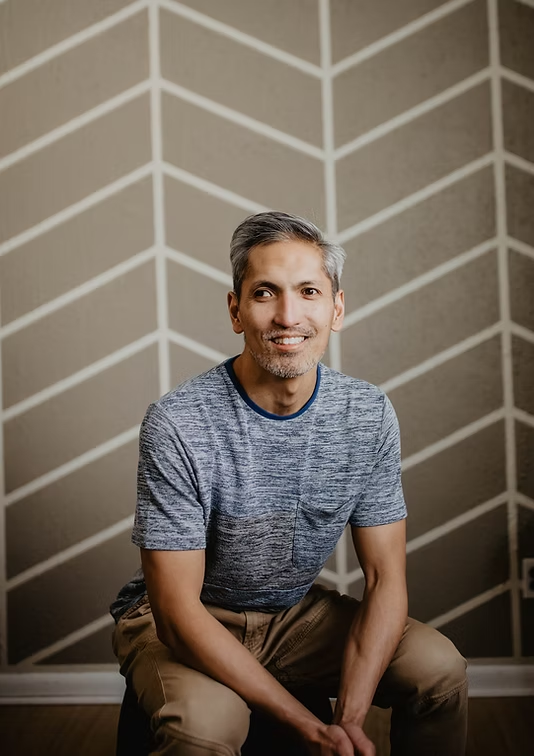
For Howie Eugenio, that understanding didn’t come only from professional training, but from years of personal curiosity and experience. As a Registered Massage Therapist and Certified Personal Trainer with over a decade in the field, Howie’s work has been guided by questions many people ask themselves but rarely explore deeply: how can the body move better, feel stronger, and function without constant discomfort?
“My journey has been driven by a curiosity to learn more about myself, and how to get my body to function at its best,” Howie explains. That curiosity shaped not only his own approach to health, but the way he works with clients today—looking beyond symptoms to understand the whole person.
Regular massage works because the body is adaptive. Muscles respond to stress, posture, movement, and recovery habits. When life pushes the body too far in one direction—long hours sitting, repetitive motions, high stress, or insufficient rest—tension becomes the body’s default state. Massage helps interrupt that cycle. With consistency, it improves circulation, restores mobility, reduces chronic tightness, and encourages the nervous system to settle.
Many people don’t realize how much pain they’ve normalized until it begins to fade. Headaches become less frequent. Sleep improves. Movement feels easier and more natural. Regular massage isn’t just about reacting to pain when it flares up—it’s about preventing small issues from becoming long-term problems. Over time, the body learns a new baseline that feels more balanced and resilient.
The benefits extend beyond the physical. Stress and mental fatigue live in the body just as much as the mind. Shoulders, hips, jaw tension, and shallow breathing patterns often tell the real story of a busy, overloaded life. Massage offers a rare opportunity to slow down and reconnect. “What I’ve discovered is that balance between mind, body, and soul is key,” says Howie. That balance doesn’t come from pushing harder, but from giving the body regular chances to reset.
One of the most powerful aspects of ongoing massage therapy is continuity. When sessions are part of a routine, patterns emerge. Treatments become more targeted and effective because they’re informed by history, not just what hurts that day. This relationship-based approach allows therapy to evolve alongside a client’s goals—whether that’s improved mobility, stress management, athletic performance, or simply maintaining a sense of calm.
Massage also supports other healthy habits. When the body moves freely, exercise feels safer and more enjoyable. When the nervous system is regulated, recovery improves. When pain is reduced, energy and motivation often follow. This is why regular massage is best understood as maintenance rather than indulgence—care for a body that works hard every day.
At the heart of Howie Eugenio’s practice is a genuine commitment to helping people feel at ease in their own bodies. “It’s an honour to be in a position to help you feel better, relax, and find your calm,” he says. That philosophy shows up in every session, grounded in experience, attentiveness, and respect for the individual.
In a world that constantly demands more, regular massage is a way to restore balance. It’s an investment in movement, clarity, and long-term health—not just for today, but for the life you’re living every day.
About The Author