Easter Morning Escalation: Donald J. Trump’s Message Signals a War Without Limits
- TDS News
- Breaking News
- April 5, 2026
By: Donovan Martin Sr, Editor in Chief
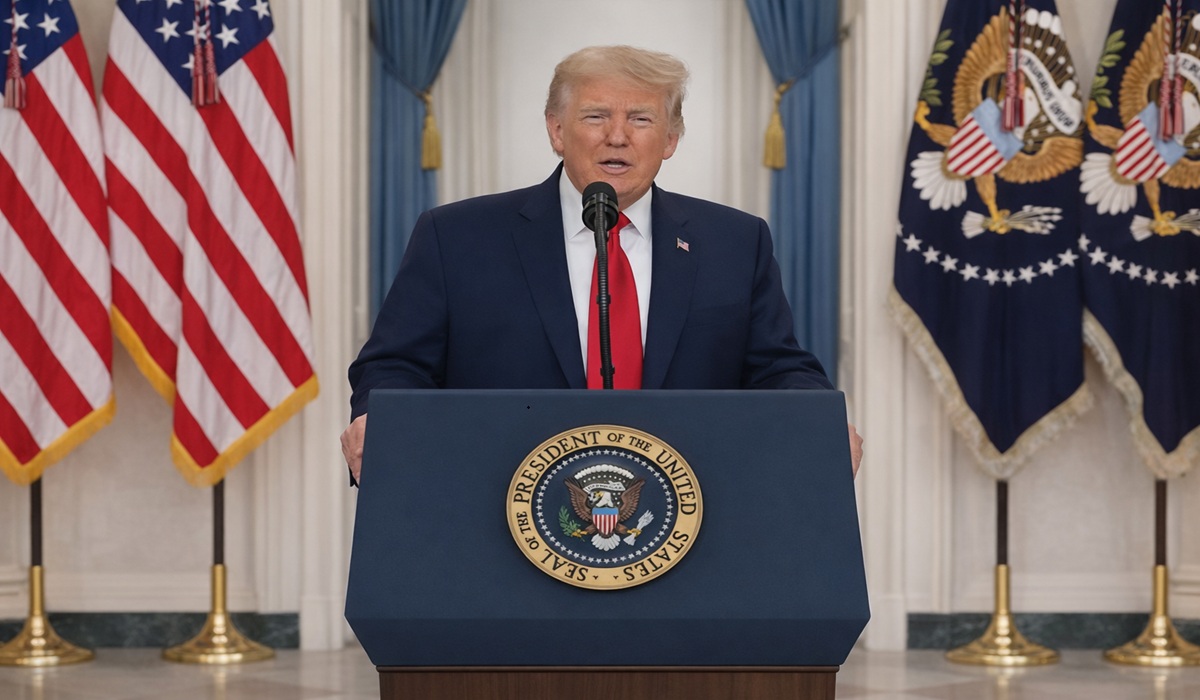
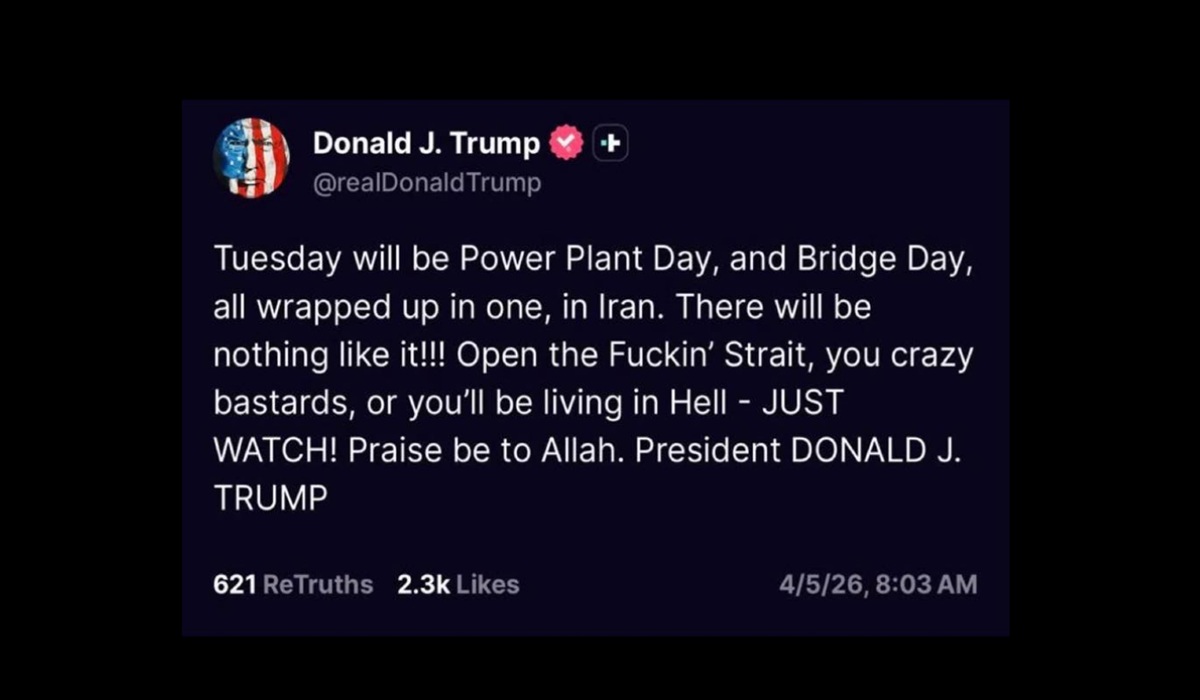
On a morning that is supposed to represent restraint, reflection, and renewal, Donald J. Trump chose instead to issue a public threat that cut straight through any remaining illusion of measured leadership. The Truth Social post was not dressed up in diplomatic language or filtered through advisors. It was raw, aggressive, and explicit in its intent, laying out a willingness to strike power plants, bridges, and critical infrastructure inside Iran if the Strait of Hormuz is not reopened. The tone was not strategic. It was coercive, and more importantly, it aligned directly with actions already unfolding on the ground.
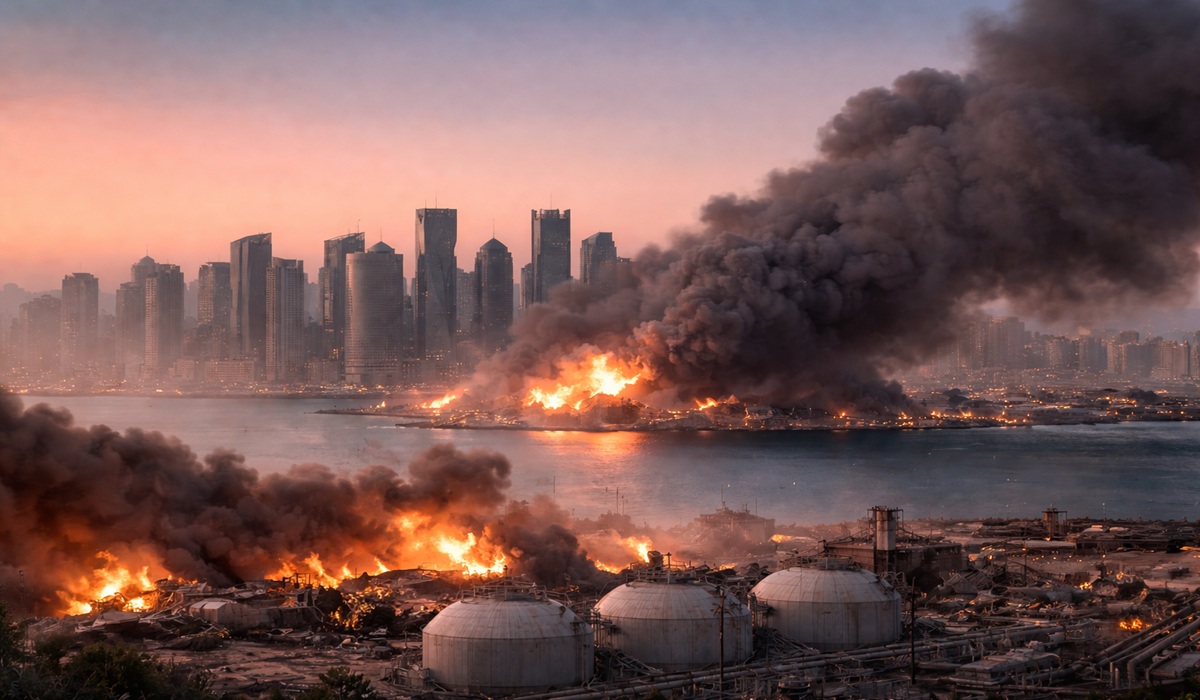
This is no longer a war framed around military precision or narrowly defined targets. The campaign has expanded into systematic strikes on infrastructure that sustains civilian life, and that distinction matters because under international law it is not ambiguous. When bridges are bombed, when energy systems are destroyed, and when desalination or water-related infrastructure is taken offline, the consequences fall immediately on civilians, not soldiers. Those are not secondary effects. They are the point of pressure, and that is exactly why such actions are widely recognized as violations when carried out deliberately.
The administration’s original justification for entering this conflict has shifted so many times that it now collapses under its own contradictions. At one point the rationale centered on weapons of mass destruction, which according to Trump’s own statements had already been neutralized. That should have marked a turning point toward de-escalation. Instead, the strikes intensified, and the justification pivoted again toward controlling access to the Strait of Hormuz and securing regional leverage. That shift exposes something deeper than inconsistency. It reveals a war that is no longer anchored to a clear objective but is instead being driven forward by momentum and political framing.
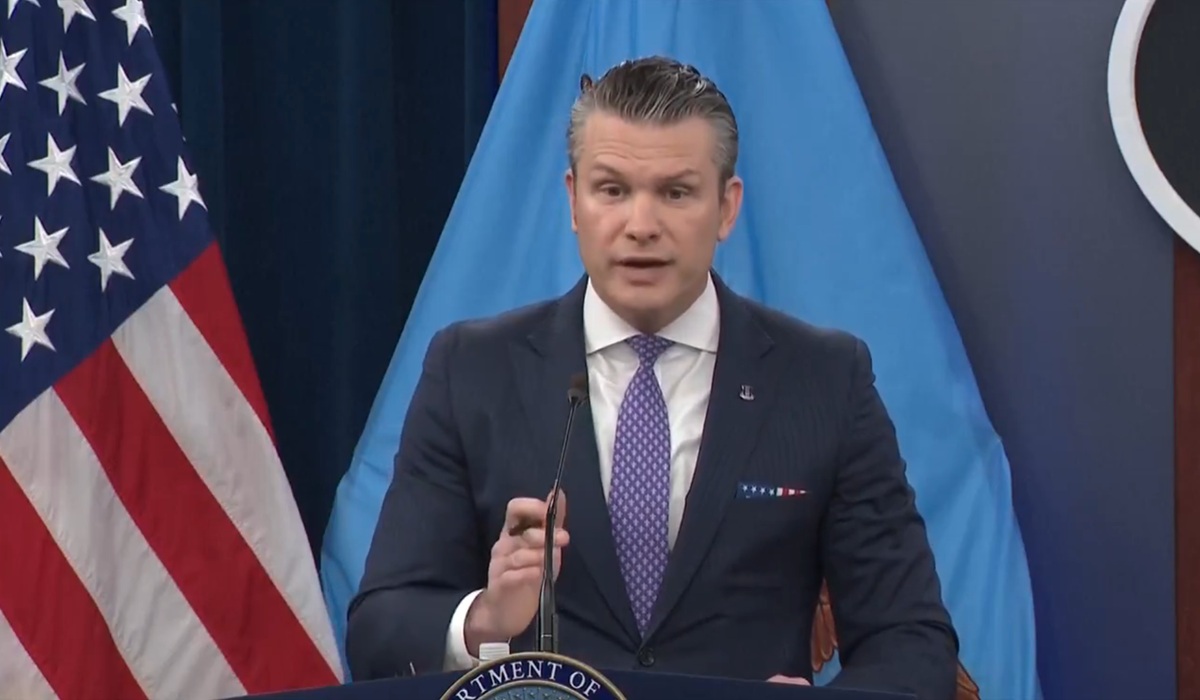
The role of senior leadership inside Washington has only amplified those concerns. Marco Rubio has not presented a coherent diplomatic counterweight to the escalation, and diplomacy itself appears largely absent from the equation. At the same time, Pete Hegseth is overseeing a military posture that is increasingly defined by expansion rather than containment. The classification of casualty figures, confirmed at the highest levels, represents a break from modern precedent and signals a deliberate effort to shield the human cost of the war from public scrutiny. That is not a minor administrative decision. It fundamentally alters the relationship between the government and the public during wartime, removing the ability to assess the true scale of sacrifice being demanded.
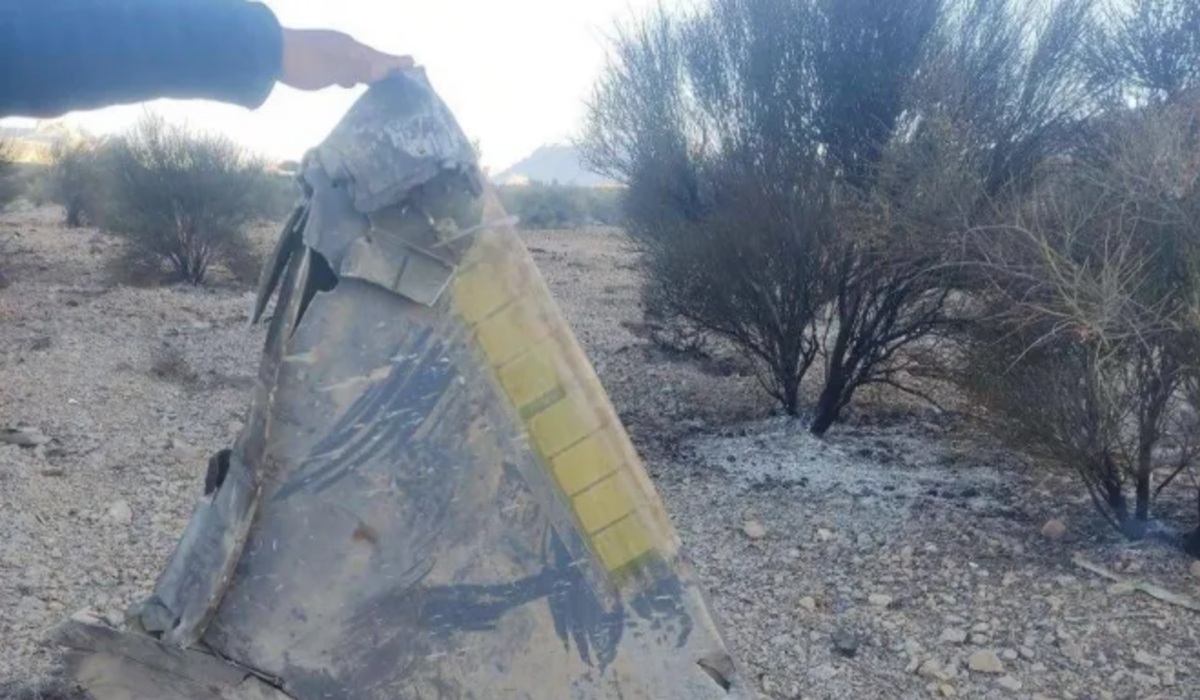
On the battlefield, the narrative of overwhelming control does not align with visible realities. Aircraft losses, damaged equipment, and the need for repeated rescue operations inside contested territory point to a conflict that is far more contested than official messaging suggests. Iran has not been neutralized in any meaningful sense, and the expectation of a rapid or decisive outcome has given way to a grinding confrontation that carries escalating risk with each passing day. This is not the profile of a controlled campaign. It is the profile of a war that is expanding faster than it can be contained.
At the same time, the geographic scope of U.S. military activity has widened in ways that raise serious strategic questions. Operations and confrontations tied to American involvement have surfaced across multiple regions, creating the impression of a government that is not engaged in a single conflict with a defined endpoint but is instead entangled in a series of overlapping escalations. That pattern matters because it stretches resources, complicates alliances, and increases the likelihood of miscalculation on multiple fronts at once. When combined with calls for a dramatically increased military budget, reportedly reaching into the trillions, it reinforces the perception that this is not a temporary posture but a sustained and expanding direction.
What makes the Easter message so significant is not just its language, but what it confirms. It confirms that the targeting of infrastructure is not incidental but intentional. It confirms that escalation is not being tempered internally but is instead being communicated openly as policy. It confirms that the war has moved beyond its original justification and into a phase where objectives are shifting while the intensity continues to rise.
The broader implications extend beyond any single battlefield. The Strait of Hormuz is one of the most critical energy corridors in the world, and its disruption carries immediate consequences for global markets and economic stability. The decision to frame its reopening as something that can be forced through destruction rather than negotiated through diplomacy introduces a level of volatility that extends far beyond the region itself. This is no longer a contained conflict. It is a pressure point with global reach.
What is unfolding is not simply a continuation of past U.S. military engagements. It is a departure from them in both tone and structure. The absence of transparency, the open discussion of targeting civilian infrastructure, and the shifting rationale for continued escalation all point to a situation that is becoming harder to define and even harder to justify within traditional frameworks of warfare.
The Easter post did not create this reality, but it exposed it in a way that cannot be walked back or reframed. It stripped away the language of caution and replaced it with a direct articulation of force as the primary tool of policy. Once that line is crossed publicly, it changes the expectations of what comes next, both for those carrying out the orders and for those living under them.
About The Author