Did Carney’s Davos Speech Make Him The Leader Of The New World Order?
- TDS News
- Canada
- January 23, 2026
By: Donovan Martin Sr, Editor in Chief
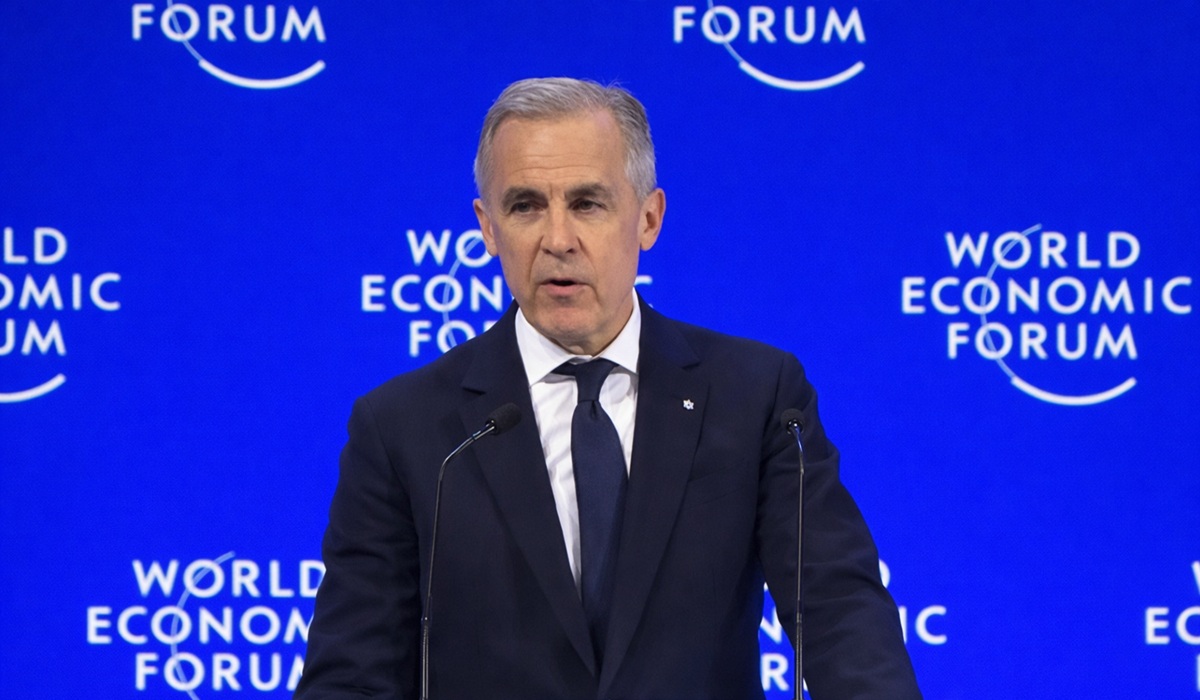
The short answer is yes. Canadian Prime Minister Mark Carney used his Davos speech to step into a leadership vacuum that already existed, and he did it without theatrics, insults, or slogans. What made the speech consequential was not tone but structure. It dismantled fear as a governing principle and replaced it with agency. That is what leadership looks like in a moment of realignment.
The speech did not call out the United States by name, but it did not need to. Its message was unmistakable: alliances are only meaningful if they function as alliances, and no country is obligated to subordinate its sovereignty to intimidation. By stating plainly that Canada does not need an ally that does not act like one, Carney reframed dependency as a choice rather than a necessity. That alone breaks the psychological leverage that Donald Trump has relied on internationally. Bullies do not lose power when they are criticized; they lose power when people stop behaving as though they are unavoidable.
This is why the speech landed so hard in the room at World Economic Forum in Davos. Carney was not proposing a new doctrine. He was declaring that the old one is already dead. The rules-based international order did not collapse because someone challenged it rhetorically. It collapsed because its largest enforcer abandoned the rules and replaced them with transactional loyalty tests. Carney simply said out loud what most governments have been quietly planning around.
The reaction since then confirms the shift. European governments are no longer treating China as a civilizational enemy by default. They are treating it as a strategic reality. The United Kingdom has reopened senior-level engagement. France has done so openly. Other EU states are following, not out of ideology, but out of necessity. Energy security, supply chains, and industrial policy do not survive on moral posturing alone. At the same time, conversations about limited re-engagement with Russia are no longer taboo in private diplomatic circles, particularly as NATO members themselves face internal fracture and open threats between allies. When alliance cohesion weakens from within, countries hedge. That is not betrayal; it is survival.
Carney’s speech gave that hedging political cover. By stating that no country should be afraid of a bully, he removed the stigma from independent decision-making. He also implicitly challenged the idea that the United States is the unavoidable center of gravity for global order. As Washington pursues overt empire-style leverage, sanctions as punishment, trade as coercion, security guarantees as conditional favours, other states are recalculating the cost of compliance. The result is not chaos. It is diversification.
This is where the “new world order” framing becomes accurate, not dramatic. Leadership today is not about commanding blocks. It is about legitimizing independence. Carney did that in a single speech by signaling that middle powers do not need permission to act like sovereign actors, and that alignment should be mutual, not enforced. Once that is said publicly by a G7 leader, the spell breaks.
What changed after Davos was not policy overnight. What changed was posture. Countries that had been managing Trump are now planning beyond him. Appeasement is being replaced with parallelism: work where interests align, disengage where they do not, and stop pretending fear is strategy. That is why the speech matters. It did not attack the bully. It made him irrelevant.
About The Author