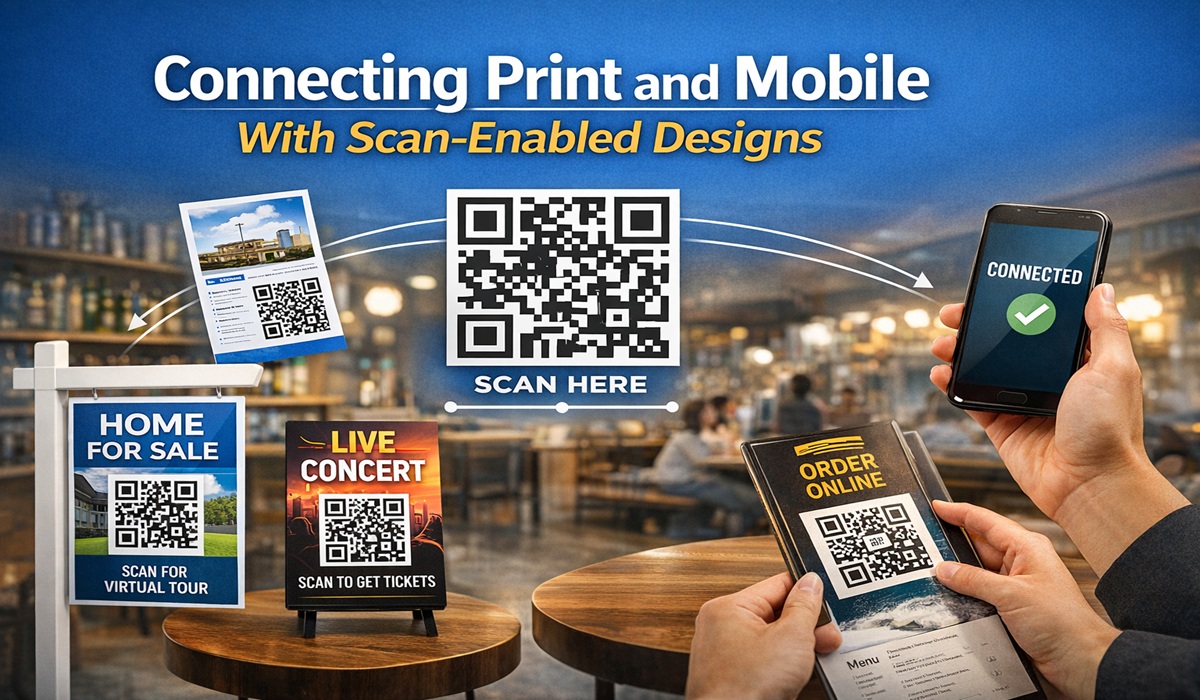
Connecting Print and Mobile With Scan-Enabled Designs
- T Flow Printing & Signage
- Western Canada
- March 9, 2026
For years, print marketing and digital marketing were treated like two separate worlds. A flyer lived on a bulletin board. A poster hung in a storefront window. A brochure sat on a counter waiting for someone to pick it up. Meanwhile, online marketing existed somewhere else entirely on websites, apps, and social media feeds. Today those two worlds are no longer separate. They are merging in powerful ways, and one of the most effective tools driving that connection is the scan-enabled design.
Scan-enabled printing, often using QR codes or other scannable elements, transforms traditional printed materials into interactive gateways that lead directly to digital experiences. A simple poster can instantly connect someone to a website, a video, a menu, a product page, or a social media account. Instead of asking people to type long web addresses or search for a business online, a quick scan with a smartphone camera takes them exactly where they need to go in seconds.
This shift has dramatically changed how businesses use print. A well-designed flyer is no longer just informational. It becomes a bridge between the physical and digital world. Imagine a restaurant menu that allows customers to scan for online ordering, a real estate sign that links directly to a virtual tour, or an event poster that instantly opens ticket purchasing. The printed piece still captures attention in the real world, but the scan functionality extends its life into the digital space where deeper engagement can happen.
One of the biggest advantages of scan-enabled designs is convenience. People live on their phones, and anything that reduces friction makes it easier for them to interact with a brand. Instead of remembering a name or typing a website later, they can engage immediately while their interest is fresh. That immediate connection increases the chances that curiosity turns into action.
Another benefit is measurable engagement. Traditional print marketing has always been powerful but difficult to track. When a QR code or scan element is included, businesses can monitor how many people interact with the design and where they are coming from. This provides valuable insight into what campaigns are working and how audiences are responding. In other words, print begins to deliver some of the same analytics benefits that digital marketing has enjoyed for years.
Design plays a major role in making scan-enabled print effective. A scannable code should not look like an afterthought dropped onto a design at the last minute. It should be clearly visible, strategically placed, and supported by a simple call-to-action that encourages people to use it. A phrase like “Scan to Learn More,” “Scan for Exclusive Offers,” or “Scan to Watch the Video” helps guide the viewer and gives them a reason to engage.
Placement matters just as much as design. Codes must be positioned where they are easy to scan without awkward angles or poor lighting. Posters placed at eye level, brochures held comfortably in hand, and signage that allows enough space for someone to point their phone at the code will dramatically increase the likelihood of successful scans.
Businesses across Winnipeg and beyond are quickly recognizing how powerful this hybrid approach can be. A printed marketing piece can capture attention in a busy environment where digital ads might be ignored, while the mobile connection delivers deeper information and long-term engagement. Instead of choosing between print or digital, scan-enabled designs allow businesses to benefit from both at the same time.
This approach also opens the door to creative storytelling. A poster can introduce an idea while the scan reveals a full video presentation. A product label can explain the basics while the scan takes the customer to behind-the-scenes content or customer reviews. A simple piece of paper suddenly becomes the first chapter of a much larger digital experience.
For businesses that want to modernize their marketing without abandoning the power of print, scan-enabled designs offer an elegant solution. They respect the visual impact of printed materials while embracing the speed and convenience of mobile technology. In a world where attention spans are short and competition is everywhere, creating that instant bridge between physical and digital interaction can make all the difference.
Companies like T-Flow Printing & Signage are helping businesses take advantage of this evolution by designing print materials that are built for the way people actually interact with information today. With thoughtful design, high-quality printing, and integrated mobile access, printed materials can do far more than simply deliver a message. They can start a conversation, spark curiosity, and lead customers directly into a deeper relationship with a brand.
To see how businesses are using modern print strategies and interactive designs, visit T-Flow Printing & Signage on Facebook:
https://www.facebook.com/profile.php?id=61561452777281
About The Author