Chery Leads the Next Evolution of EVs with REV Technology Built for Canadian Roads
- TDS News
- Canada
- April 7, 2026
By: Donovan Martin Sr, Editor in Chief
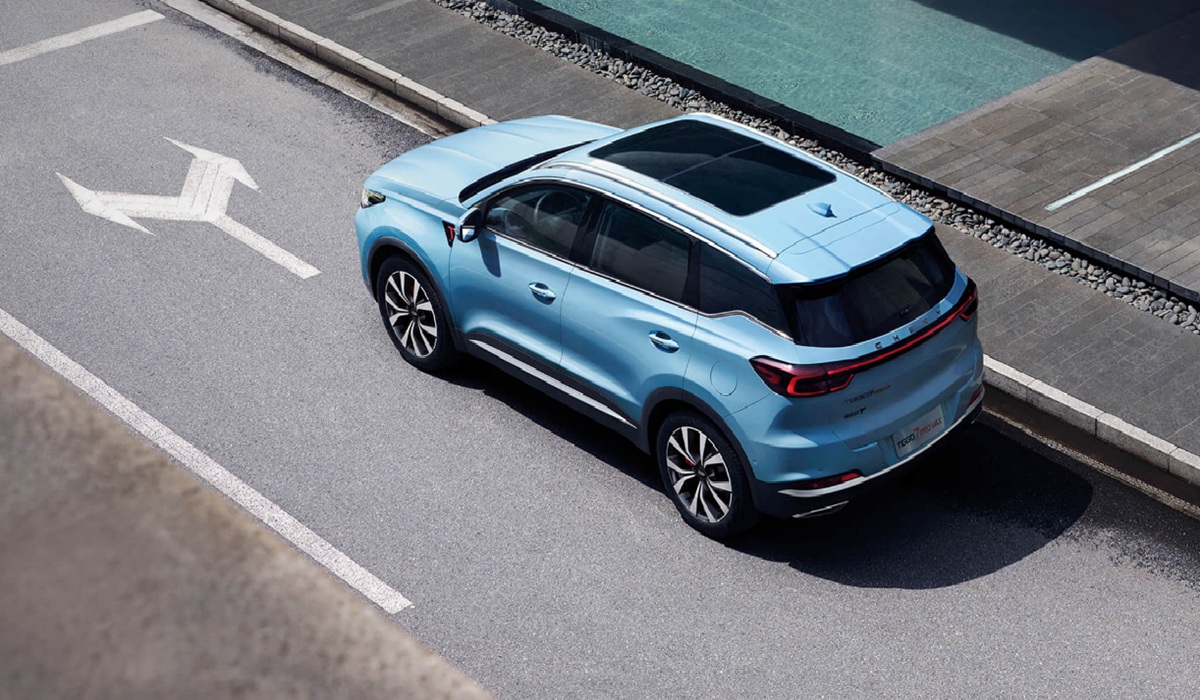
Canada has never been a simple proving ground for electric vehicles. This is a country where winter is not a season, it is a test, and where long stretches of highway can quickly expose any weakness in range or reliability. That is why the next wave of electric innovation feels more grounded, and why Chery is starting to emerge as a name Canadians are going to hear more often.
Chery may still be unfamiliar to many here, but globally it is anything but small. Founded with a clear focus on technology, the company has spent more than two decades building a reputation around engineering independence and innovation. Under the leadership of Chairman Yin Tongyue, the company has positioned itself as a manufacturer driven by in-house development, becoming one of the first in China to master core vehicle systems, including engines, transmissions, platforms, and new energy technologies. It has also grown far beyond its domestic market, with a presence in over 130 countries and nearly 19 million users worldwide.
As Canada continues opening its doors to more international EV options, this is one of the companies that stands out, not just because of scale, but because of how its vehicles are built to solve real-world problems.
At the center of that is REV technology, short for Range Extended Vehicle. It is a simple idea with a practical twist. The vehicle is still driven entirely by an electric motor, giving you the quiet, responsive feel people expect from an EV, but it carries a small onboard generator that supports the battery when needed. That means you are not relying solely on charging stations, and you are not forced to think twice about longer drives or extreme weather.
For Canadian drivers, that distinction matters more than anywhere else. In city conditions, the experience is fully electric. You plug in, you drive, and you benefit from lower operating costs. The shift happens when you push beyond the limits of a typical EV, whether that is a long highway trip or a stretch of sub-zero temperatures. Instead of watching your range drop and planning your next stop, the system quietly maintains your charge, extending your driving capability without changing how the vehicle feels.
This is where the numbers begin to change expectations. Vehicles built on this approach are reaching total driving ranges of up to 1600 kilometres. That is not just competitive, it is transformative. For a country built on distance, that kind of range removes one of the biggest barriers to EV adoption. It means fewer compromises, fewer stops, and a driving experience that feels as unrestricted as any traditional vehicle.
It also addresses one of Canada’s ongoing challenges, which is infrastructure. While major cities are seeing rapid growth in charging networks, there are still large areas where coverage is limited. A vehicle that can handle those gaps without forcing drivers to adapt their habits is not just convenient, it is practical. That is why REV technology feels particularly suited for Canada, bridging the gap between where the country is today and where it is heading.
There is also a strong cost argument that cannot be ignored. With fuel prices remaining unpredictable, the ability to rely primarily on electricity for daily driving offers real savings. At the same time, having that onboard backup removes the stress that can come with going fully electric in a country this vast. It is a balance that makes sense, especially for drivers who want efficiency without giving up flexibility.
Performance is another quiet advantage. Electric motors deliver immediate torque, which translates into smooth and controlled acceleration, even in winter conditions. That responsiveness, combined with modern traction systems, can make these vehicles feel more stable on icy roads than many traditional setups. It is not just about efficiency or range, it is about confidence behind the wheel.
Chery’s broader strategy reflects this kind of thinking. The company has expanded globally by focusing not only on products, but also on localization and long-term market integration. It has exported not just vehicles, but also technology and manufacturing expertise, building a presence that is both wide and sustainable. That kind of foundation suggests that when its vehicles arrive in Canada, they are not entering as experiments, but as well-developed solutions.
There is a moment in every industry where new technology stops feeling like a risk and starts feeling like the obvious next step. For electric vehicles in Canada, that moment may be arriving through this kind of hybrid-electric approach. It keeps everything people like about EVs, while quietly removing the limitations that have held some drivers back.
And when you combine that with the kind of range now being achieved, it becomes clear this is not just another option. It is one that feels built for Canadian roads, Canadian weather, and the way people here actually drive.
About The Author