CBSA Seizes 26 Kilograms of Cocaine Hidden in Colombian Shipping Container at B.C. Port
- Ingrid Jones
- Canada
- December 23, 2025
Canada Border Services Agency officers intercepted more than 26 kilograms of cocaine concealed inside a marine shipping container at the Tsawwassen Container Examination Facility in British Columbia, according to a federal release issued December 22.
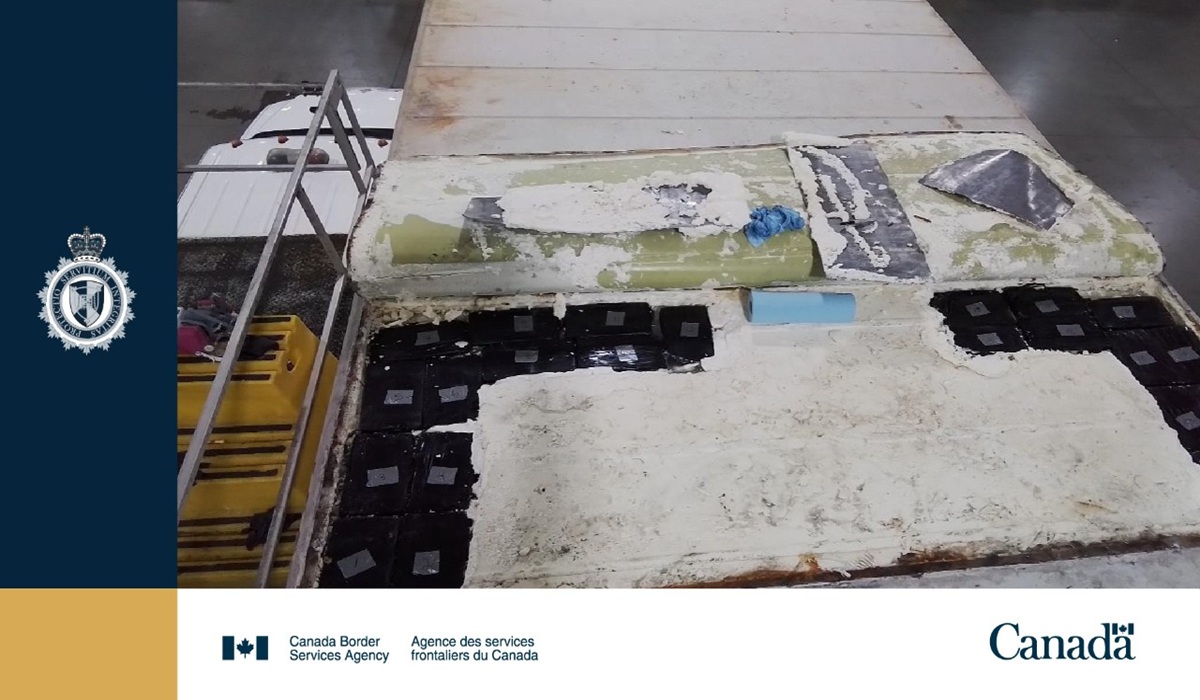
The seizure occurred on October 31, when CBSA officers assigned to Metro Vancouver Marine Operations examined a sea container that originated in Colombia and was declared as carrying boxes of frozen fruit. During a secondary inspection, officers—assisted by CBSA’s detector dog service—identified irregularities in the container’s ceiling. A search revealed 23 brick-style packages of cocaine hidden in the structure of the container.
The total weight of the drugs seized was 26.2 kilograms.
The cocaine was turned over to the RCMP’s Federal Policing Pacific Region, Drugs and Organized Crime Unit, which has taken over the investigation. No arrests have been announced, and authorities have not disclosed whether the shipment was linked to a known trafficking network or intended destination within Canada.
The concealment method used in this case—hiding narcotics within container infrastructure rather than cargo itself—is a long-established tactic in maritime drug trafficking. Frozen food shipments, particularly fruit and seafood, are frequently exploited by traffickers due to their high volume, rapid movement through ports, and the logistical pressure to avoid delays that could spoil legitimate goods.
Colombia remains one of the world’s primary sources of cocaine, and Canadian ports on the West Coast continue to be attractive entry points for organized crime groups seeking to move drugs inland or re-export them internationally.
While the seizure prevented a significant quantity of cocaine from entering circulation, it also underscores the scale of maritime drug trafficking that persists despite increased border enforcement.
According to CBSA figures, from January 1 to October 31, 2025, officers in British Columbia conducted more than 10,400 illegal narcotics seizures, including approximately 727 kilograms of cocaine. Those numbers point to sustained trafficking pressure rather than isolated incidents.
The federal government has emphasized investments under its Border Plan, which includes $1.3 billion in funding, with more than $355 million earmarked for CBSA frontline personnel, tools, and technology. Officials argue these investments are necessary to keep pace with increasingly sophisticated smuggling operations.
However, critics have noted that while seizures are regularly announced, far less information is made public about downstream investigations, prosecutions, or the dismantling of higher-level trafficking networks. Large seizures often represent a cost of doing business for organized crime, rather than a decisive disruption.
CBSA and RCMP federal policing units continue to frame these seizures as evidence of effective border controls and inter-agency cooperation. Yet the volume of drugs still being intercepted raises ongoing questions about how much is getting through undetected—and whether enforcement efforts are keeping pace with the scale of the problem.
Maritime containers number in the millions annually, and only a fraction can be physically examined. That reality places heavy reliance on intelligence-led targeting, risk profiling, and post-seizure investigations to identify criminal organizations behind the shipments.
Authorities say CBSA’s Intelligence Section plays a central role in identifying border-related risks, while the RCMP works domestically and internationally to disrupt trafficking networks and supply chains. How successful those efforts are over the long term remains difficult to assess from seizure announcements alone.
Smuggling narcotics into Canada is a serious offence under the Customs Act and the Controlled Drugs and Substances Act. Convictions can result in lengthy prison sentences. For foreign nationals, charges may also lead to removal from Canada and permanent bans on re-entry.
Anyone with information related to drug trafficking or organized crime is encouraged to contact local police, the RCMP, or Crime Stoppers.
For now, the seizure at Tsawwassen stops one shipment—but it also highlights how entrenched and persistent maritime cocaine trafficking into Canada remains.
About The Author