By: Donovan Martin Sr, Editor in Chief
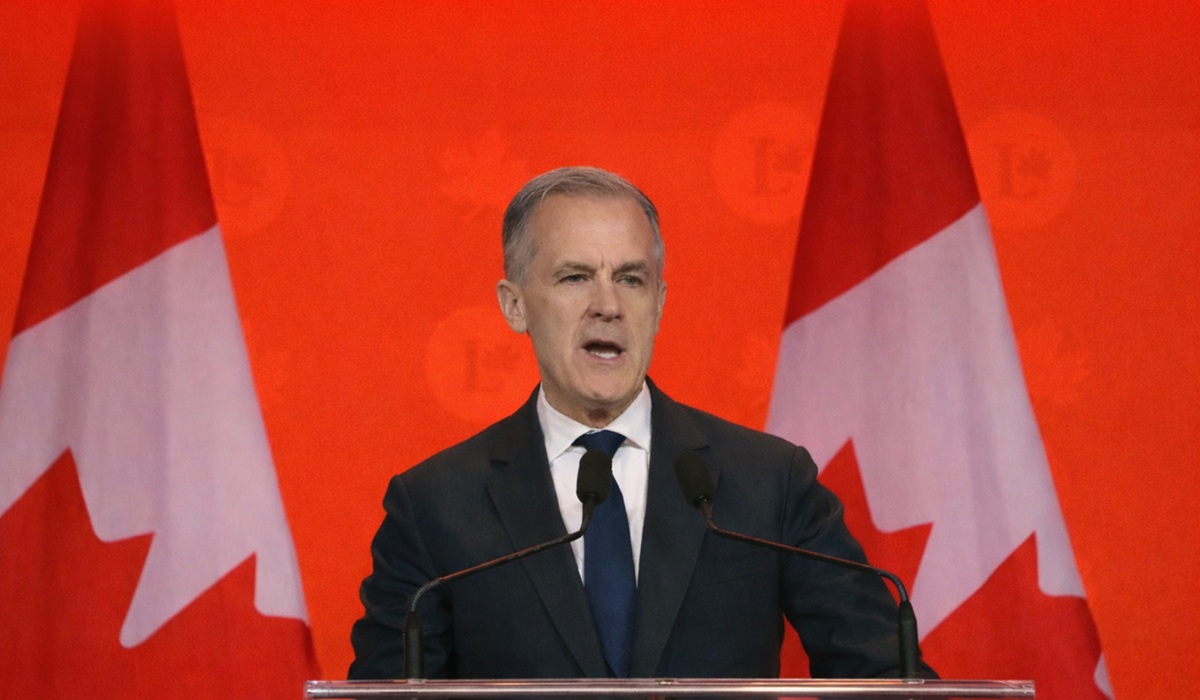
Mark Carney delivered his speech in Montreal on the final day of the Liberal Party’s 2026 national convention, addressing thousands of delegates at a moment that carries real political weight. With several key by-elections approaching that could shift the balance of power, the speech was not just about party messaging. It was about direction, and more importantly, about resetting how Canada approaches its economic and defence priorities.
The tone was noticeably measured. There was no attempt to overinflate the moment or lean into applause lines. Instead, Carney focused on structural issues, and one line in particular stood out for its clarity. He stated that the long-standing model where Canada sends the majority of its defence spending—roughly 70 cents of every dollar—to American military companies is coming to an end. It was delivered plainly, without theatrics, but it carries significant implications.
For decades, Canada’s defence procurement has been closely tied to the United States. That alignment has provided advantages, particularly in terms of compatibility with allied forces and access to advanced systems. At the same time, it has meant that a substantial portion of Canadian defence spending leaves the country, supporting jobs, innovation, and industrial growth elsewhere rather than at home. Carney’s point was not framed as criticism of that relationship, but as an acknowledgment that the balance is no longer sustainable in its current form.
His broader emphasis on building national corridors ties directly into that thinking. While the phrase can be interpreted as infrastructure-focused, the context suggests something more layered. It points to creating domestic supply chains, strengthening industrial capacity, and ensuring that large-scale spending—especially in defence—has a direct and lasting impact within Canada.
That brings into focus the ongoing debate around fighter jet procurement. The F-35 program has long represented the default path, offering advanced capabilities and integration with allied forces. However, it also comes with high long-term costs and limited domestic control, particularly when it comes to software and upgrades. Alternatives like Sweden’s Gripen have been discussed for different reasons, including lower operating costs, simpler maintenance, and the possibility of meaningful domestic production and job creation.
Carney did not outline specific procurement decisions, but the direction he signaled is difficult to separate from that debate. If the objective is to retain more economic value inside the country and reduce reliance on external suppliers, then future decisions will likely prioritize systems that allow for greater domestic involvement and control.
There is also a practical dimension that sits beneath the surface of his remarks. In periods of conflict or heightened global tension, the United States will prioritize its own military needs. Production capacity, spare parts, and technological updates are directed first toward American forces. That is not unusual or unexpected, but it does create a level of vulnerability for countries that depend heavily on those same supply chains. Delays, restrictions, or reprioritization can leave allies waiting at critical moments.
What Carney outlined suggests a recognition of that risk. It is not about stepping away from alliances or diminishing cooperation, but about reducing overexposure. Diversifying procurement and strengthening domestic capability provides a degree of insulation against external pressures, whether they come from geopolitical events or shifts in policy.
The speech also fits into a broader global trend. Countries are increasingly reassessing how much control they have over critical systems, particularly those driven by software and integrated technologies. Ownership and control are becoming just as important as performance. For Canada, that raises questions about long-term autonomy that go beyond individual contracts.
There was nothing particularly dramatic in how the message was delivered, and that may be part of its significance. The speech did not attempt to reframe alliances or introduce sweeping declarations. It simply laid out a shift in approach. Future decisions, particularly in defence, will be measured not only by capability, but by where the money flows, who benefits from it, and how much of that investment strengthens Canada itself.
Whether that shift materializes in policy remains to be seen. Defence procurement in this country has often moved slowly and unpredictably. But the clarity of the message in Montreal suggests that the conversation has moved beyond routine considerations. It is now about balance, control, and the long-term position Canada wants to hold in a changing global environment.
About The Author