Carney Off to Beijing as Canada and China Begin a Long-Overdue Economic Reset
- TDS News
- Breaking News
- January 13, 2026
By: Donovan Martin Sr, Editor in Chief
Mark Carney’s visit to China represents a decisive and constructive step toward restoring a relationship that matters deeply to Canada’s economic future. This is not a symbolic trip, nor a reactive one. It is the continuation of groundwork laid quietly and deliberately by Canadian and Chinese ambassadors, senior foreign affairs officials, and months of behind-the-scenes diplomacy aimed at stabilizing trade and reopening doors that should never have been closed.
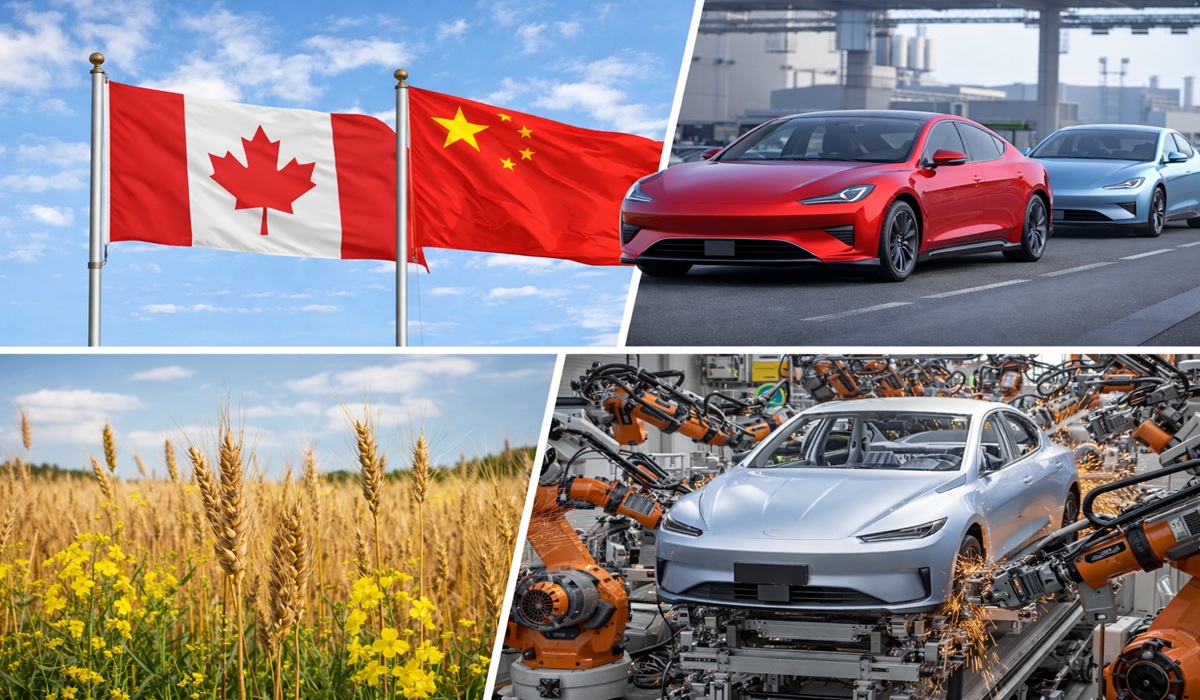
At its core, this visit is about repairing economic damage that Canadians did not create but have been paying for. The sanctions on Canadian canola and electric vehicles were not born out of bilateral hostility between Ottawa and Beijing, but from a broader trade conflict driven by U.S. policy decisions. Trump-era tariffs and pressure campaigns forced allies into positions that hurt their own industries, and Canada was no exception. Farmers, manufacturers, and consumers have absorbed the cost ever since.
For Canada’s auto sector, the timing could not be more important. North American EV prices remain stubbornly high, driven by limited competition and an industrial model that relies heavily on massive public subsidies. At the same time, large parts of the traditional American auto industry have scaled back or exited Canadian operations, leaving gaps in production, employment, and long-term planning. Re-engaging China opens the door to something Canada has never fully had before: real competition in electric vehicles, new manufacturing partners, and the possibility of Chinese EV makers building, assembling, or partnering in Canada.
That matters for workers, for supply chains, and for consumers. Affordable electric vehicles are not a luxury; they are essential if Canada is serious about emissions targets, transportation equity, and cost-of-living relief. Chinese manufacturers have demonstrated they can produce reliable EVs at price points far below what North Americans currently pay. Bringing that competition into Canada strengthens the market rather than threatening it.
Carney’s visit also reflects a broader shift toward pragmatic diplomacy. It acknowledges that Canada can maintain strong alliances while still pursuing its own economic interests. Rebuilding ties with China does not mean abandoning values or partners. It means recognizing that engagement, dialogue, and fair trade are more effective than prolonged stalemates that leave Canadian sectors exposed.
This moment is best understood as a reset, not a concession. It is about reopening channels, lifting retaliatory barriers, restoring agricultural exports, and positioning Canada as a place where global manufacturers want to invest, build, and hire. It is about correcting course after years in which external trade wars spilled over into Canadian livelihoods.
For Canadians facing high vehicle costs, strained farm incomes, and an uncertain industrial future, this trip offers something tangible: the prospect of relief, opportunity, and renewed balance. In that sense, Mark Carney’s visit to China is not just timely—it is necessary, and long overdue.
About The Author