Canada is sitting in the middle of a full-blown human trafficking emergency, and the numbers are now the highest this country has ever seen. You can feel the pressure in every corner of the system, hotlines overwhelmed, shelters overflowing, and law-enforcement agencies quietly admitting they’re drowning in cases they can’t keep up with. This isn’t a slow rise or a mild uptick. This is Canada slamming head-first into a crisis it has been tiptoeing around for years.
Victims are calling for help in record numbers. Frontline workers are waving red flags so high they’re practically creating their own weather systems. And yet, the machinery meant to protect people is still moving with the urgency of a winter sloth. What we’re seeing is the kind of spike that tells you the problem isn’t “growing,” it’s already grown, matured, multiplied, and built a condo tower.
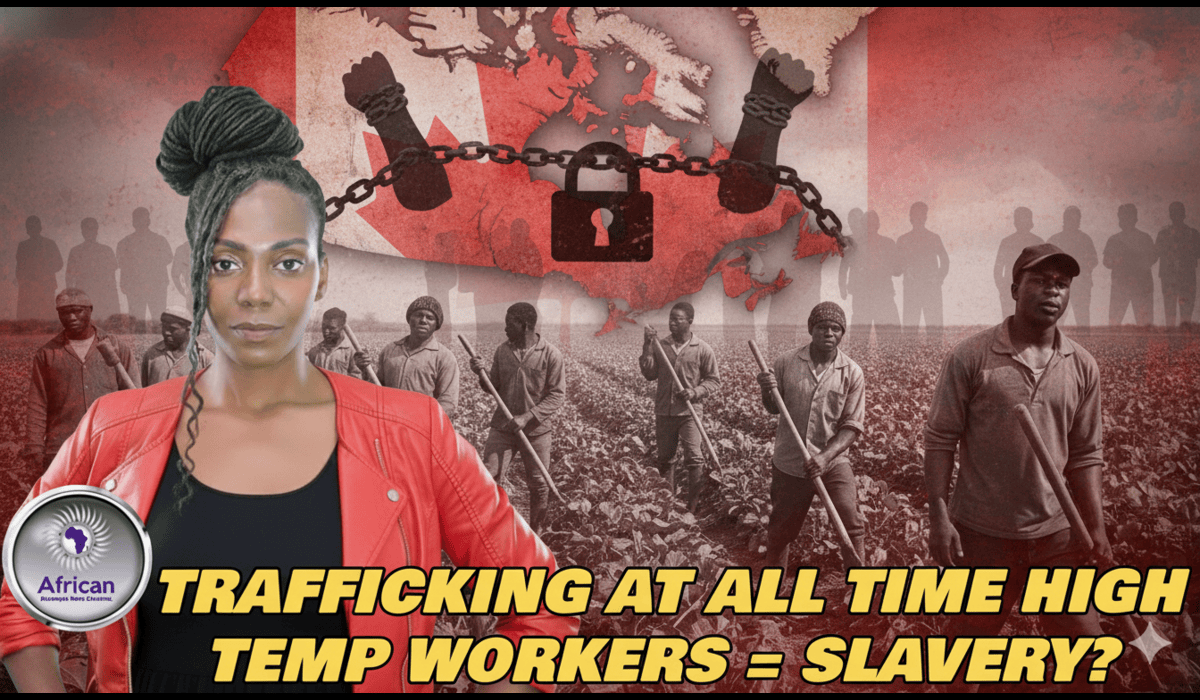
And let’s talk about who’s being targeted. Traffickers don’t choose victims randomly, they choose the vulnerable. Women and girls make up the majority of cases, with minors pulled into dangerous situations through apps, social media, dating platforms, and sometimes right out of schools and malls. Migrant workers, especially those here temporarily, are being funneled into labour exploitation rings that look legitimate until you peel back one layer and realize it’s modern slavery dressed up as employment. Indigenous youth, newcomers, people living in poverty, and those with unstable housing are all targeted with chilling precision. This is a crisis built on preying where protection is weakest.
Traffickers themselves aren’t the stereotypical shadowy figures hiding in alleyways. These are organized, mobile, networked criminals who know exactly how to exploit loopholes, gaps in coordination, and slow responses. They move victims across provinces like cargo. They communicate across borders. Meanwhile, Canada responds with meetings, committees, and the occasional press release announcing funding that never seems to stretch far enough to meet the scale of the damage.
And while authorities love to roll out “awareness campaigns,” awareness alone won’t drag a trafficker into a courtroom. It won’t pull a missing 15-year-old out of a motel. It won’t dismantle a multimillion-dollar network operating right under our noses. Victims are slipping through the cracks of a system built with cracks the size of canyons. Cases go unsolved. Survivors go unsupported. And families are left searching, waiting, praying, hoping.
Make no mistake, this isn’t just a human rights issue. This is a national emergency. If any other crisis hit record highs, fires, floods, pandemics, every level of government would be in panic mode. But when the victims are vulnerable women, racialized youth, migrants, and people with the least political power, the urgency mysteriously disappears. Canada likes to brand itself as safe, progressive, and protective, but right now, that brand is cracking.
If Canada wants to get serious, it needs a plan anchored in real enforcement, survivor-led systems, meaningful protection for migrant workers, and education that reaches kids before a trafficker does. Communities need the tools and funding to intervene early, not after someone is already missing. Police forces need the resources and coordination to chase traffickers across city and provincial lines.
Survivors need stable housing, therapy, legal support, and long-term safety, not short-term patches.
People are being taken, used, exploited, and discarded in a country that claims to value human dignity. Traffickers are getting bolder. Victims are getting younger. Systems are falling behind. And the numbers keep climbing.
Watch the livestream here:
https://www.youtube.com/live/IqLUzmlZJWs?si=l1sw9Oy8MpHK8DTz
About The Author