Canada Unveils New Automotive Strategy Focused on EVs, Trade, and Manufacturing Jobs
- Naomi Dela Cruz
- Canada
- February 5, 2026
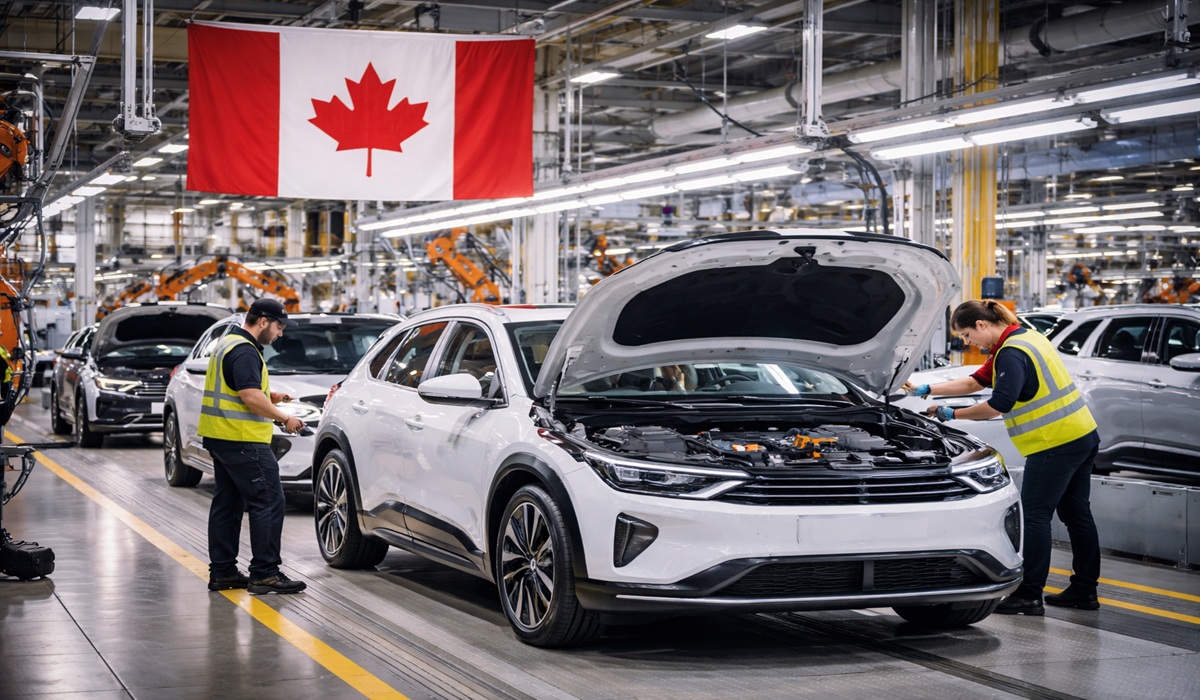
The federal government unveiled a new automotive strategy on February 5, 2026, outlining how it plans to protect existing manufacturing jobs while accelerating the shift toward electric and connected vehicles. The announcement was made in Vaughan, Ontario, with officials framing the plan as a long term response to rapid changes in global vehicle production, supply chains, and trade pressures.
The automotive sector remains a major pillar of the manufacturing economy, supporting roughly half a million jobs across assembly plants, parts suppliers, logistics firms, and research operations. Government officials said the strategy is designed to ensure those jobs are retained while positioning manufacturers to compete in an industry increasingly shaped by electrification, automation, and advanced software systems.
A central focus of the plan is building out the full electric vehicle production chain, from critical mineral extraction and battery manufacturing to final vehicle assembly. Officials emphasized the importance of clean and reliable electricity to support this transition, noting that commitments made through Budget 2025 and the Major Projects Office will underpin a forthcoming national electricity strategy developed in coordination with provinces and territories.
The strategy also highlights continued investment in critical minerals needed for battery production, including mining, processing, and commercialization. These efforts are intended to reduce reliance on foreign supply chains while supporting domestic battery manufacturing. Artificial intelligence and robotics are identified as core enablers of next generation vehicle production, with the government pointing to more than $2 billion already invested in AI talent, computing infrastructure, and research. Further commercialization efforts are expected to support autonomous and connected vehicle technologies.
To attract and retain automotive investment, the government confirmed it will deploy up to $3 billion from the Strategic Response Fund and up to $100 million from the Regional Tariff Response Initiative. These funds are intended to support vehicle assembly, parts production, and advanced manufacturing upgrades. Officials said these investments will be aligned with Buy Canadian policies to maximize opportunities for domestic suppliers, including steel and aluminum producers.
Tax measures remain a key part of the strategy. Automotive manufacturers will continue to benefit from accelerated capital cost write offs through the Productivity Super Deduction, along with investment tax credits for clean technology and electric vehicle manufacturing. The government said these measures give domestic manufacturers one of the most competitive investment environments among major industrial economies.
On emissions policy, the government announced it will repeal the Electric Vehicle Availability Standard and replace it with a technology neutral framework focused on outcomes rather than mandates. Greenhouse gas standards for light duty vehicles will become significantly more stringent by 2035, with the stated objective of reaching a 75 percent electric vehicle adoption rate and an aspirational target of 90 percent by 2040. New standards covering model years 2027 through 2032 will require increasing numbers of zero emission vehicles over time while allowing flexibility in the early years.
To stimulate consumer demand, a new five year electric vehicle affordability program will begin on February 16, 2026. The program will offer incentives of up to $5,000 for battery electric and fuel cell vehicles and up to $2,500 for plug in hybrids. Incentives will apply to vehicles with a final transaction value of up to $50,000, though the cap will not apply to electric vehicles manufactured domestically. Eligible vehicles must be built locally or imported from countries with free trade agreements. The program is projected to support more than 840,000 vehicle purchases.
Charging infrastructure was identified as another barrier to adoption. Over the past decade, federal support has contributed to nearly 60,000 public and private charging stations. A new national charging infrastructure strategy will be introduced, backed by a $1.5 billion envelope through the Canada Infrastructure Bank. The strategy will focus on attracting private investment, making buildings charging ready, and expanding workforce training.
Trade policy forms another pillar of the strategy. The government will launch consultations on reforming the automotive duty remission framework to better align it with domestic production and investment goals. Proposed changes include a tradeable import credit system that would allow manufacturers to earn credits through production and investment, which could then be sold to companies seeking to import vehicles. Officials said the framework may also account for domestic content, unionized employment, and electrified vehicle production.
The government confirmed it will maintain counter tariffs on vehicles imported from the United States that do not comply with Canada United States Mexico Agreement requirements. These include a 25 percent tariff on non compliant assembled vehicles and on non Canadian and non Mexican content within compliant vehicles. Trade with Mexico will remain tariff free. Officials said the tariffs will stay in place until U.S. automotive tariffs are removed.
Workforce protections were also outlined. A new workforce alliance on advanced manufacturing will bring together industry, labour, and training institutions to address skills gaps. Expanded access to the Work Sharing Program and updated employment insurance flexibilities are expected to support workers affected by tariffs and industry restructuring. Additional funding has also been committed to provincial and territorial labour agreements to support retraining and upskilling.
An automotive task force announced in January will coordinate federal and Ontario government efforts on investment, electrification, workforce protection, and trade issues, including preparation for the upcoming CUSMA review.
International partnerships were also addressed. Recent agreements with South Korea aim to strengthen industrial collaboration on future mobility, while a new strategic partnership with China is intended to encourage joint venture investment and allow a fixed volume of electric vehicle imports into the domestic market.
Officials said the strategy is intended to stabilize the automotive sector in the short term while preparing manufacturers and workers for a global industry increasingly defined by electric powertrains, connected systems, and shifting trade relationships.
About The Author