Black Monday Arrives as the Playoffs Begin and the NFL Coaching Carousel Spins
- Kingston Bailey
- Sports
- January 6, 2026
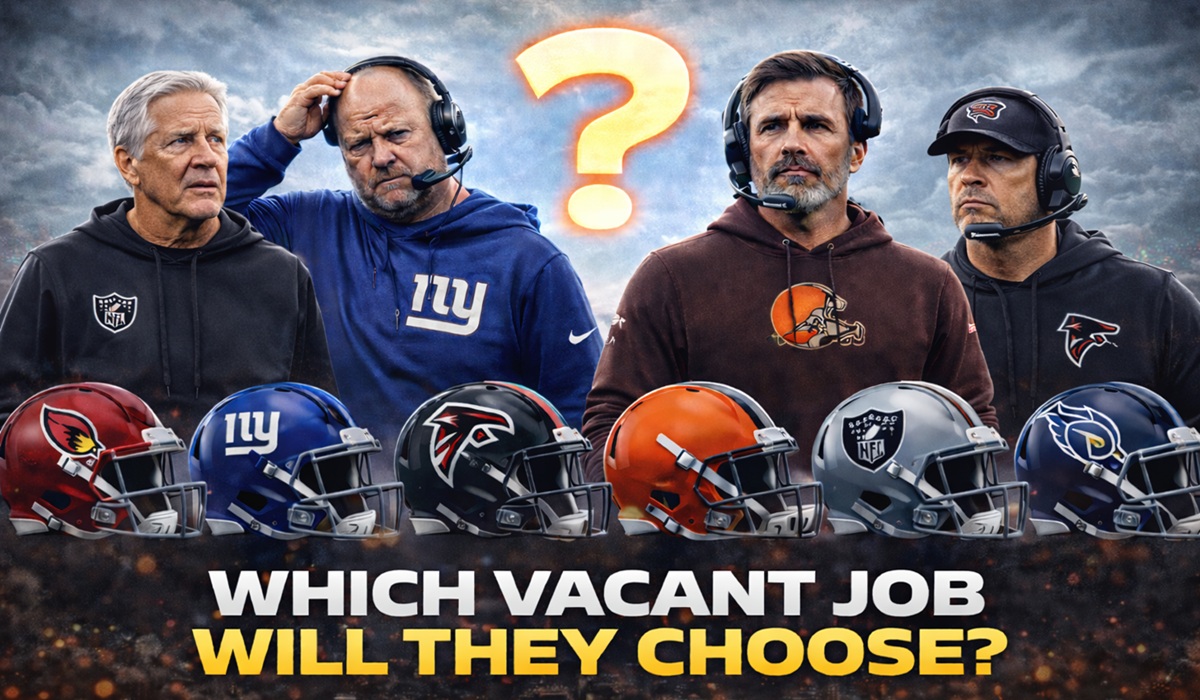
As the NFL postseason gets underway, the league’s annual moment of reckoning has arrived. For teams still playing, January is about preparation, discipline, and execution. For everyone else, it is about accountability. The end of the regular season has once again triggered sweeping changes across the league, as franchises that failed to meet expectations chose to reset rather than stand pat.
This year’s coaching cycle reflects a league with little patience for stagnation. Competitive is no longer enough. Ownership groups want direction, identity, and measurable progress. When those elements are missing, pink slips follow.
Several head coaches did not survive the season.
In Cleveland, the Browns parted ways with Kevin Stefanski, a move that says as much about the organization as it does about the coach. The Browns remain in a state of disarray, with dysfunction embedded throughout the franchise. The coaching change is only the most visible symptom of deeper issues.
Cleveland once again mishandled its quarterback planning, most notably failing to properly position itself around Shadour Sanders, a misstep that reinforced long-standing concerns about the team’s strategic competence. While the Browns do have a legitimate franchise quarterback in Brown, that advantage is being undermined by a front office that continues to struggle with evaluation, roster construction, and alignment.
The general manager’s performance has come under increasing scrutiny, and the broader management structure has drawn criticism league-wide. More damaging than any single decision is the Browns’ entrenched culture of losing. Frequent coaching changes, shifting priorities, and reactive leadership have made sustained success elusive. Until ownership addresses the organizational foundation, Cleveland risks repeating the same cycle that has defined the franchise for decades. The Browns’ coaching vacancy is attractive on paper, but any candidate will understand that winning there requires more than X’s and O’s.
In Arizona, the Cardinals dismissed Jonathan Gannon after another difficult season marked by defensive breakdowns and a lack of competitiveness in the NFC West. Injuries and roster turnover played a role, but the absence of visible progress ultimately sealed his fate.
The Atlanta Falcons also reset, moving on from Raheem Morris after consecutive seasons stuck in neutral. Atlanta was competitive but never threatening, and ownership opted to seek a new direction rather than settle for incremental improvement.
In Las Vegas, the Raiders ended Pete Carroll’s short-lived return to the NFL sideline after a single disastrous season. The results were poor, the roster lacked cohesion, and the organization chose to accelerate a rebuild. With a premium draft position and high visibility, the Raiders immediately became one of the most discussed openings in the league.
Other changes happened earlier but feed directly into the current carousel. The Tennessee Titans dismissed Brian Callahan after a poor start that revealed a mismatch between scheme and personnel. In New York, the Giants moved on from Brian Daboll midseason as offensive regression erased the goodwill from an earlier playoff appearance.
The shake-up extended well beyond head coaches.
Several teams cleared out their coordinator ranks, particularly on defense, where breakdowns, discipline issues, and late-game collapses proved costly. Offensive coordinators were also shown the door in multiple cities as teams failed to develop quarterbacks or modernize their schemes. Special teams units were not spared either, reflecting how thoroughly franchises now evaluate performance.
As a result, the market is crowded with experienced head coaches seeking second chances, coordinators rising from playoff teams, and executives weighing whether to prioritize innovation or familiarity.
Among all openings, Cleveland and Las Vegas stand out as the most polarizing. Cleveland offers talent but comes with organizational baggage. Las Vegas offers a clean slate and draft leverage but demands immediate credibility. Atlanta and Arizona are viewed as longer-term projects, while New York and Tennessee are searching for stability more than splash.
Around the league, speculation is already building. Coordinators from playoff teams are drawing interest. Former head coaches with winning resumes are being reconsidered. Front offices are balancing patience against pressure, knowing that the margin for error grows thinner every season.
The larger trend is unmistakable. The NFL has entered an era where ownership expects momentum, clarity, and adaptability. When those elements disappear, change is swift.
As the playoffs unfold, the contrast could not be sharper. Stability fuels contenders. Chaos defines the rest. And for the teams already turning the page, the next few weeks will determine whether this round of changes finally breaks old habits—or simply resets the clock once again.
About The Author