Black History 365 Honors Mary Ann Camberton Shadd Cary
- TDS News
- Trending News
- Black History 365
- February 3, 2026
By: Donovan Martin Sr, Editor in Chief
The fearless Black Canadian publisher who changed history with a pen, a press, and a purpose.
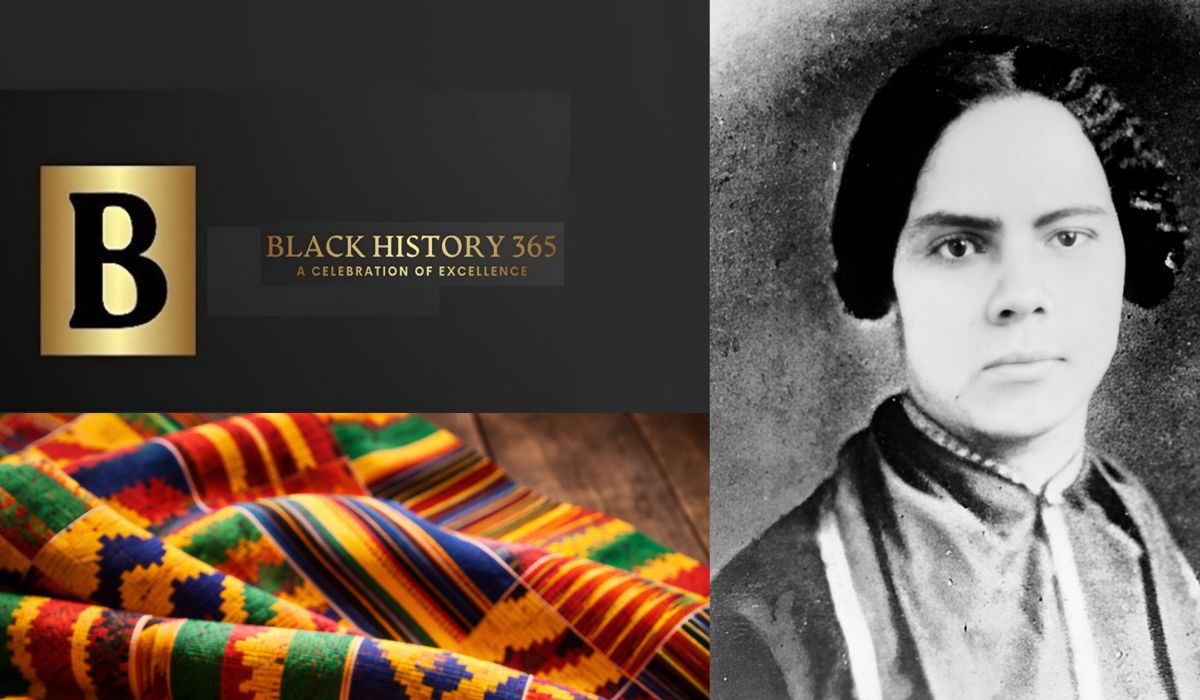
Some people become famous because the world decides to spotlight them. Others become historic because they refuse to wait for permission. Mary Ann Camberton Shadd Cary belongs in the second category. Even today, her story feels almost unbelievable, not because it is exaggerated, but because so few people were ever taught what she accomplished and how far ahead of her time she truly was.
She lived in an era where racism was law, where women were expected to stay silent, and where Black people were routinely punished simply for demanding basic dignity. Yet she did not shrink under that pressure. She leaned into it, challenged it, and helped build something that outlived the moment. That is why Black History 365 is honoring her. Because her work was not symbolic. It was practical, dangerous, and powerful.
Born in 1823 in Wilmington, Delaware, she was raised in a family that understood what freedom meant and what it cost. Her family home was connected to abolitionist efforts and the Underground Railroad, and that environment shaped the direction of her life long before she ever stepped into public view.
After the Fugitive Slave Act made life even more dangerous for Black people in the United States, she relocated to Canada in the early 1850s. Canada was not a paradise, but it was a place where enslaved people could become free people, and where communities could be built with less fear of being hunted down and dragged back into bondage.
Once in Canada West, she didn’t just “settle in.” She got to work. She opened a racially integrated school in Windsor, Ontario, because education was never a side issue to her. It was central. Literacy, learning, and self-development were not luxuries. They were survival tools, and she treated them that way.
Then came the move that secured her place in history. In 1853, she founded The Provincial Freeman, an anti-slavery newspaper published weekly in Ontario. Its mission was clear and direct, with a motto that left no confusion about purpose: “Devoted to antislavery, temperance and general literature.”
That newspaper was not just a publication. It was a weapon against silence. It gave voice to Black Canadians, challenged injustice, and pushed a message that many people found uncomfortable, even among those who claimed they supported freedom. She argued for self-reliance, progress through education, and building strong, capable communities that would not remain stuck in dependency.
What makes this even more remarkable is the fact that she broke barriers in multiple directions at once. She is recognized as the first Black woman publisher in North America, and also the first woman publisher in Canada. That is not a minor achievement. That is a historic first that should be common knowledge in Canadian classrooms.
And she didn’t build The Provincial Freeman alone. Her brother, Isaac Shadd, helped manage the business side of the paper, and she worked strategically in an environment where being a woman in leadership could cost the project credibility in the eyes of the public. At one stage, prominent abolitionist figures were listed on the masthead while she handled much of the real work behind the scenes. The reality is, she understood the world she was fighting, and she was smart enough to outmaneuver it.
The Provincial Freeman was printed in different Ontario cities over time, including Windsor, Toronto, and Chatham. This wasn’t a small, one-week project. It was sustained work, spread across communities, with influence reaching beyond Canada.
But her story doesn’t end with the newspaper, because her ambition wasn’t limited to journalism. Later in life, she became a lawyer as well, further proving what her entire life already demonstrated. She was not here to fit in. She was here to break through.
In Canada, she is officially recognized as a person of national historic significance, and even now her name still doesn’t ring out the way it should. That gap matters, because forgetting pioneers like this distorts what Black Canadian history really looks like. It makes it seem like Black Canadians were only present as victims of discrimination, when the truth is they were also builders, strategists, educators, organizers, and creators of institutions that shaped the country.
What makes her legacy stand out is not just that she accomplished great things. It’s that she did it while the world around her was structured to discourage ambition. She pushed education. She pushed independence. She pushed the idea that freedom must be defended with action and discipline, not just celebrated in speeches.
Black History 365 honors Mary Ann Camberton Shadd Cary because she represents a type of greatness that doesn’t always come with crowds and applause. Sometimes it comes through relentless work, sharp thinking, and the courage to publish truth when truth is dangerous. Her life was proof that history is not only made by presidents and generals. Sometimes it is made by a Black woman with a printing press who refuses to back down.
About The Author