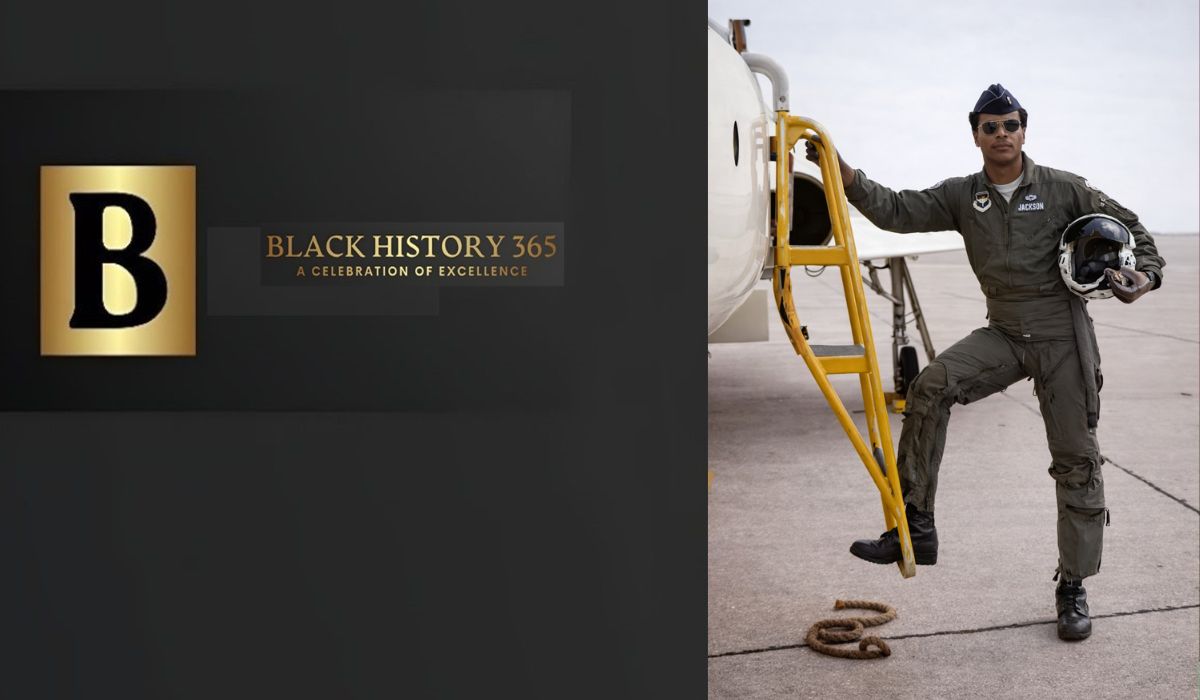
Black History 365 Honors Captain Larry “Jet” Jackson
- TDS News
- Black History 365
- Trending News
- February 1, 2026
By: Donovan Martin Sr, Editor in Chief
Excellence in the air, impact on the ground, and a legacy that endures
Black History Month is a time to look forward as much as it is a time to reflect. It is about momentum, belief, and the people who quietly expand what feels possible for everyone coming after them. Captain “Jet” Jackson’s life is one of those stories. Not loud. Not theatrical. Just steady excellence, lived with intention.
The nickname “Jet” came long before aviation. It started on the track, running the 100 and 400 metres and the 4×100 relay, often running the third leg. Speed mattered, but discipline mattered more. That balance carried naturally into flight training. At just 22 years old, fresh out of college in 1973, he entered military aviation alongside five other Black pilots. All six completed the program. In an era when the washout rate for Black candidates was staggering, that outcome mattered. It wasn’t luck. It was preparation, focus, and refusing to lower standards.
The first overseas assignment after graduation took him to Okinawa, Japan, in December 1975, just after the Vietnam War had ended. Flying the F-4 Phantom meant carrying real responsibility. This was an aircraft designed to deliver massive conventional weapons and tactical nuclear bombs. Studying how to arm them and understanding their destructive capacity was part of the job. Around that time, a Stevie Wonder lyric stuck with him, a line about men playing with bombs the way children play with toys. It wasn’t poetic. It was grounding. It reinforced the seriousness of the work.
After Okinawa came three years in the Philippines. Across those squadrons, he was the only Black pilot. He walked in like everyone else, did the work, and stayed focused. Some people were welcoming. Others were distant. None of that changed the approach. Assignment, performance, promotion, repeat. That consistency led to leadership roles as a flight leader and weapons and tactics instructor pilot in the F-5 and F-15 aircraft, and eventually to the rank of Lieutenant Colonel.
Loss was also part of the journey. In March 1987, a close friend, Gene Jackson, died in an aircraft crash caused by maintenance failures. He had been scheduled for that flight. That moment never left him. It reinforced a belief that preparation, discipline, and attention to detail are not abstract values. They save lives.
The transition to commercial aviation reset the learning curve. Training at Southwest Airlines was intense and unforgiving. Five weeks. No shortcuts. With a young daughter at home, failure was not an option. Commercial flying was never taken lightly. Carrying more than a hundred passengers meant carrying responsibility for families, children, seniors, and people needing assistance. It demanded professionalism every single day.
There were moments that defined that responsibility. A passenger suffering a heart attack at altitude over New Mexico, saved because of a rapid emergency landing in Amarillo. A flight attendant whose life was spared after a medical emergency shortly after departure from Los Angeles. A bird strike near Portland that took out an engine, handled calmly and by the book. These moments reinforced a simple truth: respect the aircraft, respect the weather, respect the role.
Beyond flying, the mission widened. In 1999, involvement with the ACES program began, aimed at introducing youths to aviation. That work expanded through the Organization of Black Airline Pilots, including helping establish a chapter in Phoenix. Speaking in schools across the city revealed a striking divide. In one predominantly minority school, hundreds of students were asked if they believed they could become pilots. Not one hand went up. In a more affluent school, more than half the class raised theirs. The difference wasn’t talent. It was exposure.
Growing up in Chicago, one of the earliest influences was an instructor named Coffey, among the first Black flight teachers in the country and a mentor to many of the Tuskegee Airmen. That lineage mattered. It connected generations and reinforced that excellence had always been present, even when opportunity lagged behind.
A defining chapter of this work unfolded through the Chapman Family Foundation. Meeting Don Chapman and his mother left a lasting impression. His mother was the kind of person who didn’t wait for permission or perfect conditions. She saw what needed to be done and did it. Don carried that same spirit, and the support of his wife and children became a pivotal part of what made the foundation’s contributions so meaningful and so lasting.
The results are visible. Captain Aaron Grisson, a 2007 graduate of the Phoenix ACE Academy, now flies for United Airlines. Alex Traverse took the military route through ROTC, flew the F-16, and is now an F-35 instructor pilot. Several Métis and First Nations students from Canada also came through the program. One became a certified flight instructor in Vancouver and has now set their sights on a new goal altogether, planning to enter the medical field and pursue a future as a doctor. These aren’t coincidences. They are outcomes.
Captain Jackson’s message to young people has always been simple and steady: “chase what lights you up, don’t let anyone else put a ceiling on your future, and stay ready—because when the door finally opens, that’s when it counts most.”
One moment captures the heart of it all. In 2003, on a flight from Indianapolis to Denver, a flight attendant brought a four-year-old boy into the cockpit. His name was Bryan Jackson, no relation. Traveling with his grandmother, he said he wanted to become a pilot so he could earn enough money to get his mother and little sister out of a homeless shelter. That moment stayed with everyone in that cockpit. It was a reminder of why access, visibility, and belief matter.
As we kick off Black History Month, we salute Captain “Jet” Jackson. Not just for the aircraft flown or the ranks earned, but for the lives lifted, the doors opened, and the steady example of what excellence looks like when it’s paired with purpose.
About The Author