Billions in Venezuelan Oil To Be Placed in an Offshore Account Controlled Only by Trump
- TDS News
- U.S.A
- January 10, 2026
By: Donovan Martin Sr, Editor in Chief
What should have landed like a constitutional alarm bell instead passed through the news cycle with barely a ripple.
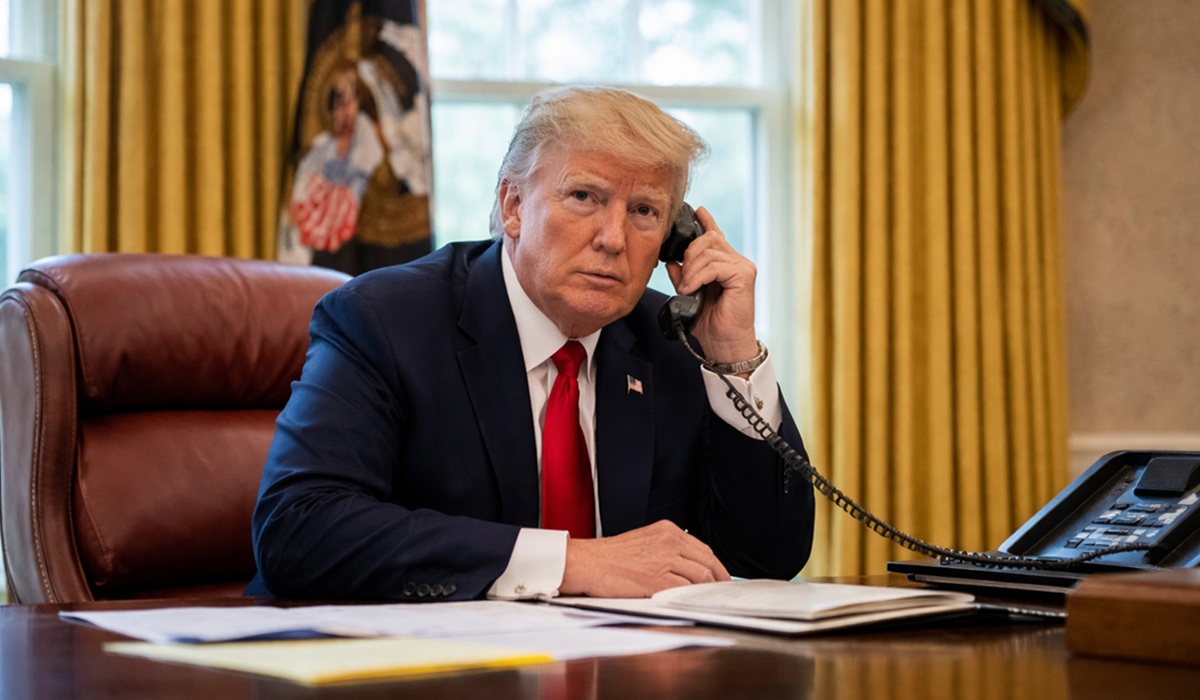
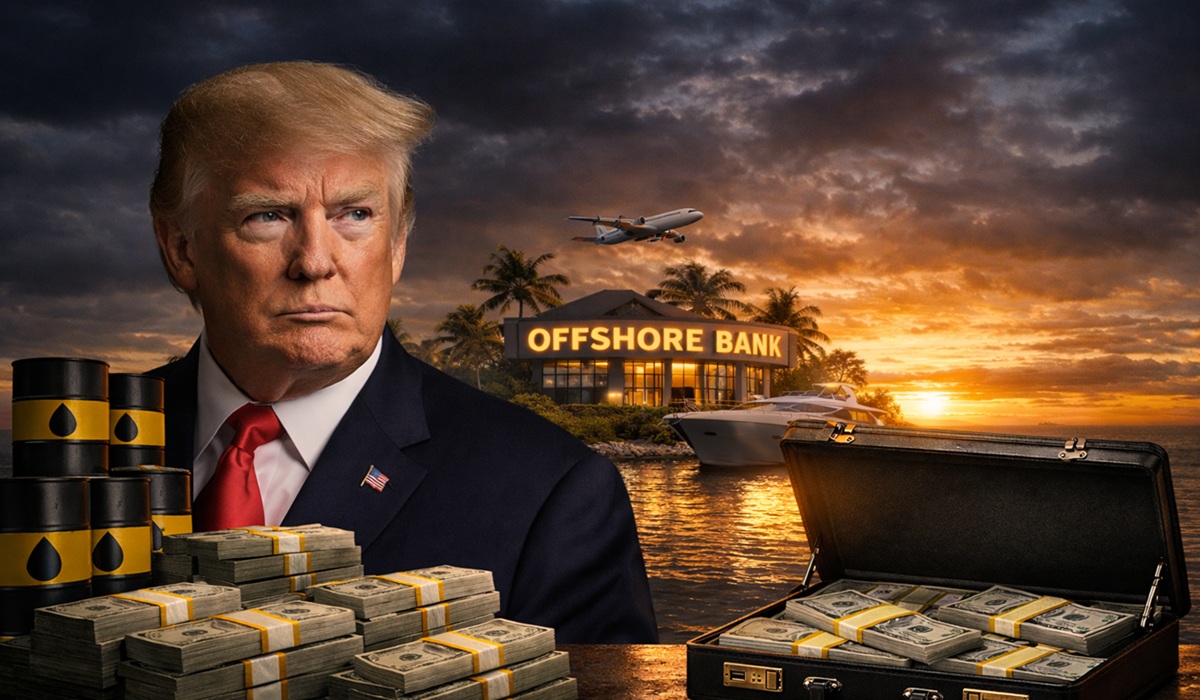
Speaking from the White House just days ago, U.S. President Donald Trump suggested that proceeds from the sale of seized Venezuelan oil would not be deposited into the U.S. Treasury, nor held in any transparent government account subject to congressional oversight. Instead, the money would be placed into offshore accounts, controlled directly and exclusively by the president himself. The sums involved are not minor. They run into the billions. And yet the reaction, domestically and internationally, has been strangely muted.
That silence is the story.
At face value, the proposal defies nearly every modern norm of democratic governance, public finance, and separation of powers. The United States has a long-standing constitutional framework governing seized assets, sanctions enforcement, and the handling of foreign proceeds. Funds derived from seizures are typically routed through the Treasury, managed under statute, audited, and subject to congressional authority. Even in extraordinary circumstances—wartime seizures, sanctions regimes, frozen foreign assets—the principle remains the same: the executive does not personally control the money.
What makes Trump’s remarks so jarring is not just their brazenness, but how casually they were delivered, as though this were a routine administrative detail rather than a radical departure from constitutional practice. An offshore account, by design, exists outside domestic oversight mechanisms. It is opaque by intention. When paired with sole personal control by a sitting president, it raises questions that would be unavoidable in any other country and devastating in any other administration.
This is not about Venezuela alone. It is about the precedent being asserted.
If proceeds from seized foreign resources can be placed into offshore accounts outside the Treasury, controlled by one individual, then the line between state power and personal authority effectively dissolves. The money no longer belongs to the public. It does not belong to Congress. It does not even clearly belong to the executive branch as an institution. It belongs to the president, personally, for however long he remains in office.
That timeline matters. Trump is expected to leave office in less than two years. What happens to an offshore account he alone controls when that term ends? Does the account dissolve? Does control transfer automatically? Under what legal authority? Who audits it? Who ensures the funds are neither redirected, leveraged, pledged, nor quietly moved?
No clear answers have been offered, because under normal governance structures, such an arrangement would never exist to begin with.
Supporters might argue this is a tactical maneuver, a way to prevent funds from being tied up by bureaucracy, litigation, or political opposition. But even that defense collapses under scrutiny. The United States has mechanisms for escrow, trust arrangements, court-supervised accounts, and internationally monitored funds. None of those require secrecy, offshore placement, or personal presidential control. Speed and legality are not mutually exclusive. Transparency is not an obstacle to effectiveness. In fact, it is usually what legitimizes it.
The deeper concern is normalization. In other countries, the act of seizing resources and placing the proceeds into offshore accounts controlled by a single leader would be described plainly as kleptocratic behavior. International watchdogs would issue reports. Sanctions would be discussed. Editorials would invoke corruption, authoritarian drift, and state capture. The United States has historically been the country writing those reports, not starring in them.
And yet here, the response has been fragmented. A few legal scholars have raised alarms. Some commentators have questioned the mechanics. But the gravity of the issue has not penetrated public consciousness in proportion to what is being suggested.
Part of the reason may be fatigue. Trump’s presidency has produced a constant stream of norm-breaking statements and actions, many of them so extreme that the extraordinary begins to feel routine. Another reason may be ambiguity. The remarks were framed loosely, leaving room for later clarification or retreat. But ambiguity does not neutralize intent. When a president publicly asserts personal control over billions in offshore funds derived from seized foreign assets, the burden shifts to the administration to explain, in detail, how such a scheme could possibly comply with the law.
So far, that explanation has not come.
What makes this moment particularly unsettling is that it sits at the intersection of power, money, and impermanence. A president nearing the end of his term asserting exclusive control over offshore billions is not a hypothetical risk. It is a governance stress test. It forces the country to confront whether its institutions are strong enough to push back, or whether they have become so accustomed to shock that they no longer react at all.
If any other official—cabinet member, governor, agency head—proposed diverting seized funds into an offshore account they personally controlled, the response would be swift and unforgiving. Investigations would begin immediately. Criminal statutes would be examined. Careers would end. That standard cannot evaporate simply because the person involved occupies the Oval Office.
This is why the issue matters, regardless of one’s views on Venezuela, sanctions, or Trump himself. Democracies do not collapse only through coups or violence. They erode when lines blur, when accountability weakens, and when the public becomes conditioned to accept what once would have been unthinkable.
An offshore account controlled solely by the president is not a technical footnote. It is a flashing warning light. And the most troubling question may not be how such a proposal could be made—but why so few seem willing to stop and ask, loudly and insistently, how it could ever be allowed.
About The Author