Spain is the latest country to take part in the growing “It’s about time!” international effort to protect children from the myriad harmful effects of social media. Speaking at the World Governments Summit 2026 on Tuesday, February 3rd, Spain’s Prime Minister, Pedro Sánchez, declared that social media has become a “failed state.” Sánchez then announced plans to ban under-16s from accessing social media, which’ll require platforms to implement effective age-verification systems. Spain joins Australia, France, Portugal, Denmark and the United Kingdom—Greece is expected to follow—in considering platforms co-responsible entities for their users’ well-being, rather than mere intermediaries. Such a ban calls for social media platforms to establish “effective age-verification systems.”
Although I hold a strong belief in freedom of speech, it’s impossible to ignore that social media has deteriorated into a breeding ground for hate speech, spreading misinformation like wildfire, and cyberbullying—issues that artificial intelligence is amplifying. Digital governance, especially for young people in their formative years, is long overdue.
Human DNA renders us ill-prepared for anything that requires moderation.
The human race was unprepared for the seismic social shift ushered in by the Internet and social media. Instant mass communication from a handheld device has made everyone a broadcaster, fueling egos and self-serving interests. It’s no wonder that social media has become the primary platform for those eager to influence how others view them.
People born between 1965 and 1980 were the last generation to grow up without the influence of the Internet or social media. As a Gen Xer, I can speak firsthand about what life was like before digital platforms:
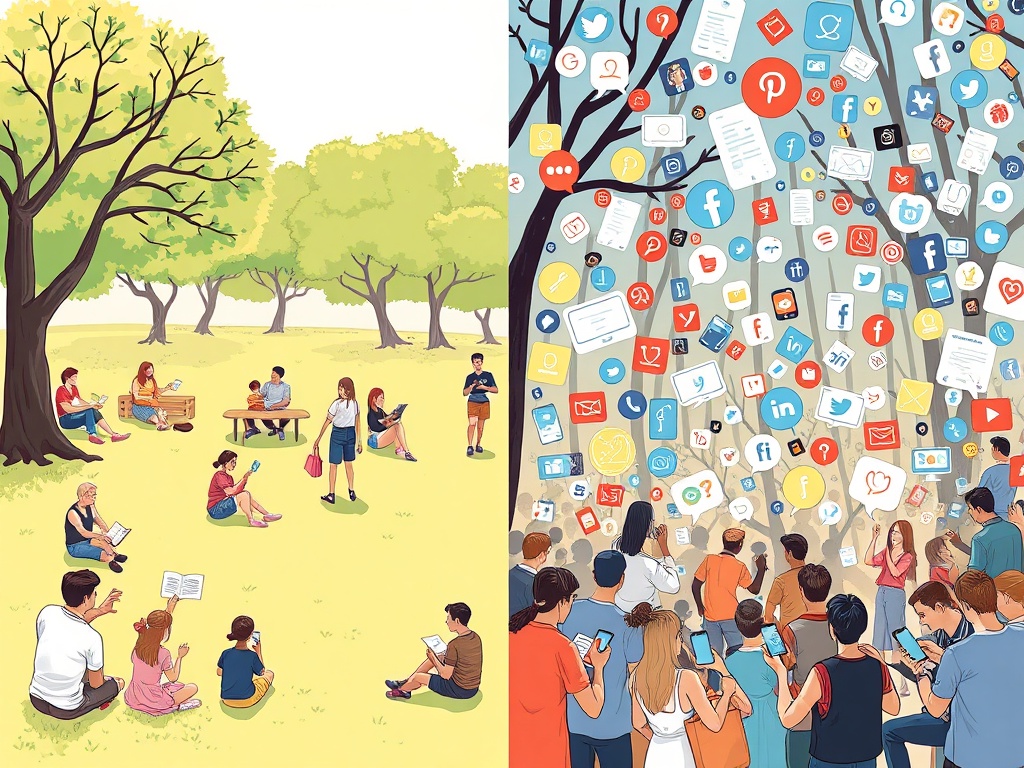
- We caught up with family and friends face-to-face.
- We read, played, and did sports.
- We spent more time outside in the fresh air.
- We made phone calls using a landline, which most Gen Zers have never experienced.
- We drove without being distracted or tempted by a smartphone.
- We didn’t see our friends on Instagram hanging out with other people.
- We were more involved in our community.
- We relied on TV, newspapers, and magazines for product information and advice rather than “influencers.”
- We had to turn on the 6 or 10 o’clock evening news or read a newspaper to know what was going on. We watched, listened, and discussed, then went about our day.
- We had fewer “connections,” but much stronger social relationships in real life.
- We didn’t feel like our hair, makeup, weight, home, or job had to be Instagram-worthy, or that we weren’t good enough. We were real, which was liberating.
- We were happier, less lonely, had fewer anxiety-related mental disorders, and compared ourselves less to others. We lived more in the moment.
Fast-forward to today, and what a different world we live in, mostly by our own doing, given how most of us have freely (keyword) chosen to use the Internet and social media the way we do, which, sadly, is to weaponize it, either intentionally or unintentionally, against each other. Online, we’re constantly reminded of what we don’t have, where we haven’t been, and what we haven’t accomplished. Our feeds are saturated with displays of seemingly perfect lives, created and posted to boost the poster’s self-esteem. The result? Many people, regardless of age, feel inadequate and as if they’re perpetually falling short.
Governments regulate food. Governments regulate cars. Governments regulate medicines. Governments regulate vices (tobacco, alcohol, gambling). Yet governments are allowing digital platforms to expose children and society to unchecked harm. This “oversight” seems to be slowly coming to an end.
Before social media, I thought I was kicking ass. Now, with a mere glance at my phone, I’m confronted with an endless parade of questions: “Are you killing it today?” “Are you living your best life?“ As someone who spends more time online than is likely advisable, I’ve learned to approach social media with skepticism. As I scroll through my feeds, I keep reminding myself that what I see is largely curated and not an accurate portrayal of real life. However, many people struggle to discern this, especially younger people who are in the midst of figuring out who they are.
No doubt, there will be armchair critics who’ll say that, for many teenagers, social media is where they first encounter news, public debate, and civic life. Then, they’ll add, in an attempt to trigger the “We must defend democracy at all costs!“ sentiment we’re supposed to have, that cutting anyone off from social media risks undermining democracy.
The issue isn’t young users. It’s platform design, weak governance, and a lack of meaningful accountability. If adults are spending vast amounts of time on social media, at the expense of neglecting their real-world and relationships, being influenced by strangers to the point of questioning their normalcy, what makes anyone think a 14-year-old who’s yet to develop the cognitive capacity to ask, ‘Is this true?’ “Why am I being shown this?’ ‘What verified facts support this?’ about what they see on social media isn’t being adversely affected by content that many adults aren’t mentally competent to handle? Sánchez may want to consider restricting access to social media to those over 30.
About The Author