America at the Crossroads: When a Republic Starts to Look Like an Empire
- TDS News
- Breaking News
- January 11, 2026
By: Donovan Martin Sr, Editor in Chief
There is a moment in the life of every great power when confidence quietly gives way to overreach. It is not announced. It does not arrive with trumpets or declarations. It reveals itself through patterns: the expansion of authority, the normalization of exceptional powers, the belief that rules exist for others but no longer apply at the center. In recent months, even voices long associated with conservative nationalism have begun to articulate that something fundamental is shifting. Tucker Carlson, one of the most recognizable conservative political commentators in the United States, has openly questioned whether the country is behaving less like a constitutional republic and more like an empire. That observation, coming from within the ideological tent, is not insignificant. It suggests unease not with a single policy or president, but with trajectory.
Empires are not defined simply by size or military strength. They are defined by concentration of power, by permanent war footing, by economic extraction, by a belief in historical destiny, and by the erosion of internal restraints in the name of external dominance. Rome did not fall because it lacked armies. Britain did not retreat because it lacked ships. The Soviet Union did not dissolve because it lacked ideology. Each collapsed under the weight of contradictions created by imperial behavior itself.
The Roman Empire expanded until governance became more about control than consent. Emergency powers became routine. Loyalty to institutions was replaced by loyalty to individuals. Military success abroad masked decay at home. When the costs of maintaining dominance exceeded the cohesion of the society paying for it, the structure hollowed out. Rome did not fall in a single year; it thinned, fractured, and eventually ceased to function as a unified whole.
The British Empire followed a different arc but ended in a familiar place. It justified global control through trade, order, and civilizational mission. Over time, imperial commitments outpaced domestic tolerance. Wars drained the treasury. Colonies demanded autonomy. The empire’s legitimacy eroded not because Britain lost its culture or intelligence, but because it could no longer reconcile imperial ambition with democratic accountability at home.
The Soviet Union offers a modern cautionary tale. It centralized authority, suppressed dissent, and projected power far beyond its economic base. Official narratives insisted on strength while living standards stagnated. When legitimacy cracked, it cracked everywhere at once. Empires, once they lose internal trust, tend to fall inward rather than being conquered from without.
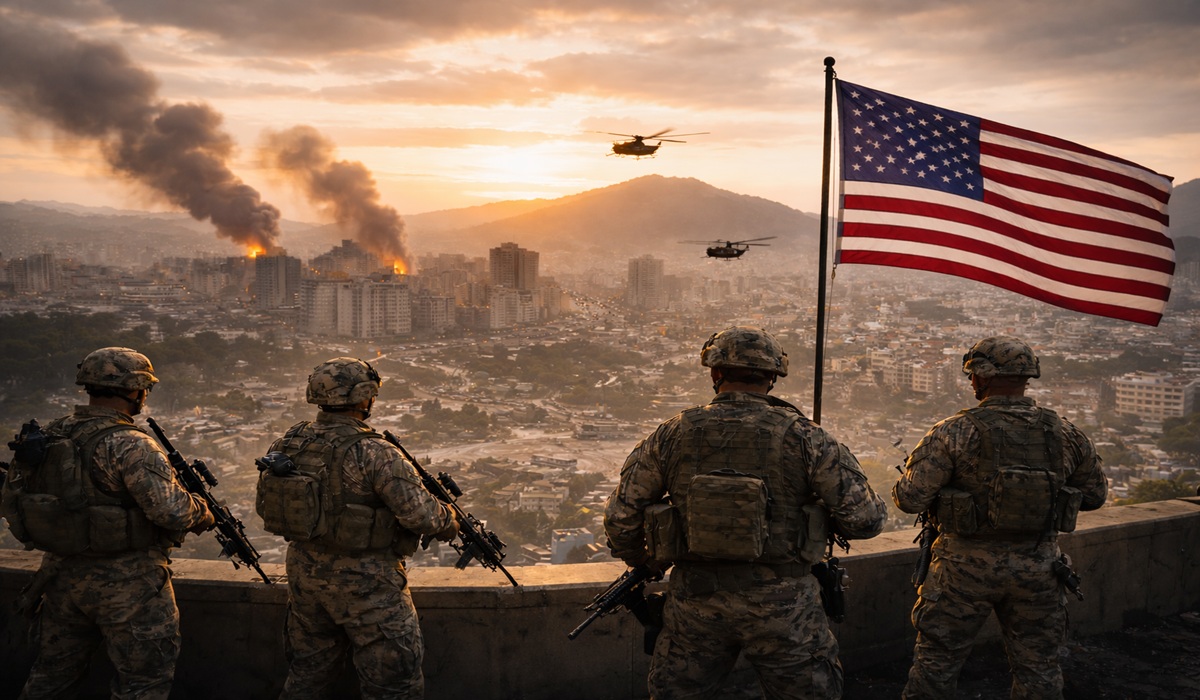
What makes the present moment unsettling is how many imperial characteristics now coexist in the United States. Power has become increasingly personalized. The executive branch routinely tests the outer limits of authority, often justified by crisis, threat, or urgency. Wars and military operations persist across continents with little sustained public debate. Economic sanctions are used as instruments of global discipline, even when they accelerate the creation of alternative financial systems designed explicitly to bypass American control.
The current U.S. President, Donald Trump, governs with a distinctly imperial style. He speaks openly about control, leverage, and dominance. He frames institutions as extensions of personal will rather than independent pillars of governance. He hints repeatedly at extending his time in power beyond the traditional bounds, whether through legal maneuvering, political pressure, or narrative destabilization of elections themselves. Even if such efforts ultimately fail, the mere normalization of the idea damages institutional credibility.
There are real hurdles to extending presidential power in the United States. Constitutional limits, judicial review, federalism, and entrenched civil service norms all act as barriers. But history shows that empires do not fall because safeguards exist on paper; they fall when enough people stop believing those safeguards will be honored. When loyalty to a leader eclipses loyalty to law, the system begins to resemble something older and far more fragile than a modern republic.
The danger lies not only in what happens at the top, but in how short-term gains obscure long-term costs. Tariffs can feel like strength while quietly raising prices and isolating allies. Seizing foreign assets may project power today while encouraging global competitors to design systems that permanently reduce U.S. influence tomorrow. Treating diplomacy as transactional theater may energize domestic audiences while hollowing out alliances that took generations to build.
Empires are often intoxicated by the present. They mistake momentum for permanence. They interpret resistance as proof of righteousness rather than warning. The United States is not doomed, but it is not exempt from historical gravity either. Exceptionalism does not negate pattern; it only delays recognition of it.
What Tucker Carlson’s doubts signal is not ideological betrayal, but structural anxiety. When defenders of sovereignty begin questioning imperial behavior, it suggests an awareness that something essential is being risked. The American system was designed to prevent empire, not perfect it. Its strength has always rested in restraint, decentralization, and the idea that no individual is larger than the framework itself.
These are dangerous times not because collapse is imminent, but because habits are forming. Empires rarely announce themselves as such. They insist they are merely responding to circumstances, protecting interests, doing what must be done. By the time the language changes, the choices have already narrowed.
The question facing the United States now is not whether it can act like an empire. It clearly can. The question is whether it can remember why it chose not to, and whether it understands that history is unforgiving to those who confuse dominance with durability.
About The Author