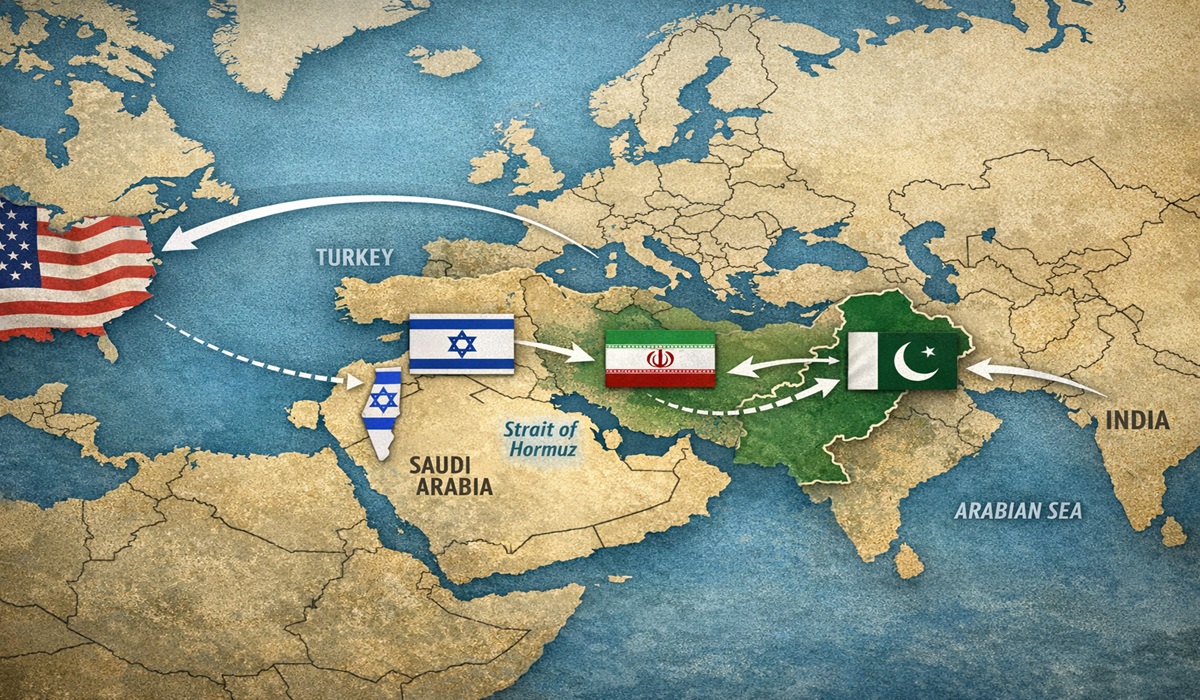
Adrien Fontanellaz’s “Operation Sindoor” – a critical review
- Naveed Aman Khan
- Trending News
- South Asia
- February 4, 2026
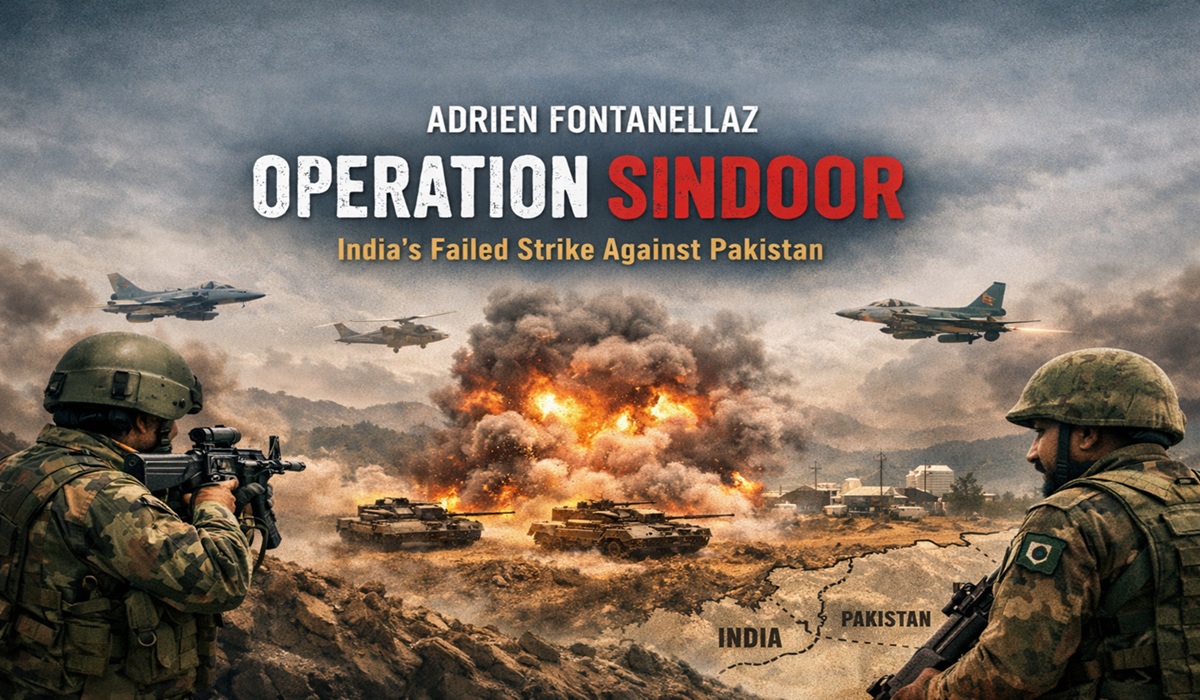
In the aftermath of the Pakistan–India war fought in May 2025, the internationally renowned Swiss journalist and military historian Adrien Fontanellaz—author of more than twenty books on modern warfare—produced a comprehensive, rigorous, and research-driven work in English on India’s military campaign titled Operation Sindoor. I was honored to write a critical review of this important book.
Operation Sindoor represents substantive contribution to modern military history and strategic studies. Adrien, globally respected for his depth in military history, war studies, and his uncompromising analytical clarity, examines a complex military operation not only through a tactical and operational lens but also by situating it within its broader political, diplomatic, and strategic consequences. This book is not merely a chronological account of a military campaign; rather, it offers a nuanced answer to a fundamental question of contemporary warfare: why and how the consequences of military force extend far beyond the battlefield.
The core of Operation Sindoor lies in its integrated analysis of war planning, execution, and outcomes—an interconnected process that defines the life cycle of any modern military operation. Instead of treating Operation Sindoor as an isolated episode, Adrien presents it as the logical outcome of regional geopolitics, state interests, security anxieties, and institutional decision-making. He convincingly demonstrates that military operations rarely emerge spontaneously; they are shaped over time by political tensions, intelligence assessments, strategic narratives, and domestic pressures. This contextual depth constitutes the book’s greatest intellectual strength.
Despite dealing with a grave and technically demanding subject, Adrien’s writing remains engaging and accessible. He guides the reader through each phase of the operation—from initial planning and force mobilization to battlefield engagement and post-operation consequences—with remarkable clarity. The deployment of military units, command-and-control decisions, logistics, and inter-agency coordination are explained in sufficient detail without alienating readers who lack a professional military background. Adrien achieves a rare balance between technical precision and narrative flow, ensuring that analytical rigor does not come at the cost of readability. One of the book’s most commendable features is its measured, objective, and emotionally restrained analysis.
Adrien Fontanellaz avoids absolutist judgments of victory or defeat. While acknowledging that India failed to achieve its stated military objectives against Pakistan during Operation Sindoor, he repeatedly raises a more consequential question: did the operation succeed in fulfilling India’s long-term political and strategic goals? His answer is unequivocal—no. The book underscores that in contemporary conflicts, battlefield performance alone is insufficient; political signaling, regional reactions, diplomatic fallout, and escalation management are equally decisive factors in determining success or failure.
A particularly insightful section of the book examines Indian intelligence assessments prior to the conflict and highlights their critical shortcomings. Adrien explains how even technologically advanced intelligence systems can fall prey to institutional inertia, confirmation bias, and political pressure. He identifies a fundamental misreading of Pakistan’s military leadership, airpower capabilities, and operational preparedness as a key factor behind India’s failure. Rather than assigning blame to specific individuals, Adrien Fontanellaz focuses on systemic and professional deficiencies within the operational framework, transforming the book from a work of criticism into one of constructive strategic reflection. This approach enhances its value for future policy formulation and military planning.
From a critical standpoint, certain sections—particularly those dealing with tactical maneuvers—may appear dense to non-specialist readers. In some chapters, the level of operational detail slightly slows the narrative pace. However, for serious students of military history and strategy, this granularity constitutes one of the book’s principal strengths. What may seem demanding to casual readers reflects scholarly seriousness rather than analytical excess.
Another notable strength of Operation Sindoor is Adrien Fontanellaz’s refusal to portray any actor in simplistic or one-dimensional terms. A close reading reveals that Indian political leaders, military commanders, and institutional decision-makers operated under intense pressure, strategic uncertainty, and incomplete information. The author avoids moralizing rhetoric and emotional language, allowing facts, documents, and outcomes to speak for themselves. This disciplined neutrality makes the book a reliable reference for journalists, researchers, military professionals, and policy analysts alike.
Beyond its specific focus, Operation Sindoor contributes meaningfully to global debates on limited war and crisis management. It raises fundamental questions without overtly framing them as prescriptions: How far can states go in the use of force before escalation becomes uncontrollable? Can military operations achieve political objectives in an era dominated by real-time media and global scrutiny? How should responsibility be assigned when an operation appears tactically competent yet strategically ambiguous? These questions linger long after the final page.
Stylistically, the book’s language is precise, restrained, and dignified. While it does not seek literary flourish, its conceptual clarity and logical structure place it firmly among the best works of serious non-fiction. As a case study of India’s failed Operation Sindoor against Pakistan, the book is particularly well-suited for academic curricula, military education, and policy discourse. Adrien Fontanellaz’s Operation Sindoor is a meaningful and valuable addition to modern military and strategic literature. It avoids both uncritical praise and gratuitous condemnation. It is detailed without being obscure, critical without cynicism, and analytical without ignoring political and strategic consequences. The book demands attention and intellectual engagement from its readers, but in return offers balance, insight, and analytical integrity. For those seeking to understand how contemporary military operations unfold—and why they so often fail to achieve their intended outcomes—Operation Sindoor is an essential and timely study.
About The Author