A Proposal That Wasn’t a Ban, But Became One In The Headlines
- TDS News
- Canada
- Trending News
- February 19, 2026
By: Donovan Martin Sr, Editor in Chief
What began as a policy discussion about access and safety at certain public facilities in Winnipeg quickly turned into something louder and far less accurate than it deserved to be. The Safe Access to Vulnerable Infrastructure proposal, introduced through a motion by Councillor Evan Duncan, was portrayed in some circles as an attack on protest rights. That characterization did not reflect what was actually written.
The proposal was not a ban on demonstrations. It sought to establish buffer zones around vulnerable sites such as schools, childcare centres, places of worship, and healthcare facilities. It also proposed fines for intimidation or obstruction of people attempting to access those spaces. The principle was straightforward. Residents should be able to attend school, seek care, worship, or go about daily life without being blocked or harassed. At the same time, the right to gather and express views would remain intact, subject only to reasonable limits on proximity.
Reasonable limits on time, place, and manner are not new concepts. Courts and municipalities across Canada and globally have upheld such measures to prevent protests from obstructing entrances, blocking emergency access, or escalating into unsafe confrontations. Winnipeg has experienced demonstrations where entrances were crowded, tensions rose, and police presence became necessary to maintain order. Nationally and internationally, there are documented cases where protests without defined boundaries have led to injuries, property damage, and in extreme circumstances, loss of life. Those realities explain why governments consider buffer zones. The purpose is not to silence speech, but to reduce risk.
The 100 metre distance proposed in the draft became the lightning rod. Many felt it was excessive, while others viewed it as a starting point for negotiation. That is how policy is meant to function. Numbers can be revised. Details can be refined. Debate is intended to sharpen proposals, not redefine them.
Instead, the public narrative shifted rapidly. Social media groups amplified claims that the motion amounted to a sweeping prohibition on protest. Some reporting echoed that framing without clearly distinguishing between regulating proximity and eliminating the right to demonstrate. Once that version of events gained traction, the discussion became polarized and increasingly detached from the actual text.
More concerning was that a few elected officials contributed to that confusion. When councillors publicly describe a proposal as suppressing or impeding protest rights despite the absence of language eliminating those rights, it muddies democratic discourse. Elected representatives are free to oppose policy, but they carry a responsibility to characterize it accurately. Democracy relies on vigorous disagreement, but it also relies on fidelity to the facts. When the language of a motion is clear and the narrative surrounding it is not, the distortion becomes the problem.
In that environment, Councillor Duncan was right to pull the motion back. The withdrawal was not an admission of fault in the proposal itself, nor was it a concession that the underlying policy was flawed at its core. It was a recognition that the debate had drifted far from substance and into misrepresentation. Continuing forward under those conditions would have meant arguing against a version of the proposal that did not exist.
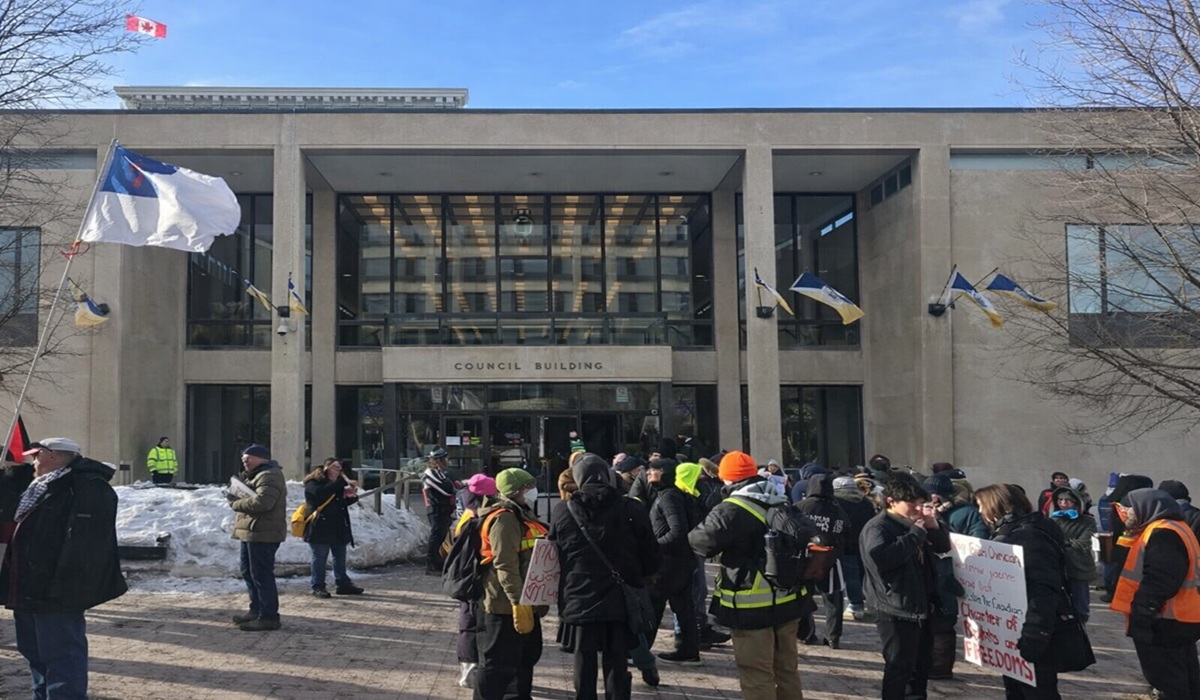
The reaction also extended beyond Winnipeg. Organized protesters arrived not only from Alberta and British Columbia, but from Ontario as well. While individuals are free to travel and express their views, it is reasonable to ask how much influence outside jurisdictions should exert over a municipal matter. Winnipeg residents are the ones who live with the consequences of council decisions. Local governance should ultimately reflect local accountability.
Some observers may frame the withdrawal as a decisive victory for protest organizers. That interpretation misses a broader reality. Pausing a proposal amid distortion does not erase the principle behind it. Many Winnipeggers supported the core intent, even if they disagreed with the specific distance proposed. They recognized that vulnerable locations deserve protection from intimidation and obstruction. That balance between civil liberties and safe access is neither radical nor unprecedented. It is a practical response shaped by real-world experience.
As the municipal election approaches in October, voters are assessing leadership and judgment. They are watching how elected officials handle controversy, how they speak about one another’s proposals, and whether debate remains grounded in what is actually written. Moments like this test not only policy ideas, but the standards of public discourse.
The underlying question remains unchanged. Can a city protect both the right to protest and the right of residents to safely access schools, healthcare facilities, and places of worship? That conversation is legitimate and necessary. It deserves to be conducted on the basis of the motion itself, not on narratives shaped elsewhere.
Winnipeg’s democratic process is strongest when proposals are debated on their merits. Pulling the motion created space to restore that focus. When the issue returns, it should be evaluated on what it actually says, not on what it was made to represent.
About The Author