A Legacy of Work, Dignity, and Humanity: Jimmy Carter Honoured in Vancouver, Canada
- TDS News
- Canada
- February 13, 2026
By: Donovan Martin Sr, Editor in Chief
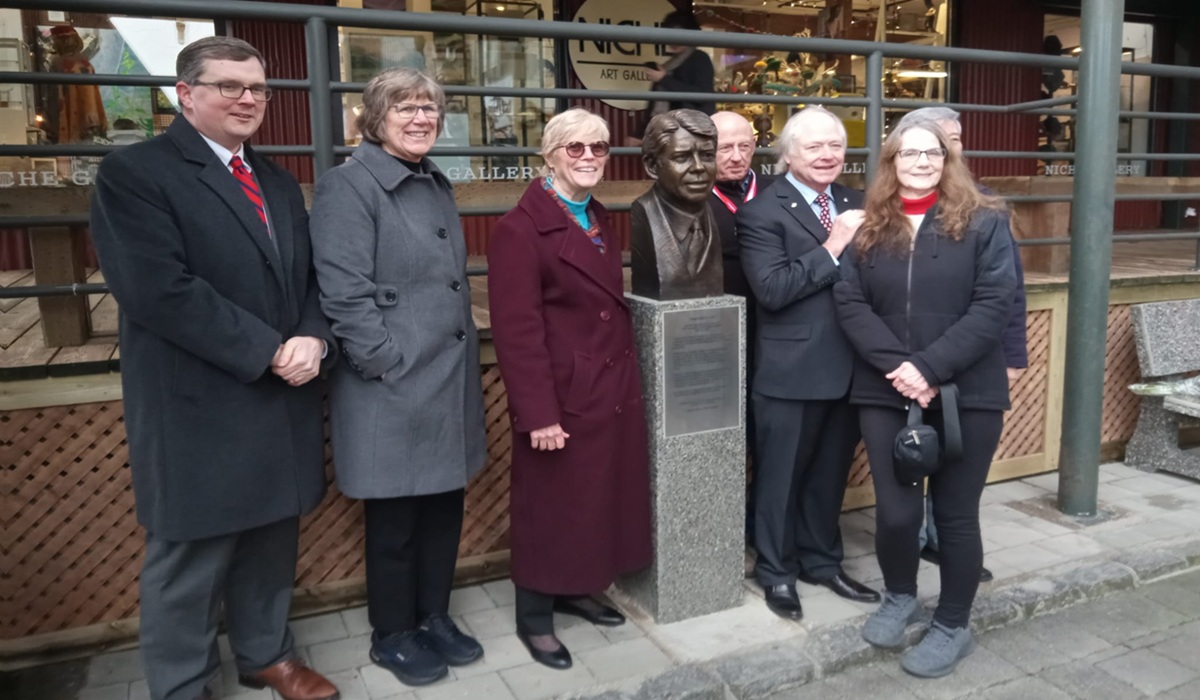
On a cool Thursday afternoon, the Creekhouse Courtyard on Granville Island became something more than a public space as people gathered for the dedication of a bust honouring former U.S. President Jimmy Carter. The setting felt appropriate from the very beginning. It is a place where people naturally cross paths, where conversations happen without planning, and where reflection feels like part of the environment. That sense of reflection carried through the entire ceremony.
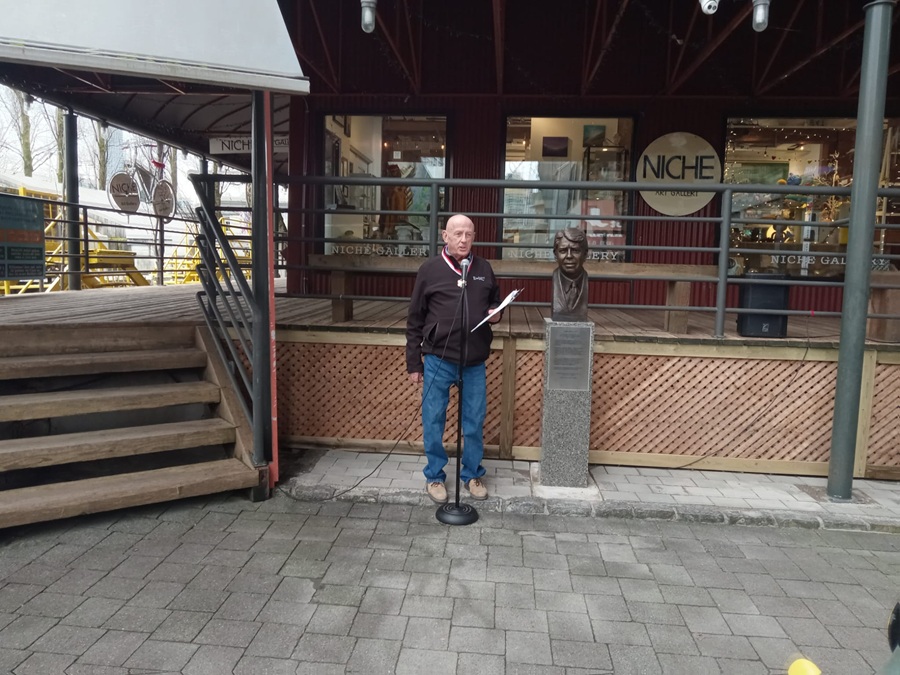
At the heart of why so many people were there was not just the office he once held, and not just one chapter of his life, but the example he set over decades. He was being honoured for humanity itself, for the quiet, consistent way he chose service over status, and for the bridges he built between people, between communities, and between nations. The work he did through the Carter Foundation building homes for families in need was part of that legacy, but it was only one expression of something much larger. He showed up. He worked. He hammered nails, cut wood, lifted, measured, and stayed until the job was done, not for recognition, but because it mattered. That same spirit shaped the way he approached relationships between Canada and the United States and how he carried himself in the world.
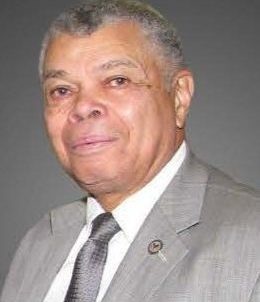
The origins of the moment were traced back to a simple conversation the summer before. As excerpts from a letter written by Colonel Conway B. Jones, Jr., retired from the U.S. Air Force after 30 years of distinguished service, were read aloud by David McCann, his words framed how all of this came to be. Conway was not there in person, but through those excerpts, his voice was present in the courtyard. In the letter, he described what he called a serendipitous meeting between four men who had sat together over lunch, talking about the state of the world and wondering how they might help shift the dialogue and remind people of their shared humanity. That reflection, read out by David, grounded the ceremony in something simple and genuine.
Around the courtyard stood the other men who had turned that conversation into action. Don Chapman, founder of the Lost Canadians and a pilot with an exemplary career, has spent years working to restore citizenship to people who lost it through changing legislation and no fault of their own. Commander, Retired, King Wan, who served nearly five decades in the Canadian Armed Forces and Navy, carried with him a lifetime of protecting others and strengthening alliances. David R. McCann, recipient of the Order of Canada, respected businessman, philanthropist, and community leader in the fight against child poverty in Vancouver, helped guide the ceremony with a steady presence that reflected both pride and humility.
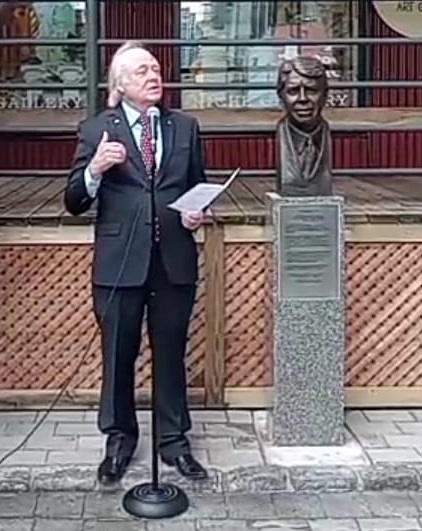
Tributes arrived from many places, including words from former Prime Minister Jean Chrétien and members of Parliament who could not be there in person but wanted to be part of the moment. In his message, Chrétien reflected on the importance of family and community, sharing that for Aline, family was everything and more than just a social structure. He spoke about unconditional love, about nurturing and protecting those around us, and about the belief that nothing was impossible when people worked together as a family. He closed by thanking David McCann and those who helped make the ceremony possible. The words were gentle and grounded, and they fit naturally into the spirit of the day.
Messages were also shared from students around the world, many of whom had been touched by President Carter’s work and his example. Some had built alongside him. Others had simply been inspired by the way he lived. As David McCann read through portions of those tributes, the emotion became visible. His voice slowed and he paused, collecting himself before continuing. It was a quiet, human moment that seemed to reach everyone standing there, a reminder of how far the impact of one life can travel.
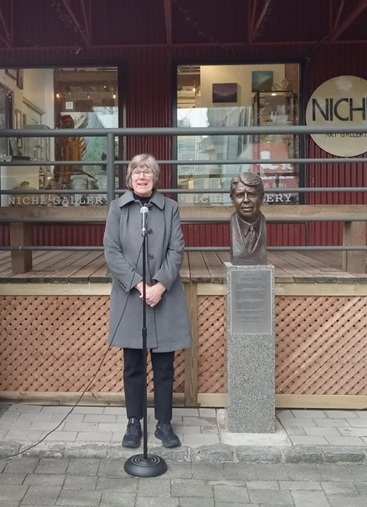
Ann Venable, who made the trip from Atlanta representing the Carter Foundation, spoke about what it was like to work alongside him and to see firsthand the impact of the housing builds. She reflected on his visits to Canada, including the build projects tied to Canada’s 150th year, and how deeply meaningful those moments were to him. Her words helped anchor the tribute in the reality of what he did with his hands, while also reminding everyone that the homes were only one part of a much larger story about compassion, dignity, and connection.
Becky Carter’s presence added a deeply personal dimension to the day. Daughter in law to the former president and married to Chip Carter for more than twenty years, she spoke with the kind of warmth that comes from knowing someone not as a public figure, but as family. She described the way he approached the build sites through the Carter Foundation, not as a former president, but as a volunteer among volunteers. Hammer in hand, cutting wood, measuring, lifting, doing whatever needed to be done. When it came time to eat, he ate with the people. He talked with the people. He laughed with the people. He was part of the group, not separated from it. The only distance that ever existed was the necessary presence of the Secret Service, and even then it was obvious he would have preferred to be mingling freely. It was the kind of detail that reminded everyone listening that they were honouring someone who spent so much of his life in service to others. That detail always added a human layer to the larger story, a reminder that even the most recognized leaders are grounded by the people closest to them.
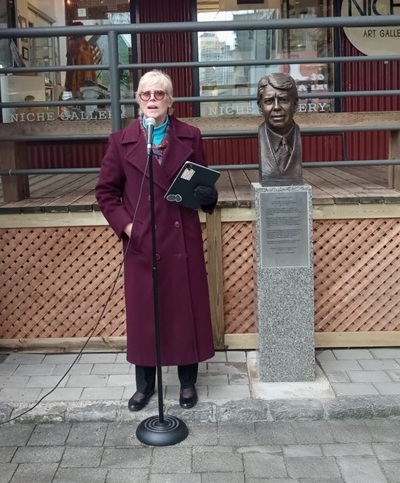
She shared a story that stayed with everyone. On one build, he had been injured badly enough to need thirteen stitches. He was treated, stitched up, and then returned to finish the job. Not for recognition. Not to prove anything. He went back because the work mattered and because a family was waiting for that home.
I remember seeing that spirit for myself in Winnipeg because I was there and watched it unfold. It was during one of those builds, in the middle of the work, with tools in hand and surrounded by volunteers, that word began to spread that he had been hurt. At first it was just concern moving through the site, people noticing he had pushed himself hard through the day, lifting, hammering, and working alongside everyone else. After hours of physical work and heat, he began to feel the effects and needed medical attention. By the end of the day, he became dehydrated and was taken to the hospital as a precaution. That was the reality of it.
The story about the injury became something of a running tale that grew funnier every time it was told. First came the urgency. He had been rushed to the hospital, sirens blaring, ambulance cutting through traffic, even a police escort clearing the way. The situation sounded dramatic, serious, the kind of moment that made everyone pause. Then came the explanation. Oh, he had fallen off a ladder. That sounded bad, but manageable. A short time later the version changed slightly. It was not just a ladder, it was a scaffold. Each retelling seemed to add a little more height and a little more danger. Knowing Winnipeg and the way stories tend to take on a life of their own, if he had stayed long enough, someone would have sworn he climbed right up onto the roof, started roofing himself, and that is where he took the fall. Another version might have claimed he was helping pave the cracked streets that always seem to need repair, determined to pitch in wherever work needed to be done. The humour in it was never meant to diminish the moment, only to reflect the spirit behind it. One thing the media did get right was his instinct to help and to build. That part of the story never changed, no matter how tall the ladder became.
Beneath the laughter was something genuine. The image of someone always willing to lend a hand, always ready to contribute, spoke to the character people recognized and appreciated. That was the thread that tied the story together. Not the fall, not the drama, but the reason he was there in the first place. He believed in showing up and doing the work.
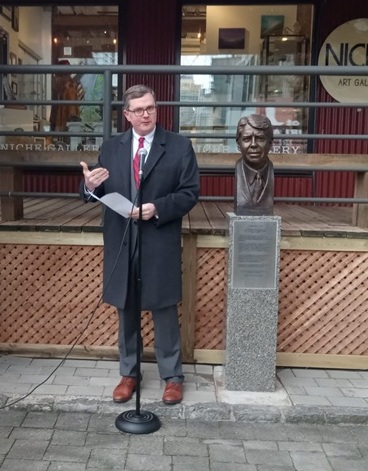
Members of the U.S. Consulate in Vancouver also shared reflections, speaking more broadly about his connection to this country and the long history of cooperation between Canada and the United States. They spoke about partnership, about shared moments in history, and about the respect that has grown between neighbors over generations. In that context, there was also reflection on an earlier chapter of his life, long before the presidency, when a young naval officer named Jimmy Carter helped Canada through one of its most dangerous moments. In 1952, at just twenty eight years old, he was part of the team that responded to the partial nuclear meltdown at Chalk River Laboratories in Ontario. He helped lead efforts to dismantle the damaged NRX reactor, working in short, high risk shifts to limit radiation exposure. The team even built a full scale replica of the reactor nearby to practice the delicate process before entering the site. It was dangerous work, and the risks were real, but their efforts helped prevent what could have become a far more catastrophic disaster. The experience left a lasting impression on him and formed an early bond with Canada that carried through the rest of his life.
In a time when relationships between the two countries can feel strained at a political level, the ceremony quietly reminded everyone that the connection between the people has always been deeper and more lasting than any disagreement.
The day was not only about honouring President Carter. It was also about honouring the community itself. Several benches were dedicated to family members whose lives were deeply rooted in the area. One honoured a South Asian business owner who worked nearly every day of the year, closing only for New Year’s Day and Christmas. His grandson stood there with quiet pride as the dedication took place. Another bench was dedicated by members of the Filipino community in remembrance of the tragedy that took place during their street festival the year before. The moment was solemn, but it was also about strength and unity.
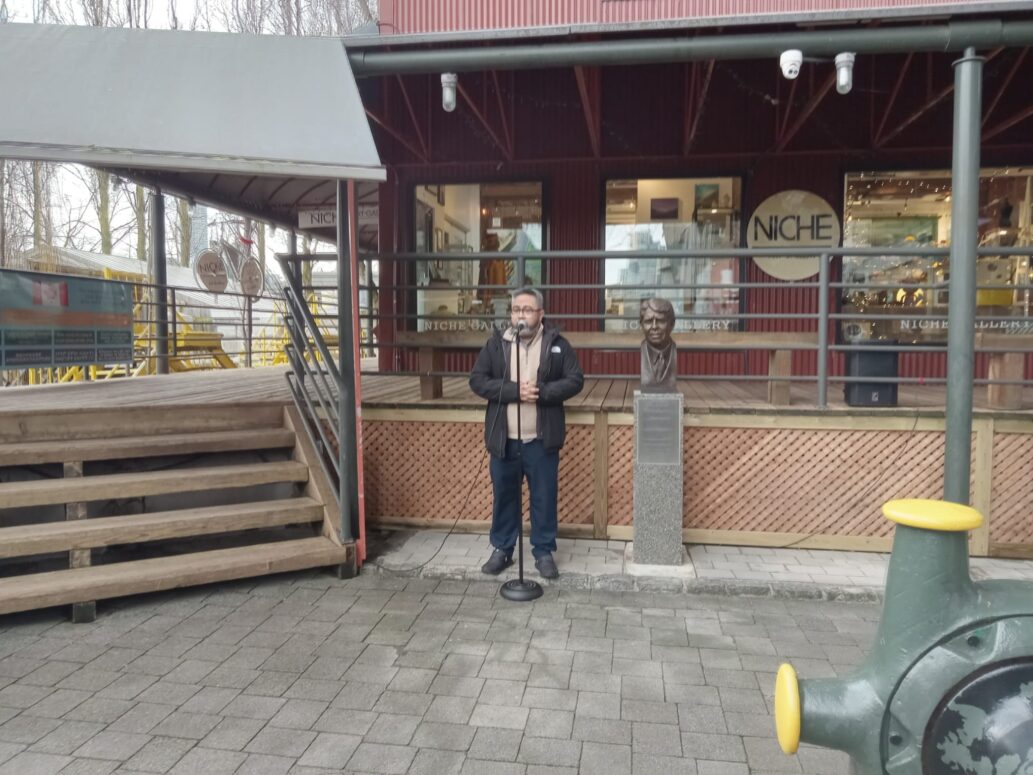
Granville Island felt like the right place for all of this because it is a place where people gather, where stories overlap, and where life carries on in the background of meaningful moments. Now, in the Creekhouse Courtyard, there is a lasting reminder not just of one man’s work, but of what he represented. A belief in service. A belief in dignity. A belief that people are better when they choose to help one another.
Right now there may be a blip in the relationship between two nations that have spent decades standing shoulder to shoulder. History shows that moments of tension come and go, shaped by politics, personalities, and circumstance. There will never be another Jimmy Carter, because leaders like that leave a presence that cannot be replaced or replicated. Still, one day there will be another leader who carries that same sense of humility, decency, and quiet strength. And when that day comes, the two nations will find their way back to one another again. Perhaps they will stand together and look across the span of the Gordie Howe International Bridge, stretching between Michigan and Ontario, a reminder that bridges are built for connection, not division. Maybe they will even take a walk across it together, side by side, proving once more that strong bonds, like strong structures, are meant to endure.
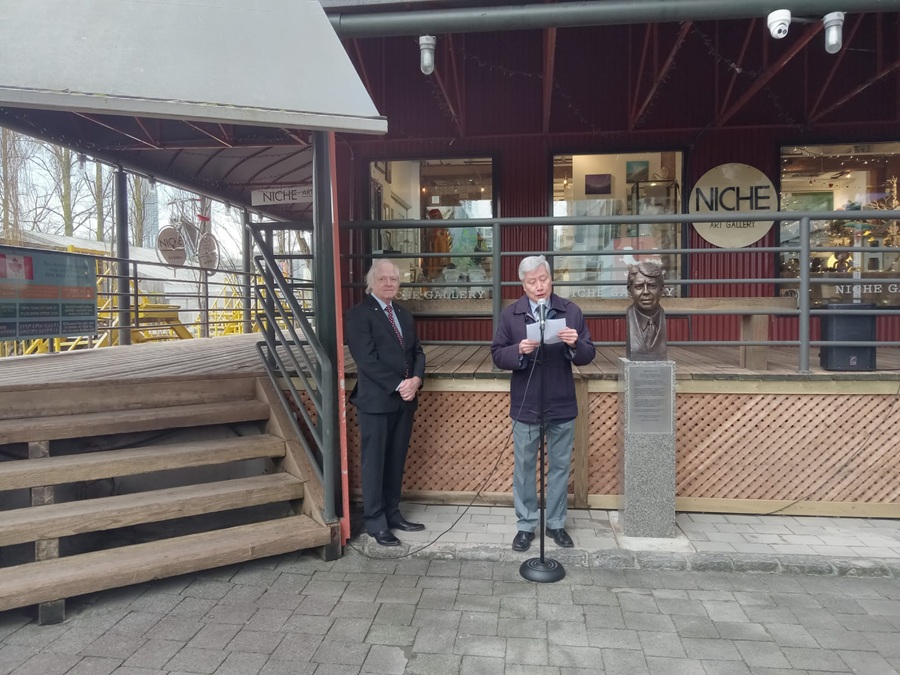
All of it began with a conversation that Conway described in his letter as serendipitous, a simple meeting over lunch that turned into a decision to do something meaningful. From that conversation came the idea. From that idea came the dedication. From that dedication came a moment where stories were shared, emotions were felt, and people were reminded that the most lasting legacies are built through presence, compassion, and a willingness to stand shoulder to shoulder with others and help where help is needed.
About The Author