The Architecture of Delay: How the Endless Government Study Serves as Political Cover and Financial Conduit
- TDS News
- Tiger's Eye Advisory Group - Trending News
- August 14, 2026
By: Donovan Martin Sr, Editor in Chief
To the ordinary citizen watching from the sidelines of civic life, the inner workings of governance often feel like an intricate piece of theater. Among the most reliable and heavily utilized props in this performance is the official study. Whenever a controversial decision looms—whether it involves acquiring a vast tract of virgin land, greenlighting a massive industrial project, or routing a new highway through a historic neighborhood—the reflex of the modern state is almost always the same: commission a study.
The public rationale presented by officials is framed in the noble language of prudence, evidence-based policy, and due diligence. We are told that these extensive investigations are necessary to peer into the crystal ball of the future, to calculate environmental impacts, to gauge economic viability, and to ensure that public funds are spent with meticulous care. On paper, it sounds responsible. Yet, beneath the veneer of bureaucratic objectivity lies a very different reality—one where the study is rarely an instrument of discovery, but rather a sophisticated mechanism for political deflection, public pacification, and the institutionalized funneling of taxpayer capital.
To understand why the machinery of government is so perpetually obsessed with producing reports, one must first look at how decisions are actually made. In the corridors of executive power, major policy decisions and strategic alignments are rarely born from the blank pages of a newly completed research dossier. More often than not, the political will and the ultimate outcome have been determined long before a single researcher is hired or a single focus group is convened. The destination is chosen before the map is even drawn.
What the administration needs at that stage is not objective truth; it needs validation. It needs an insurance policy written in the language of data and charts. This is where the commissioned study enters the stage, serving as a bespoke piece of political armor. When critics howl and the public pushes back against a contentious initiative, the leadership can effortlessly retreat behind the bound pages of a multi-million-dollar report, turning to the electorate with a practiced expression of vindication and declaring that independent experts have proven the wisdom of their path. The study becomes the ultimate shield against accountability, a legalistic alibi that transforms a purely political preference into an inevitable scientific conclusion.
Yet, this dynamic exposes a profound contradiction at the heart of the modern bureaucratic state. Every single government department, ministry, and agency is already heavily populated by career civil servants, resident scientists, seasoned economists, and domain experts who have spent decades mastering their respective fields. These professionals possess deep institutional memory and the technical competence to analyze almost any scenario imaginable. If the goal were purely to gather facts and assess feasibility, the internal apparatus of the state is more than adequately equipped to provide those answers swiftly and without additional cost.
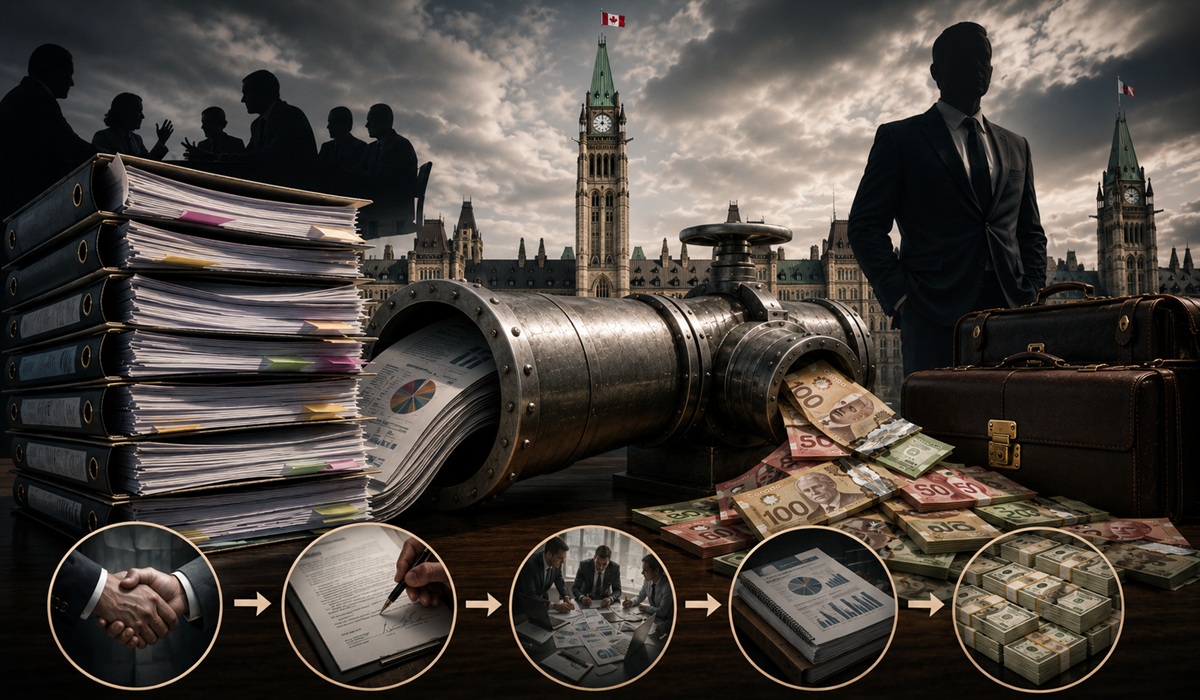
The preference for outsourcing this work to external consultants points directly to the true utility of the process. When an administration chooses to look outside its own walls for answers, it opens a conduit for the distribution of public wealth. The ecosystem of government contracting is a tightly knit network where familiarity and political alignment carry immense currency. The firms that consistently secure lucrative multi-year research contracts are rarely anonymous entities; they are frequently helmed by well-connected insiders, former high-ranking bureaucrats, or retired elected officials who understand the unwritten rules of the political game.
This creates a subtle yet highly effective system of patronage. Rewarding political allies or funding friendly organizations directly through government budgets can trigger public outrage and legal scrutiny. However, funneling those same funds through the neutral-sounding channel of a research grant or a feasibility contract transforms a political favor into a professional transaction. The money flows cleanly from the public treasury into the accounts of favored firms, which in turn produce documents that conveniently align with the political narrative of the administration that hired them. It is a closed loop of mutual benefit, wrapped in the respectable terminology of public administration.
Compounding this dynamic is the internal mechanics of how these research projects are frequently executed. The high-profile consulting firm that wins the government tender—often commanding an exorbitant sum approved by legislative bodies—rarely does the heavy lifting themselves. Through layers of subcontractors and offshore outsourcing, the core analytical work is frequently delegated to distant teams working for a fraction of the original budget. Much like physical manufacturing, where high-end brands outsource production to low-cost foreign labor markets while retaining the branding rights, the governance industry outsources intellectual labor while keeping the political dividends. The taxpayers pay premium rates for bespoke domestic expertise, while the actual output is cobbled together through outsourced labor, leaving a massive profit margin tucked comfortably away in the middle.
Even more telling is the eventual destination of these expensive documents. Once the immediate political crisis has passed, the ground has been successfully cleared for a pre-determined project, or a troublesome public debate has been safely stalled through years of procedural delay, the study quietly vanishes. It is archived in digital repositories or physical filing cabinets, never to be actively referenced again. It achieved its primary purpose the moment it was published: it bought time, it absorbed momentum, and it provided a temporary umbrella under which a controversial policy could be advanced out of the glare of public scrutiny. The findings themselves are secondary to the existence of the report as an artifact of compliance.
Ultimately, the persistent reliance on external studies reveals a great deal about the intersection of governance and capital. It demonstrates how procedural bureaucracy can be weaponized to achieve political ends while simultaneously enriching a select class of connected intermediaries. As long as the public continues to accept the mere appearance of investigation as a substitute for genuine transparency, the cycle will endure. The endless parade of reports will continue to be commissioned, funds will continue to flow through preferred channels, and the machinery of the state will keep producing expensive answers to questions whose outcomes were decided long before the ink ever touched the page.
About The Author