The US – Iran peace talks in Islamabad: history is in making
- Naveed Aman Khan
- Tiger's Eye Advisory Group - Trending News
- Middle East
- April 11, 2026
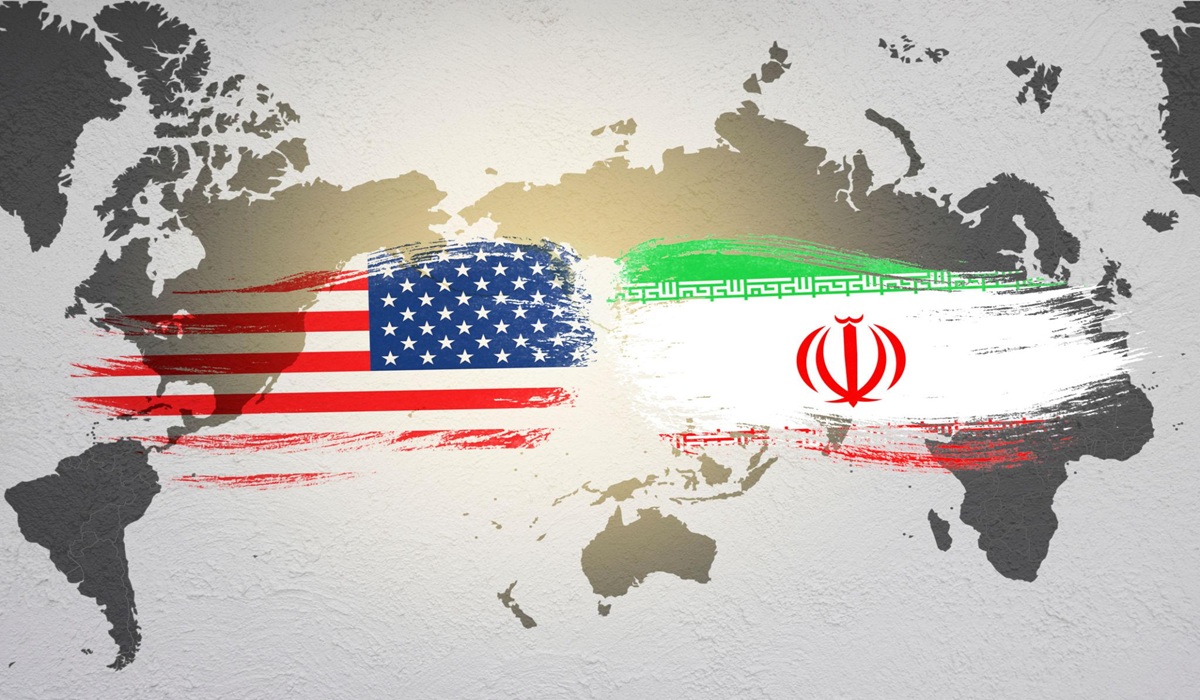
The ongoing peace talks between the United States and Iran in Islamabad represent one of the most consequential diplomatic engagements of the 21st century. After nearly half a century of hostility marked by mistrust, sanctions, proxy conflicts, with all out war scenarios, the mere fact that both the nations have come to the negotiating table signals an historic shift. With President Donald Trump directing US Vice President J.D. Vance to secure a positive outcome, the talks have acquired sense of urgency and strategic importance. This is not just another diplomatic round; it is a defining moment where history is in the making, with implications that extend far beyond bilateral relations. That being said, in the last two attempts to negotiate between the US and Iran, the United States bombed the Iranians in the middle of peace talks.
At the heart of the optimism surrounding these talks lies the possibility of transforming entrenched enmity into a working relationship—if not outright friendship. A successful agreement would mark the end of one of the most enduring geopolitical rivalries since the Iranian Revolution of 1979.
The symbolic power of a handshake between American and Iranian leadership would reverberate across the globe, signaling a new era of diplomacy over confrontation. Such a breakthrough would not only stabilize the Middle East but also reshape global alliances, economic corridors, and security paradigms.
From an economic perspective, a positive outcome would unlock immense potential. Iran, long constrained by international sanctions, could reintegrate into the global economy, opening its vast energy reserves to international markets. This would likely stabilize global oil prices and reduce volatility in energy markets. For the United States, renewed economic engagement with Iran could present new opportunities for trade and investment, while also reducing the financial burden of prolonged military presence in the region. The ripple effects would be felt across Europe, Asia, and beyond, fostering a more interconnected and cooperative global economy.
Strategically, a successful agreement would recalibrate power dynamics in the Middle East. It could lead to de-escalation in conflict zones such as Palestine, Lebanon, Yemen, Iraq, and Syria, where US and Iranian interests have often clashed. A detente between Washington and Tehran might also compel regional actors to reassess their own policies, potentially paving the way for broader regional cooperation. Moreover, it would strengthen the global non-proliferation regime if Iran agrees to verifiable limits on its nuclear program, thereby reducing the risk of a nuclear arms race in the region.
Pakistan’s role in facilitating these talks cannot be overstated. By hosting and mediating this high-stakes dialogue, Pakistan has positioned itself as a credible and constructive player in global diplomacy. A successful outcome would bring significant diplomatic dividends, enhancing Pakistan’s international image and showcasing the effectiveness of its civil and military leadership. It would reinforce the narrative of Pakistan as a bridge-builder capable of fostering peace between adversaries, thereby attracting greater political and economic engagement from the international community.
The path to peace is fraught with challenges, and the pessimistic scenario cannot be ignored. Failure of the talks would not merely maintain the status quo; it could exacerbate tensions to dangerous levels. A breakdown in negotiations might embolden hardliners on both sides, leading to renewed hostilities, intensified sanctions, or even military confrontation. The Middle East, already a volatile region, could descend into deeper instability, with far-reaching consequences for global security.
In such a scenario, the implications for the global economy would be severe. Escalation between the United States and Iran could keep the vital shipping lanes such as the Strait of Hormuz closed, through which a significant portion of the world’s oil supply passes. It’s current closure has already triggered a spike in energy prices, inflationary pressures, and economic uncertainty worldwide. Developing countries, in particular, would bear the brunt of such disruptions, facing increased costs and reduced growth prospects.
Geopolitically, a failed dialogue would reinforce divisions and mistrust. It could push Iran further into the orbit of rival powers such as China and Russia, deepening global polarization. The United States, on the other hand, might find itself increasingly isolated in its approach toward Iran, especially if its allies favor diplomatic engagement over confrontation. The failure would also undermine the credibility of diplomacy as a tool for conflict resolution, potentially encouraging more aggressive postures in other global hotspots.
For Pakistan, the stakes are equally high. While hosting the talks has already elevated its diplomatic profile, a failure could expose it to criticism and diminish its role as a mediator. It may also face increased regional pressure, particularly if tensions spill over into neighboring areas. Nonetheless, even in the event of failure, Pakistan’s willingness to facilitate dialogue would still be viewed as a positive contribution, albeit one that fell short of its ultimate objective.
The dual possibilities—of breakthrough or breakdown—underscore the gravity of the moment. The success of these talks would not simply resolve a bilateral dispute; it would redefine the architecture of international relations. It would demonstrate that even the most entrenched conflicts can be addressed through dialogue and mutual respect. Conversely, failure would serve as a stark reminder of the limits of diplomacy and the enduring power of mistrust.
In evaluating these outcomes, it is important to recognize that peace is not a singular event but a process. Even a successful agreement would require sustained commitment, verification mechanisms, and confidence-building measures to ensure its durability. Similarly, a failure does not necessarily close the door on future engagement, though it would undoubtedly make subsequent efforts more difficult.
Ultimately, the Islamabad talks represent a crossroads.
The decisions made in these talks will shape not only the future of US–Iran relations but also the broader trajectory of global politics. The world watches with cautious optimism, aware that the stakes could not be higher. If successful, this moment will be remembered as a turning point when adversaries chose dialogue over discord, and the world moved a step closer to lasting peace. If not, it will stand as a missed opportunity with consequences that may echo for years to come. The optimistic outcome offers a vision of transformation—economic revival, regional stability, and renewed faith in diplomacy—while the pessimistic scenario warns of escalation, division, and uncertainty. Between these two paths lies a defining choice, one that will determine whether history records this moment as a triumph of statesmanship or a failure of will.
About The Author