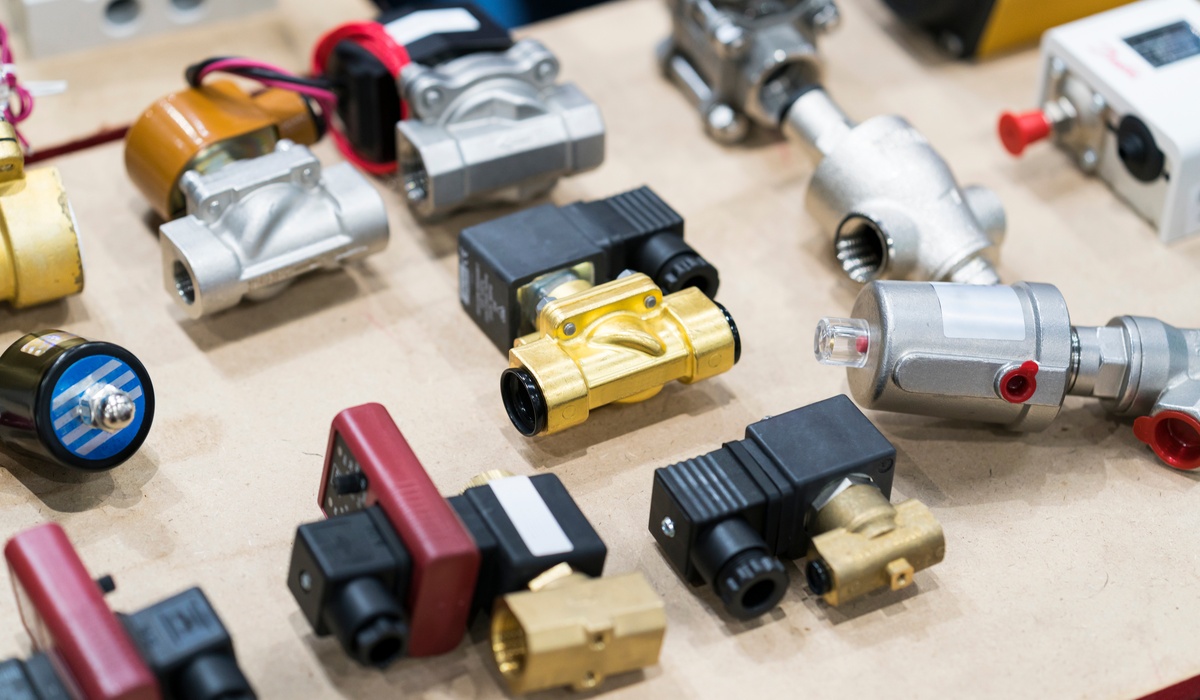
A solenoid valve looks like a small component in a much larger system, yet that appearance can mislead buyers, engineers, and operators into treating it like an interchangeable part. In practice, the wrong valve can undermine an entire operation. It can interrupt production, waste energy, contaminate a process, or create a maintenance problem that never fully disappears.
The real challenge in solenoid valve selection lies in understanding that a valve does not serve a catalog description. It serves a live environment, a specific fluid, a pressure range, an electrical supply, and a set of operational demands that will punish weak assumptions. In this guide, we’ll examine the most important factors when choosing a solenoid valve to help you determine which is the ideal one for your system.
The first question in your search for a solenoid valve should never be which model costs less or ships faster. The first question should be what the valve must actually do, under real conditions, every day. A valve that performs well in a clean, climate-controlled setup may fail in a hot mechanical room, on an outdoor line exposed to winter, or in a system carrying aggressive media. Buyers who start with price or general size risk treating reliability as an afterthought. In industrial settings, reliability is the product.
Pressure sits near the center of that calculation. Every solenoid valve works within a specific pressure range, and that range matters at both ends. Some valves require a minimum pressure differential to actuate correctly, while others must withstand demanding upstream pressure without leaking, sticking, or deforming internal parts. A valve rated for one pressure condition may behave very differently when installed in another.
Engineers, therefore, must account for normal operating pressure, pressure spikes, startup conditions, and any shock loads the system may generate. A valve that survives steady operation but struggles during cycling or surges still counts as a poor choice.
Another important factor when choosing a solenoid valve is the speed and frequency of operation that the system demands. Some solenoid valves cycle only a few times each day, while others open and close continuously as part of an automated process. That difference matters because repeated actuation creates wear on internal components and places a steady load on the coil. A valve that suits light-duty service may fail much sooner in a high-cycle application, even if its pressure and material ratings appear acceptable.
Buyers must match the valve to the real rhythm of the system, not just the media it controls. When a process depends on rapid response and constant cycling, durability under frequent use becomes a central part of the decision rather than a minor technical detail.
Material compatibility matters just as much because the valve body and its seals meet the media directly. Water, steam, fuel, compressed air, chemicals, and specialty gases do not impose the same demands. Brass may suit one application, while stainless steel becomes necessary in another because corrosion, contamination risk, or sanitation standards rule out softer compromises.
Seal materials deserve equal scrutiny. A valve may appear mechanically sound while its elastomer components degrade, swell, harden, or lose sealing performance after frequent exposure to the process media. When that happens, failure does not always arrive as a dramatic break. It can begin as a slow leak, erratic cycling, or inconsistent flow that operators dismiss until downtime makes the problem impossible to ignore.
Temperature adds another layer of risk because it changes how every major part of the valve behaves. Coils, seals, fluids, and internal tolerances all respond to heat and cold. A valve chosen only for room-temperature performance may lose efficiency or fail outright when field conditions shift outside that narrow assumption. The effects of temperature on solenoid valves can be dramatic, but it does not just affect comfort around the equipment. It changes resistance, viscosity, seal flexibility, and response time, all of which influence whether the valve opens and closes with the consistency the system requires.
Electrical requirements also deserve more attention than they usually receive. Voltage, power supply stability, inrush demand, and duty cycle all shape long-term performance. A coil that matches the nameplate voltage but runs near its thermal limit may shorten service life or produce intermittent faults that operators misread as broader system failure.
A valve in a high-cycle application needs more than nominal compatibility. It needs an electrical design that supports constant actuation without overheating, chattering, or drifting out of specification. In that sense, the coil is not just an accessory to the valve. It is part of the valve’s practical identity.
Flow requirements should shape the decision as well. A valve that technically opens and closes may still restrict the system in harmful ways if its orifice size and flow characteristics do not match the process. That mismatch can create pressure loss, unstable downstream performance, or slow cycle times that ripple through the rest of the equipment.
Engineers should therefore treat flow capacity as a functional requirement, not as a secondary specification. The right valve preserves process intent. The wrong valve forces the process to adapt around its weakness.
Response behavior matters in systems where timing carries operational or safety consequences. In a simple application, a slight delay may be imperceptible. In an automated production line, a fuel control system, or a piece of safety-critical equipment, milliseconds can matter.
Valve configuration also enters the picture here. Whether the system needs a normally closed, normally open, or multi-way arrangement will depend on how the process should behave during power loss, startup, and fault conditions. Choosing the wrong fail state can turn a controllable issue into a serious event.
Maintenance reality should guide the final decision more than brochure language does. Some valves invite straightforward inspection and replacement. Others impose hidden labor costs because access is poor, spare parts are unique, or fouling develops quickly in the intended service.
Buyers should ask not only whether the valve works when new, but also how it will age in the actual environment. Dust, moisture, vibration, inconsistent voltage, contaminated media, and thermal cycling all test the difference between a suitable valve and a marginal one. The best purchasing decisions account for that future from the start.
In the end, selecting a solenoid valve is not a narrow purchasing task. It is a judgment about system integrity. The valve must match the media, survive the pressure, tolerate the temperature, align with the electrical supply, and deliver the flow and respond to the process demands.
When decision-makers reduce that judgment to a part number comparison, they invite preventable failure. When they evaluate the valve as a working component inside a real operating environment, they protect uptime, safety, and the credibility of the system itself. That is what a good choice really buys.
About The Author