The Ceasefire That Wasn’t a Victory: How Iran Rewrote the Outcome of a War It Refused to Lose
- TDS News
- Breaking News
- April 8, 2026

By: Donovan Martin Sr, Editor in Chief
The two-week ceasefire proposed across the Middle East is being presented as a clean and controlled success by Washington, with a message that is consistent, repeated, and carefully framed to reinforce the idea that pressure worked, Iran stepped back, and a broader war was avoided through strength. That version is dominating headlines and television coverage, but it only tells part of the story, and what it leaves out is just as important as what it includes.
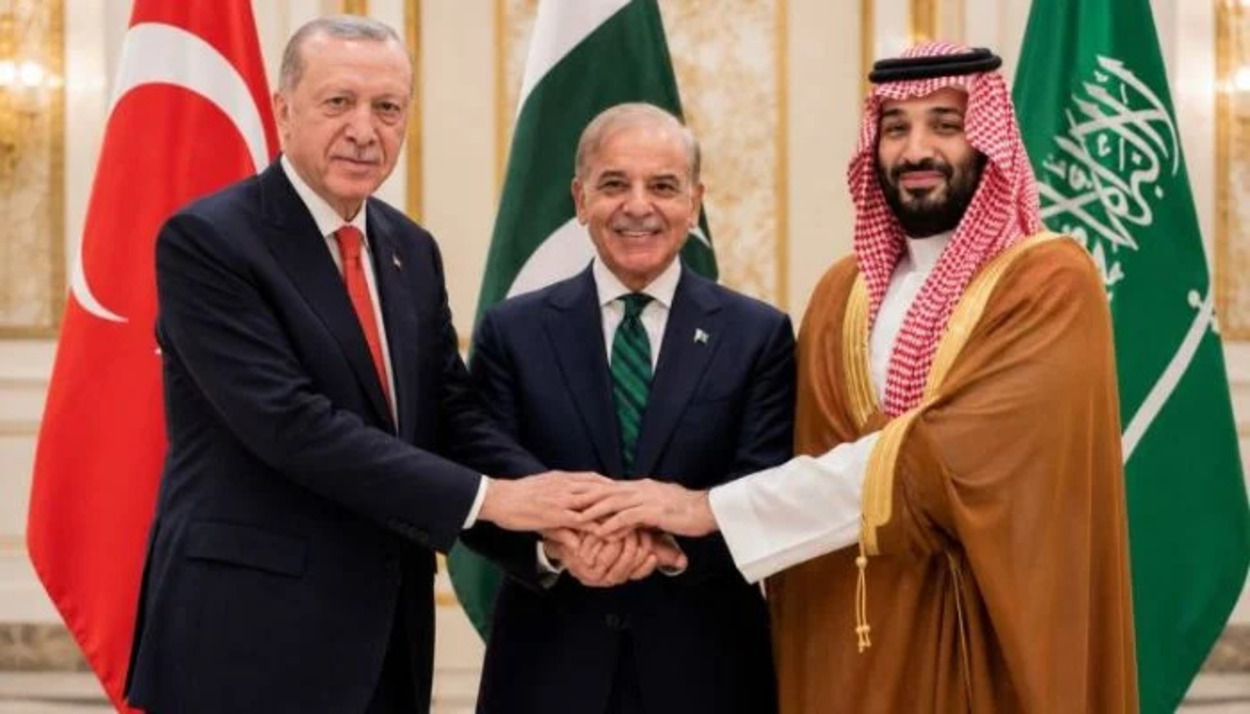
Because when you step back and examine how this ceasefire actually came together, it becomes clear that this was not a moment triggered by fear or sudden capitulation, but rather the result of limits being reached behind the scenes well before the most aggressive public rhetoric ever took hold. Negotiations had already been underway through multiple channels, with Pakistan, Turkey, Egypt, and China all playing roles in facilitating discussions that were moving toward a pause, and even Donald Trump himself acknowledged China’s involvement, which alone disrupts the idea that this was a one-sided outcome driven purely by American threats.
When that many regional and global players step into a situation at once, it signals that the risk of continuing had reached a level that extended far beyond a bilateral conflict, and at the center of that risk was the Strait of Hormuz, where Iran demonstrated something that has not been fully acknowledged in public coverage. It showed that it could regulate global shipping in a selective and calculated way, not by fully shutting down the waterway, but by controlling movement, slowing traffic, and effectively deciding which ships moved and which did not.
That distinction is critical because it shifts Iran from being a reactive player under pressure to an active force shaping economic consequences on a global scale, and those consequences were immediate. Energy markets, insurance costs, shipping routes, and supply chains all began to feel strain, and for the United States this quickly moved beyond a military issue into an economic one with direct implications for domestic stability and international partnerships.
The deeper concern was escalation, because Iranian messaging made it clear that further expansion of the conflict could bring Gulf infrastructure into play, and that is where the situation became far more dangerous than it was being publicly described. A sustained disruption to oil and natural gas flows would not simply raise prices temporarily, but would destabilize entire economic systems, and that is a level of risk that neither Washington nor its allies were prepared to absorb.
At the same time, what is dominating television coverage right now is a very specific and controlled narrative, one that presents the U.S. military as having executed a precise and highly effective operation with minimal to no casualties, maintaining dominance and exiting without meaningful damage. That messaging is not unusual, because militaries do not project uncertainty in real time, and a narrative of control serves to reassure allies, calm markets, and prevent escalation driven by panic.
What is not being discussed, however, is what that narrative does not address, and that is where the reality becomes far more complex. Modern warfare, particularly against a state that has spent decades preparing for this type of confrontation, does not unfold without friction, and losses are not always immediately disclosed or fully understood in the early stages of reporting.
Even when casualty numbers appear limited relative to scale, that does not mean the engagement came without cost, and that is especially true when it comes to the perception of military dominance. American air superiority, long presented as virtually untouchable, was tested in a way that matters far beyond the battlefield, because even limited losses or near-losses of advanced aircraft carry weight that extends into global perception, defense partnerships, and future procurement decisions.
These systems are not just tools of war, but symbols of technological superiority and reliability, and when they are challenged in visible ways it forces allies and potential buyers to reassess what they are investing in. Defense companies depend heavily on that perception, and even a slight shift can introduce hesitation into future deals, because confidence is as much a part of the product as the hardware itself.
At the same time, the financial cost of the war was becoming increasingly difficult to justify within the United States, as billions of dollars were being spent daily while Americans were being told there was limited funding available for healthcare, infrastructure, and veterans’ services. That contradiction creates political pressure quickly, especially in a country that has already experienced the long-term consequences of prolonged conflict in the Middle East.
The public appetite for another extended war is not what it once was, and the memory of Iraq and Afghanistan continues to shape how new military engagements are perceived, particularly when there is no clear endpoint or defined outcome. This is not just about policy, but about trust, and once that begins to erode it becomes much harder to sustain support for continued escalation.
Meanwhile, inside Iran, the response followed a very different trajectory than what might have been expected from sustained pressure, because instead of fragmentation or retreat, the messaging and public posture reflected defiance, mobilization, and a willingness to endure. National pride became a central theme, and even open mockery of American threats became part of the narrative, reinforcing the perception that Iran was not operating from a position of fear.
Whether every figure cited about mobilization is precise or not, the broader reality is clear, which is that the pressure campaign did not produce visible internal collapse, and that matters because wars are not only fought with weapons, but with perception, endurance, and the ability to sustain pressure over time.
This is where the most important shift occurs, because Iran did not enter negotiations empty-handed, and it did not approach the ceasefire as a retreat. It entered with a structured framework, a ten-point plan that, if even partially realized, represents a significant strategic gain across multiple fronts.
A commitment to non-aggression from the United States changes the baseline entirely, because it moves Iran from being under constant threat to being recognized as a power that must be negotiated with rather than confronted directly. Controlled passage through the Strait of Hormuz ensures that Iran retains long-term leverage over one of the most critical waterways in the world, and the acceptance of its nuclear enrichment program marks a departure from decades of hardline opposition.
The lifting of sanctions and the release of frozen assets open the door to economic expansion that has been restricted for years, while the removal of international resolutions alters how Iran is positioned within the global system. The potential withdrawal of U.S. forces from regional bases would shift the balance of power significantly, and the concept of compensation tied to shipping through Hormuz transforms geographic control into sustained economic influence.
The push to formalize these terms through international mechanisms adds another layer, because it elevates these gains beyond temporary concessions and moves them toward long-term legitimacy, which is where the true strategic advantage lies.
And beyond all of that, there is a reality that is rarely discussed in mainstream coverage, which is that Iran is a critical agricultural engine within the region, and its production plays a significant role in supporting food supply across multiple countries. Disrupting that system would not just impact Iran, but would create wider economic and humanitarian consequences that extend far beyond the battlefield.
This is why the stakes of the conflict were never limited to military outcomes, and why the pressure to reach a pause became unavoidable as the situation evolved.
So when you step back and ask what this ceasefire actually represents, the answer is far more complex than the version being presented publicly, because this is not a clear victory, and it is not a resolution. It is a pause that reflects the limits of escalation, the risks of continuation, and the reality that neither side could push further without consequences that would extend well beyond their control.
During these two weeks, both sides will reassess, reposition, and prepare, and any assumption that movement can occur without detection or response ignores the level of surveillance and awareness that defines this region. Every action will be watched, every shift will be measured, and any miscalculation has the potential to restart the cycle immediately.
This is not the end of the conflict, but a recalibration, and when you look at what has been preserved, what has been secured, and what has been exposed, one conclusion becomes increasingly difficult to avoid.
No matter how it is framed publicly, Iran emerges from this moment with more leverage, more recognition, and more influence than it had before the conflict began, and that is not a retreat by any definition, but a repositioning that will shape everything that follows.
About The Author