Delta Strips Congress of VIP Travel Perks, Closing the Gap Between Power and Public
- Naomi Dela Cruz
- U.S.A
- April 2, 2026
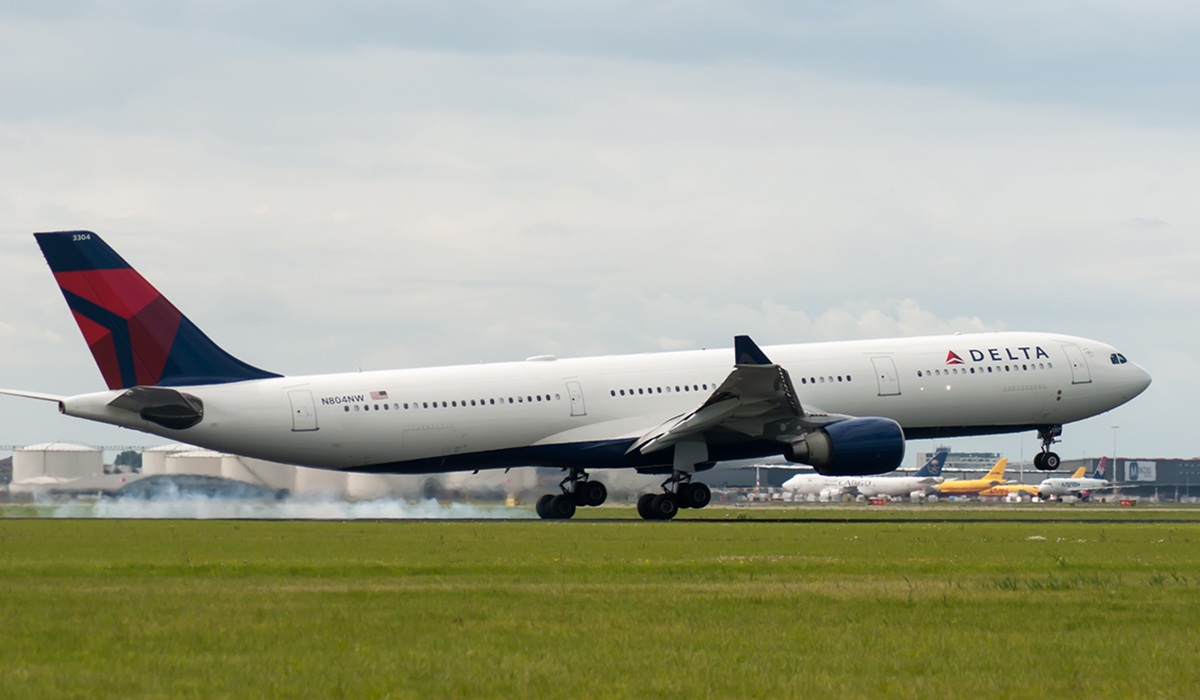
For years, the quiet choreography of power extended well beyond the halls of Washington and into the terminals of major airports. Members of Congress moved through a different version of air travel, one that softened the friction most passengers accept as routine. There were escorts who guided them through crowded concourses, expedited pathways that reduced waiting, and a level of attention often described as “white glove.” It was not loudly advertised, but it was widely understood. Travel, for elected officials, did not mirror the experience of the public they represented.
That arrangement has now been disrupted, at least for the moment, and the reaction has been swift. Reports that Delta Air Lines has suspended specialized airport escort services and VIP handling for members of Congress have circulated widely, sparking a wave of commentary that frames the move as a long-overdue equalizer. The image is a powerful one: lawmakers standing in the same security lines, waiting at the same gates, boarding in the same groups as everyone else. For many observers, it feels like a symbolic correction, a narrowing of the gap between political leadership and everyday reality.
The facts, however, tell a more grounded story, one rooted less in principle and more in pressure. The suspension of these services is tied to operational strain, not a sweeping philosophical shift. A combination of government dysfunction, resource constraints, and increased demand on airport systems has forced airlines to make difficult decisions about where to allocate staff and attention. In that environment, discretionary services—no matter how prestigious the clientele—are often the first to be scaled back.
Still, the reaction to the change reveals something deeper than the policy itself. The idea that elected officials would be required to navigate airports without special handling has struck a nerve because it touches on a broader tension that has been building for years. There is a growing perception that those in positions of power operate within a different reality, one insulated from the day-to-day challenges faced by the public. Air travel, with its long lines, unpredictable delays, and often frustrating logistics, has become a symbol of that divide.
To suddenly imagine members of Congress moving through that same system, without shortcuts or buffers, is to imagine a form of accountability that goes beyond legislation. It suggests a lived experience, a direct exposure to the infrastructure decisions, funding priorities, and policy outcomes that shape the travel experience for millions. Whether that exposure leads to meaningful change is another question entirely, but the symbolism is difficult to ignore.
At the same time, there are legitimate concerns that complicate the narrative. Public officials are not ordinary travelers in every sense. They are high-profile figures who can attract attention, both positive and negative, and crowded environments like airport terminals present unique security challenges. The removal of specialized services raises questions about how those risks are managed and whether the balance between accessibility and protection has shifted too far in one direction.
Those concerns, however, have not slowed the public conversation. If anything, they have added another layer to it. For some, the loss of VIP treatment is seen as a necessary recalibration, a reminder that public service should not come with an invisible layer of privilege. For others, it is a temporary inconvenience that will likely be reversed once operational pressures ease. The truth likely sits somewhere in between, shaped by factors that extend beyond a single airline or a single policy decision.
What is clear is that the moment has exposed how normalized these perks had become. There was a time when such services might have been viewed as practical accommodations for demanding schedules and security needs. Over time, they evolved into an expectation, part of the routine of political life. Their sudden absence, even if temporary, has made that expectation visible in a way it rarely was before.
There is also an argument emerging, quietly but persistently, that experiences like these should not be dismissed as trivial. Infrastructure, after all, is not an abstract concept. It is lived in moments like standing in line, missing a connection, or navigating an unfamiliar terminal under time pressure. When those making decisions about funding, staffing, and policy are removed from those moments, the gap between intention and reality can widen. When they are immersed in them, even briefly, that gap can become harder to ignore.
Whether this shift becomes permanent is uncertain, despite the claims circulating online. Airlines operate within a complex ecosystem of demand, resources, and relationships, and decisions made under strain are not always lasting. Yet the idea that this could mark a turning point has taken hold in the public imagination. It speaks to a desire, perhaps even an expectation, that the systems shaping everyday life should be experienced by those who govern them.
In the end, the suspension of VIP airport services for members of Congress is more than a logistical adjustment. It has become a reflection of broader questions about privilege, accountability, and connection. It forces a reconsideration of what it means to represent, and whether representation can ever be fully understood from a distance. For now, at least, the journey from Washington to home districts looks a little more like the journeys taken by everyone else. And in that shift, however temporary it may be, there is a story that extends far beyond the airport terminal.
About The Author