Can Iran Turn the Strait of Hormuz into a Toll Corridor?
- Naveed Aman Khan
- Tiger's Eye Advisory Group - Trending News
- April 2, 2026
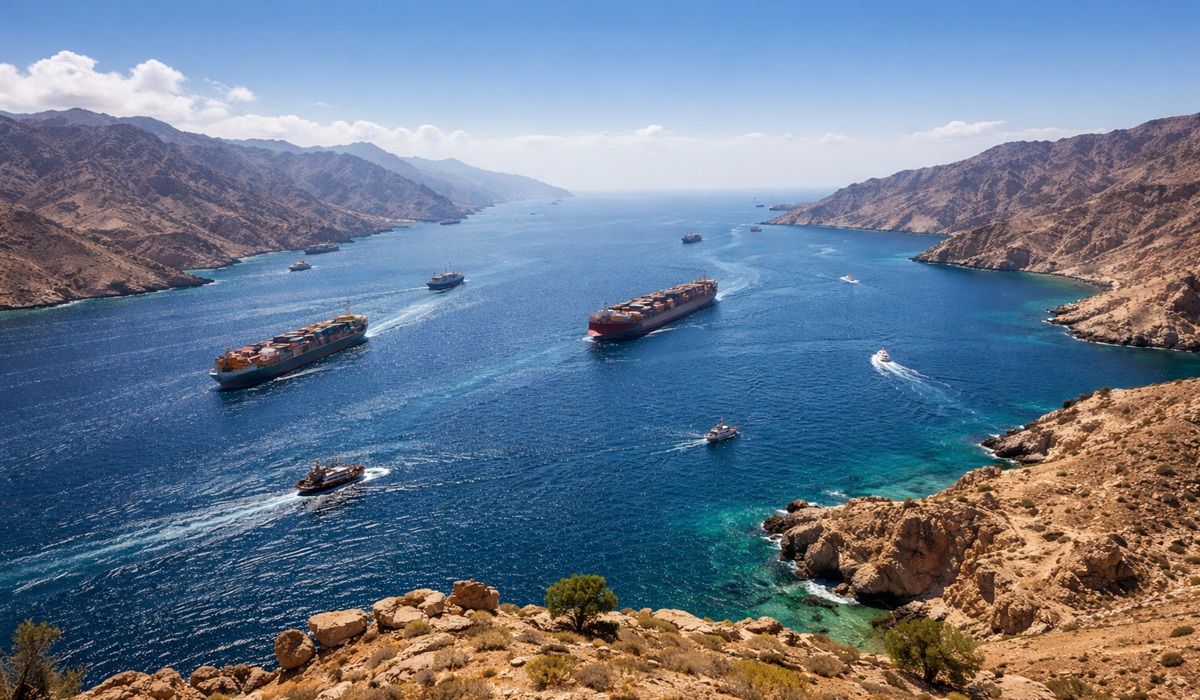
Global trade relies heavily on a few critical maritime chokepoints that not only facilitate the movement of goods but also shape the direction of international politics. Among the most prominent are the Suez Canal, the Panama Canal, and the Strait of Hormuz. Egypt and Panama have successfully transformed their waterways into major sources of national revenue through structured toll systems. In the current global context, however, an important question has emerged: can Iran similarly use the Strait of Hormuz for economic gain, and would such a strategy be practical and sustainable?
The Suez and Panama Canals are artificial waterways, constructed through extensive engineering, investment, and continuous maintenance. Egypt and Panama possess internationally recognized legal authority to impose transit fees on vessels passing through these canals. Egypt earns billions of dollars annually from the Suez Canal alone, while Panama’s economy heavily depends on its canal toll system. Shipping companies willingly pay these fees because the routes significantly reduce travel time and fuel costs, ultimately making them economically beneficial. The success of these systems rests on legal legitimacy, transparency, and stable administrative frameworks.
In contrast, the Strait of Hormuz is a genuine maritime passage that no single state has constructed. It connects the Persian Gulf to the Arabian Sea and ranks among the most vital global energy corridors. A substantial portion of the world’s oil supply passes through this narrow waterway, making it indispensable for international markets. Approximately 130 to 140 vessels transit the strait daily, amounting to nearly 50 thousand ships annually. This volume underscores its extraordinary strategic importance. Despite this, the legal and political framework governing the Strait of Hormuz is fundamentally different from that of the Suez and Panama Canals.
Under international maritime law, particularly the principle of “transit passage,” coastal states cannot unilaterally impose taxes or tolls on vessels passing through natural straits used for international navigation. This represents the primary obstacle preventing Iran from establishing a formal toll system. While there have been periodic allegations during times of heightened tensions that Iran has attempted to exert pressure on certain vessels for concessions or financial advantage, such actions fall outside the bounds of internationally accepted legal norms.
From a purely financial perspective, the Strait of Hormuz holds enormous revenue potential. If Iran were hypothetically able to charge $5 hundred thousand per vessel for approximately 50 thousand ships annually, total revenue could reach around $25 billion per year. Even a more modest fee of $ one hundred thousand per ship could generate up to $5 billion annually. On paper, these figures suggest that Iran could replicate the economic success achieved by Egypt and Panama.
The ground realities make this proposition highly complex. Any unilateral attempt by Iran to impose tolls would likely trigger a strong international backlash. Such a move would not only violate established maritime laws but could also escalate tensions with major global powers. Maritime trade operates on the principles of stability and predictability; any disruption or uncertainty in a key shipping route compels companies to explore alternative options, even if those alternatives are more costly.
At the same time, for countries importing oil and gas from the Gulf, the Strait of Hormuz remains the most critical route. This dependency explains why global powers and Gulf states are increasingly investing in alternative infrastructure, including pipelines and port networks, to reduce reliance on the strait. These efforts reflect a long-term strategy to mitigate risks associated with geopolitical instability in the region.
Another key difference between the Strait of Hormuz and the Suez and Panama Canals lies in the element of trust and stability. The canals operate under clearly defined regulations, robust administrative systems, and broad international confidence, ensuring steady and reliable revenue streams. In contrast, the Strait of Hormuz is located in a geopolitically sensitive region where tensions can escalate rapidly. Under such conditions, establishing and maintaining a structured toll system becomes exceedingly difficult.
The global economy is gradually transitioning toward alternative energy sources. While oil remains a dominant energy commodity, the growing adoption of renewable energy may reduce the long-term strategic importance of oil transportation routes. In this context, relying exclusively on the Strait of Hormuz as a future economic pillar may not represent a secure long-term strategy.
For Iran, transforming the Strait of Hormuz into a toll corridor similar to the Suez or Panama Canal remains largely a theoretical proposition rather than a practical reality. Legal constraints, political risks, and the likelihood of international resistance make such a strategy highly unstable. Sustainable economic benefits require legal legitimacy, political stability, and global trust—elements that are currently absent in this case. Without these foundations, even the world’s most strategically significant waterway cannot guarantee consistent revenue. If there is a major shift in the global balance of power and Iran succeeds in consolidating its regional influence, the nature of this debate could evolve. Under such circumstances, new precedents might emerge.
If Iran collects tolls from the Strait of Hormuz, it will not harm the US or Israel. If no country has supported the US in clearing the Strait of Hormuz, then it is not the US’s responsibility to clear Hormuz for the world. Why does the US create problems for itself for no reason for the sake of countries that did not support the US in clearing the Strait of Hormuz?
About The Author