From Hormuz to Main Street: Iran’s Rise, America’s Limits
- Naveed Aman Khan
- Tiger's Eye Advisory Group - Trending News
- Middle East
- March 30, 2026
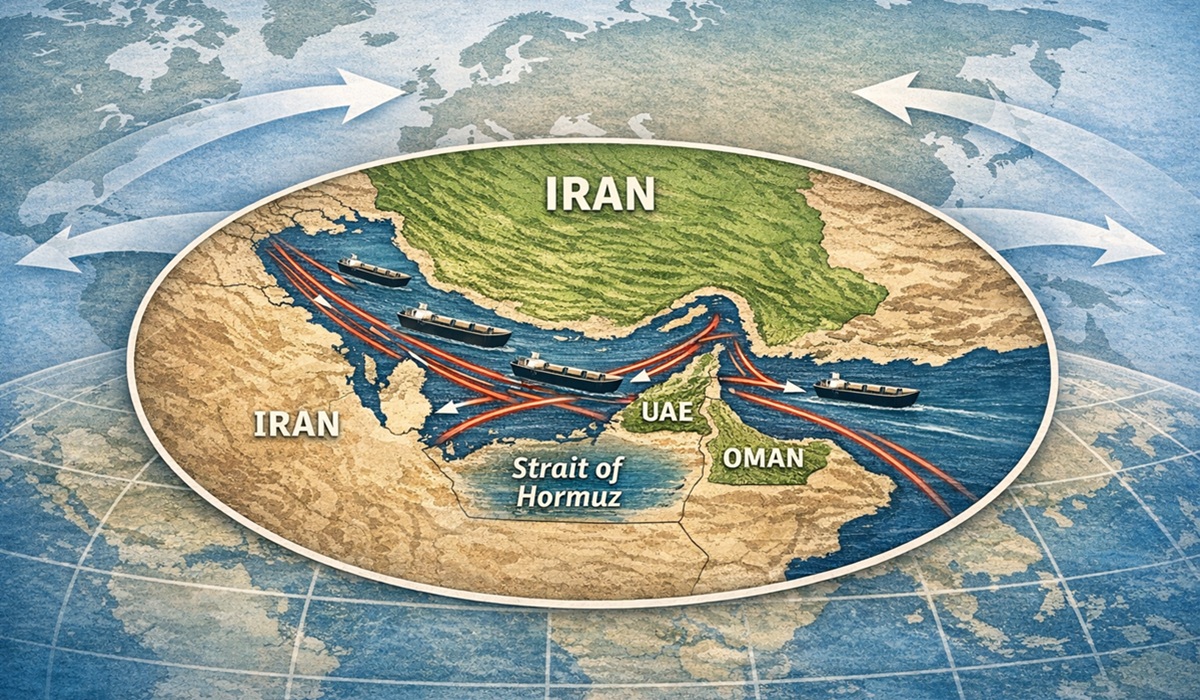
In recent weeks, mass protests have erupted across multiple U.S. states, with estimates suggesting that over eight million Americans took to the streets against former President Donald Trump and Israeli Prime Minister Benjamin Netanyahu, while expressing solidarity with Iran and Palestine. This wave of dissent—fueled by opposition to foreign policy decisions, concerns about war escalation, and a broader sense of global justice—has captured international attention. From an Iranian perspective, these developments are seen not merely as reactions to a specific conflict but as indicative of a shifting geopolitical landscape in which Tehran’s long-standing narrative of resistance against Western dominance has gained unexpected resonance.
For decades, Iran has positioned itself as a staunch defender of Palestinian rights and a challenger to U.S. and Israeli influence in the Middle East. Tehran’s support for groups such as Hezbollah in Lebanon, militias in Iraq, the Houthis in Yemen, and political actors sympathetic to the Palestinian cause reflects a multifaceted strategy of influence that goes beyond conventional statecraft. Rather than relying solely on traditional military might, Iran has built a network of alliances and proxies that serve as force multipliers in key theaters across the region. This approach has enabled Iran to exert influence disproportionate to its conventional military capabilities, especially in the context of asymmetric and proxy warfare.
However, the question of whether Iran has achieved true regional hegemony remains complex and contested. Hegemony implies not only influence but also the ability to shape the preferences and behaviors of neighboring states in a sustained and broadly accepted manner. While Iran’s network of influence has undeniably expanded since the 1979 revolution, it has also faced significant constraints. Economically, Iran has been weighed down by long-term sanctions and internal structural weaknesses. Its conventional military capabilities, though resilient, are limited compared to those of regional rivals and global powers. Diplomatically, Tehran has often found itself isolated from key Arab states and Western powers, even as it engages in tactical partnerships and negotiations.
The ongoing conflict with the United States and Israel—now entering its second month—has further underscored both Iran’s resilience and its vulnerabilities. U.S.-Israeli strikes have reportedly damaged significant portions of Iran’s missile infrastructure, reducing its strike capabilities even as Tehran continues to launch retaliatory attacks. These developments highlight the limits of Iran’s military reach in a direct confrontation with major powers.
Yet, Tehran’s strategic posture has been notable for its adaptability. Iran’s use of asymmetric tactics and its network of allied non-state actors complicate efforts by the United States and its allies to contain its influence. The so-called “Axis of Resistance”—a loose alignment that includes Hezbollah, various Iraqi militias, and the Houthis—allows Iran to project power across multiple fronts without engaging in conventional, state-to-state warfare. This decentralized model has proven difficult for adversaries to dismantle and reflects a nuanced understanding of the balance of power in the region.
From Tehran’s vantage point, the recent protests in the United States and growing global criticism of Western policies toward Palestine are seen as validation of its long-standing narrative: that Western interventionism is neither universally accepted nor sustainable. Iranian state media and political elites have portrayed these developments as evidence that the moral and political legitimacy of U.S. foreign policy is eroding. In this narrative, mass protests abroad are not isolated events but part of a broader awakening against what Tehran describes as “arrogant” foreign powers. This framing resonates with segments of the global public who see in Iran’s resistance rhetoric a challenge to entrenched power structures.
Nevertheless, it would be an over simplification to equate global protests with a strategic victory for Iran. The Palestinian cause enjoys widespread sympathy internationally, and opposition to certain U.S. and Israeli policies transcends support for Tehran’s regional ambitions. Many protesters in the United States and elsewhere are motivated by humanitarian concerns and a desire for a just resolution to the Palestinian situation, not necessarily by alignment with Iranian geopolitical objectives.
Furthermore, the internal political dynamics of the United States—where democratic processes and institutional checks limit the immediate impact of street protests on foreign policy—mean that such demonstrations, while significant, do not automatically translate into strategic shifts in U.S. policy.
Moreover, Iran’s relations with its immediate neighbors, particularly the Gulf Arab states, remain fraught. Countries like Saudi Arabia, the United Arab Emirates, and Qatar have expressed deep concerns about the threat posed by Iran-backed militias and proxy groups. These states have condemned actions attributed to Tehran and warned of destabilizing spillover effects, including espionage and cross-border attacks. Such tensions underscore that Iran’s influence is neither uncontested nor uniformly welcomed across the region.
In assessing Iran’s regional position, it is also essential to consider the broader geopolitical context. The Middle East is not a monolithic arena but a complex web of competing interests, alliances, and historical grievances. Iran’s influence intersects with the strategic calculations of global powers such as the United States, Russia, and China, as well as regional actors like Turkey and Israel. In this environment, Iran’s role is significant but not singularly dominant.
So, has Iran established hegemonic control in the Middle East? From an Iranian perspective, the answer may be framed in affirmative terms: Tehran has successfully positioned itself as a central player in regional politics, capable of resisting Western pressure and shaping the discourse on key issues like Palestine. Its alliances and strategic depth give it leverage that belies its conventional military and economic limitations. Yet, from a broader analytical standpoint, Iran’s influence—while substantial—is balanced by persistent constraints and opposition from powerful regional and global actors.
Iran’s regional strategy has indeed yielded notable influence, particularly through its support networks and ideological appeal among certain constituencies. The recent global protests and shifting public sentiments in Western countries reflect broader dissatisfaction with the status quo, which Iran has sought to capitalize on rhetorically. However, true hegemony—defined as uncontested and widely accepted leadership across the region—remains elusive. Iran’s position is better understood as that of a resilient and strategically adept regional power, navigating a turbulent geopolitical landscape with both strengths and limitations.
About The Author