Trump Caves To One Of Iaolta’s Demands: US Government Lifts Sanctions on Iranian Oil
- TDS News
- Breaking News
- March 21, 2026
By: Donovan Martin Sr, Editor in Chief
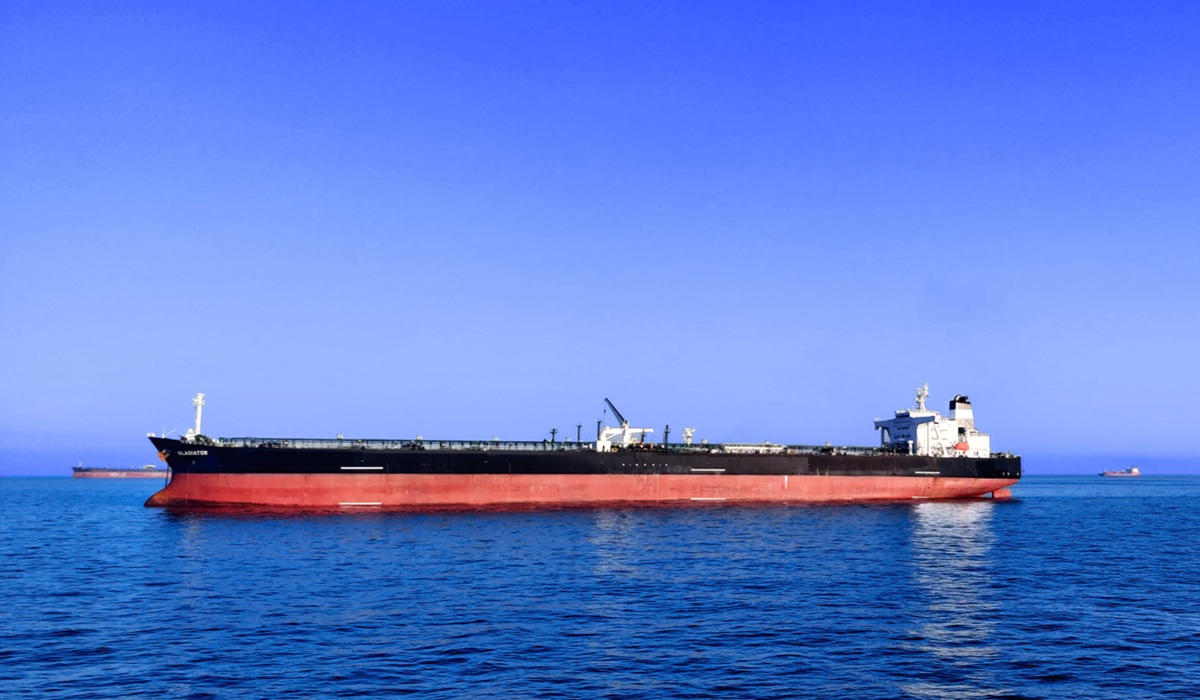
Image Credit: Mohamed Aly
The Trump administration’s decision to temporarily lift sanctions on Iranian oil is not simply a technical adjustment to stabilize energy markets. It represents a pivotal moment that exposes a deeper and more consequential reality: the United States, long regarded as the central enforcer of global economic pressure through sanctions, is now showing signs of strain in maintaining that system under real-world stress.
Recent authorization from Washington allows a limited volume of Iranian oil already in transit to be delivered and sold on global markets. Officially, this is framed as a short-term measure intended to ease extreme volatility in oil prices following escalating tensions in the Middle East. Prices have surged sharply, and supply disruptions tied to regional instability have left few immediate options to stabilize markets. On paper, the move is temporary and controlled. In practice, the implications extend far beyond a single shipment of oil.
For decades, U.S. sanctions have functioned as more than policy. They have operated as a global enforcement mechanism. When the United States imposed sanctions, other nations followed, not always out of agreement, but out of necessity. Financial systems, trade networks, and diplomatic relationships were structured in a way that made compliance the only viable path. Countries absorbed economic losses, restructured industries, and limited access to resources because Washington set the direction and the consequences for defiance were clear.
That system has always depended on consistency and credibility. What is now unfolding challenges both. The timing is critical. The easing of restrictions comes amid a broader energy crisis fueled by conflict in the Middle East, including disruptions around one of the world’s most important oil transit corridors. With supply constrained and prices rising rapidly, the United States has moved to release pressure on sanctioned sources, including both Iranian and previously restricted Russian oil flows. This is not a move from a position of strategic advantage. It is a response to a system under pressure.
That distinction is where the real significance lies. When a country leads through sanctions, it sends a clear message that certain lines will not be crossed and that enforcement will remain firm. When those same sanctions are relaxed under economic and geopolitical pressure, it introduces uncertainty into that message. It signals that enforcement has limits, that pressure can produce results, and that the rules governing global behavior may be more flexible than previously believed.
That perception alone begins to shift the balance of power.
The immediate effects are already visible. Iran stands to benefit economically from renewed access to global markets, strengthening its financial position and reinforcing its influence within the region. Major energy-importing nations are also positioned to take advantage of the additional supply, moving quickly to secure resources that have been restricted for years. These are rational decisions driven by economic need, but they also reflect a broader shift toward more independent action.
For U.S. allies, particularly in Europe, the situation is far more complex. Many of these countries aligned themselves closely with American sanctions policy, often at significant cost to their own economies. They reduced reliance on certain energy sources, absorbed higher prices, and restructured supply chains in order to maintain alignment. Now, they are confronted with a reversal that raises difficult questions about the long-term reliability of that alignment.
If sanctions can be enforced strictly and then eased when conditions become unfavorable, the incentive to endure economic hardship in support of them begins to weaken. Over time, this leads to a gradual shift where countries prioritize their own interests over coordinated global action. This is how fragmentation begins, not through open defiance, but through quiet recalibration.
At the same time, the global energy market is becoming more reactive and less predictable. Instead of operating within a stable framework, countries are increasingly making short-term decisions based on immediate needs. This creates a more transactional environment where long-standing alliances are tested by economic realities. In such a system, influence is no longer maintained solely through power, but through the ability to provide stability and consistency.
Domestically, the consequences are equally significant. Rising oil prices are feeding into broader inflationary pressures, increasing the cost of transportation, goods, and basic living expenses. The impact is being felt most strongly in regions with lower incomes and higher dependence on fuel, where households have less flexibility to absorb sudden increases. As economic strain grows, so does political pressure, particularly in a climate where voters are already sensitive to affordability and stability.
This creates a situation where domestic and international pressures are converging. The United States is attempting to manage a global energy crisis while also addressing rising economic concerns at home. The tools available are limited, and each decision carries trade-offs that extend beyond immediate outcomes.
The larger issue is not whether the temporary lifting of sanctions will ease prices in the short term. It is whether the credibility of the sanctions system itself can withstand visible adjustments under pressure. Once questions begin to emerge about consistency, they tend to expand, influencing how countries respond not just today, but in future crises.
This is where the broader implications take shape. If allies begin to question the durability of U.S. policy, alignment becomes more conditional. If adversaries see that pressure can lead to concessions, they are more likely to test those limits. If markets interpret policy as reactive rather than strategic, volatility becomes the default. Each of these shifts may appear gradual on its own, but together they reshape the global landscape.
The United States remains a dominant force, but dominance requires more than capability. It requires predictability, clarity, and the ability to set a course that others trust, even when it is difficult. When that trust is weakened, influence does not disappear overnight, but it does begin to erode.
The temporary lifting of sanctions on Iranian oil may address an immediate problem, but it also reveals a deeper challenge. The system that once allowed the United States to enforce global compliance is being tested by real-world pressures that cannot be controlled through policy alone. What is unfolding is not just a response to an energy crisis. It is a moment that signals a shift in how power is exercised, how alliances are maintained, and how the global order is evolving under strain.
About The Author