An Evening of Reflection, Freedom, and Unity: A Powerful Passover Experience
- Don Woodstock
- Canada
- March 21, 2026
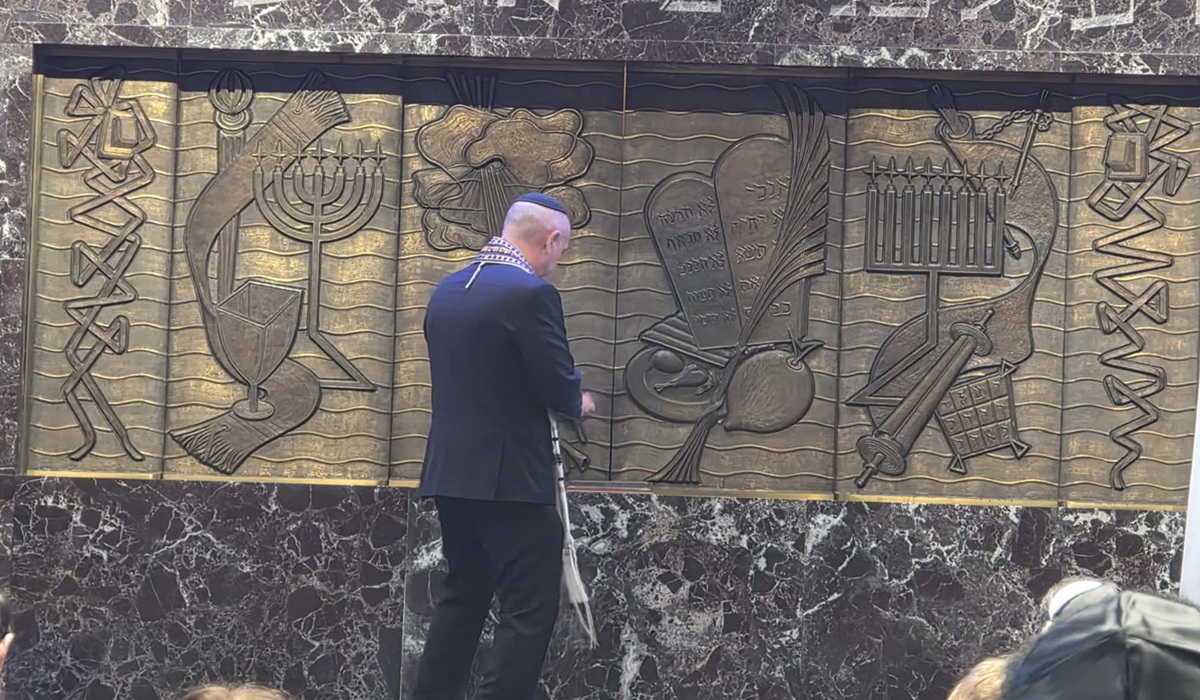
An evening of reflection, tradition, and cultural immersion unfolded in a powerful and memorable way as members of the community gathered for a deeply meaningful Passover experience. Organized through a collaboration between B’Nai Brith Canada, Congregation Shaarey Zedek, and the League for Human Rights of B’nai Brith Canada, the event offered far more than a ceremonial gathering. It became a living bridge between past and present, inviting participants to step into centuries of history and experience the enduring journey of the Jewish people toward freedom.
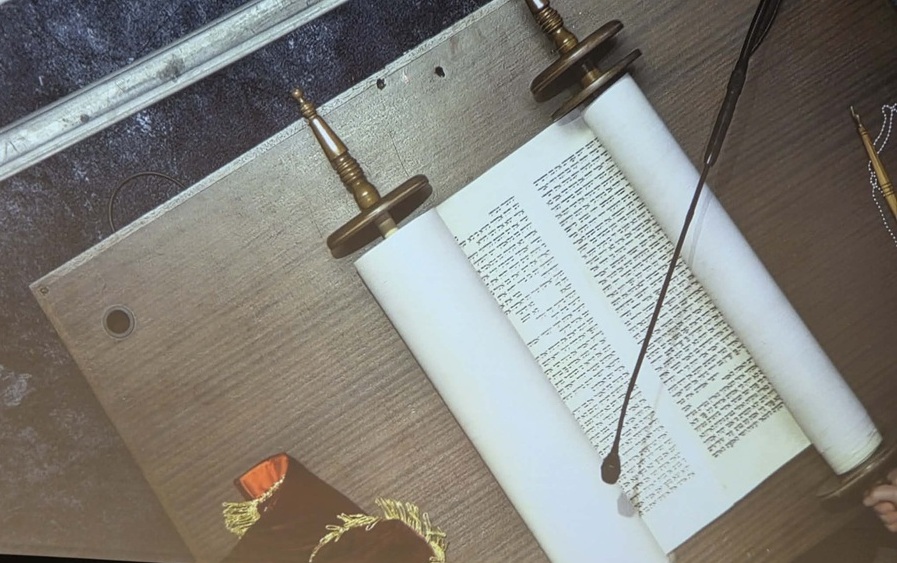
From the moment the evening began, there was a clear sense that this was not simply about remembering history, but about reliving it. The procedure used to write these scrolls is ancient, and attendees were given a rare and humbling opportunity to stand in close proximity to a century-old Torah scroll containing original sacred writings and teachings.
The presence of such an artifact carried a quiet but profound weight, reminding everyone in the room that the traditions being observed were not symbolic recreations, but practices rooted in an unbroken historical continuum.
The experience was thoughtfully guided to ensure that every participant, regardless of background or familiarity, could connect with the meaning behind each ritual. What stood out most was how every action, no matter how small, carried layers of significance that continue to resonate in modern life. This was not distant or abstract history. It was presented as something deeply relevant to the present day, offering lessons about resilience, identity, and the ongoing pursuit of freedom.
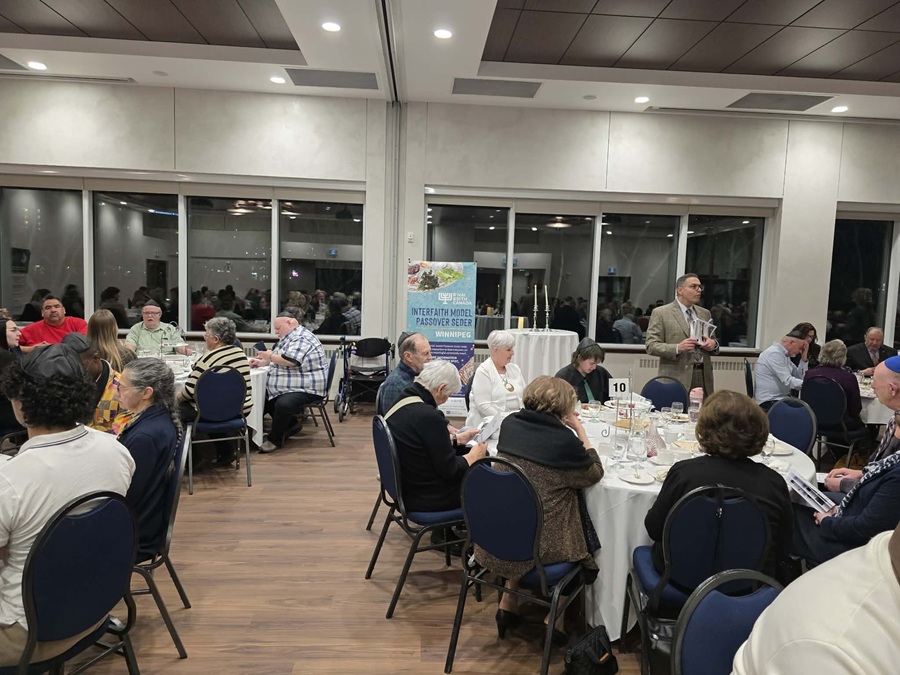
Behind the success of the evening was the leadership and dedication of Ruth Ashrafi, who has served as Regional Director for B’nai Brith Canada in Manitoba and Saskatchewan for the past five years and was responsible for organizing this remarkable gathering. As part of a global social action and advocacy organization, her work reflects a deep commitment to bridging communities and advancing justice and truth. Her passion for building meaningful connections across diverse groups was evident throughout the event, as people from all walks of life came together in a spirit of shared understanding.
Ruth spoke to the importance of what was witnessed that evening, noting that building bridges between the Jewish community and others was “lovely to see at this year’s Passover Haggadah.” She emphasized that bringing people together in a setting filled with laughter, smiles, and shared meals is not only meaningful, but a true blessing. Her words captured the essence of the evening, reinforcing that unity is built not just through dialogue, but through shared human experiences.
Central to the evening’s impact was the leadership of Rabbi Shalom Rose, whose presence transformed the gathering into both an educational and spiritual journey. Rabbi Rose expressed sincere gratitude for being part of such a meaningful celebration while injecting humour in a very witty way, emphasizing that Passover is not only about physical liberation, but also about freeing the mind. He spoke about the importance of breaking away from the shackles and bondage that still exist in different forms today, encouraging all in attendance to embrace a renewed sense of clarity and purpose in what he described as a “New Jerusalem.” (You would never know that he is aware of Negro Spiritual!)
Rather than allowing the event to become a passive experience centered solely on food and tradition, Rabbi Rose ensured that each element of the Seder was understood in its full depth. Participants were encouraged to reflect on the meaning behind each ritual step, creating an atmosphere that was both engaging, funny, and introspective. His message resonated deeply, as he reminded attendees that Passover is an opportunity to open our eyes to the wonders of God’s love, and through that awareness, to achieve true freedom of the mind.
The progression of the evening followed the traditional structure of the Passover Seder, each stage building upon the last to tell the story of liberation from Egypt. The ritual of washing the hands symbolized preparation and renewal, while the eating of the green vegetable reflected growth and hope, even in times of hardship. When the middle matzah was broken, it became a moment of reflection on themes of division and restoration that echo not only through history, but through present-day experiences as well.
As the story of the Exodus was shared, it became the emotional centerpiece of the evening. Accompanied by the tradition of four cups of wine, each representing a different expression of redemption, the narrative came alive in a way that felt both vivid and deeply personal. Remember now, back then drinking 4 cups of wine would make you feel really good and your camel would take you home. Today, moderation was the order of the day so we could keep our driver’s license. It was not simply a story being told, but a shared experience connecting everyone in the room to generations that came before them.
What made the evening especially powerful was the diversity of those in attendance. People from many different backgrounds came together, including Jewish, Muslim, Hindu, Christian, Black, White, First Nations, and others, all sharing in this timeless tradition. It was a rare and meaningful display of unity, where differences were not only acknowledged but embraced, creating a space where mutual respect and understanding could flourish.
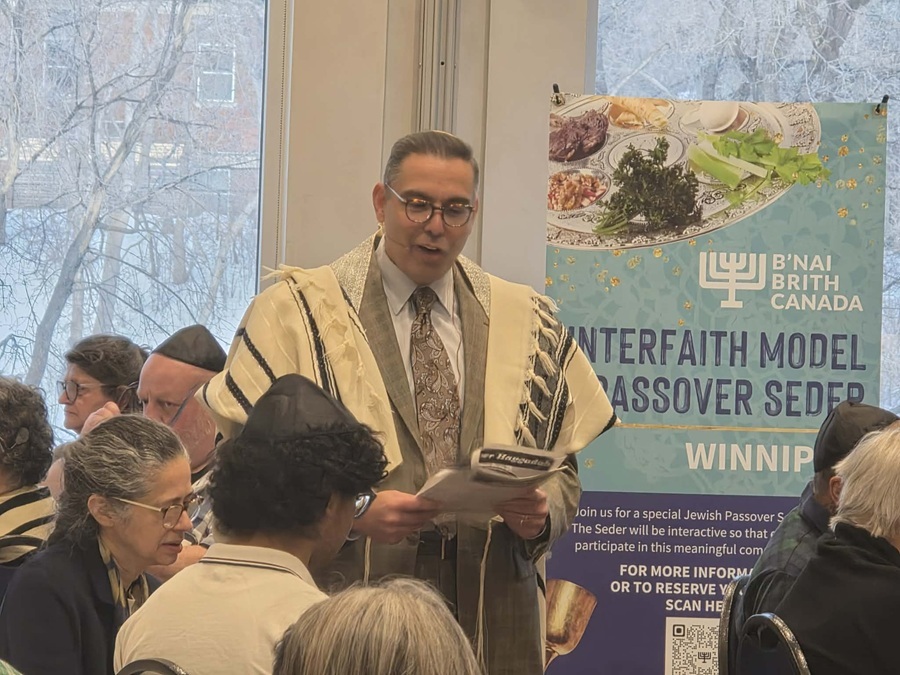
Through storytelling, ritual, humour, and reflection, the experience engaged not just the mind, but the body and spirit. The atmosphere balanced reverence with warmth, making it accessible while preserving its deep significance. By the end of the evening, there was a shared sense that something truly meaningful had taken place.
As the gathering came to a close, a message lingered that extended far beyond the walls of the room. This was not just about honoring the past, but about carrying its lessons forward. The traditional words, “Next year in Jerusalem,” took on renewed meaning, symbolizing hope, continuity, and the enduring human desire for freedom and connection.
Well done to Ruth Ashrafi and B’nai Brith Canada, whose guiding principle of “People helping people live with dignity” was clearly reflected in every aspect of the evening. Alongside Congregation Shaarey Zedek, celebrating communities and culture, and the League for Human Rights of B’nai Brith Canada, this collaboration stood as a powerful example of what can be achieved when organizations come together with a shared purpose.
Above all, the evening stood as a powerful reminder that traditions like Passover are not meant to divide, but to bring people together. In a world often marked by separation, this gathering served as a living example of unity, understanding, and shared humanity.
Shalom, Shalom.
About The Author