Nobel Peace Prize 2026: Once a Moral Crown, Now Too Often a Political Statement
- Ingrid Jones
- Breaking News
- March 18, 2026
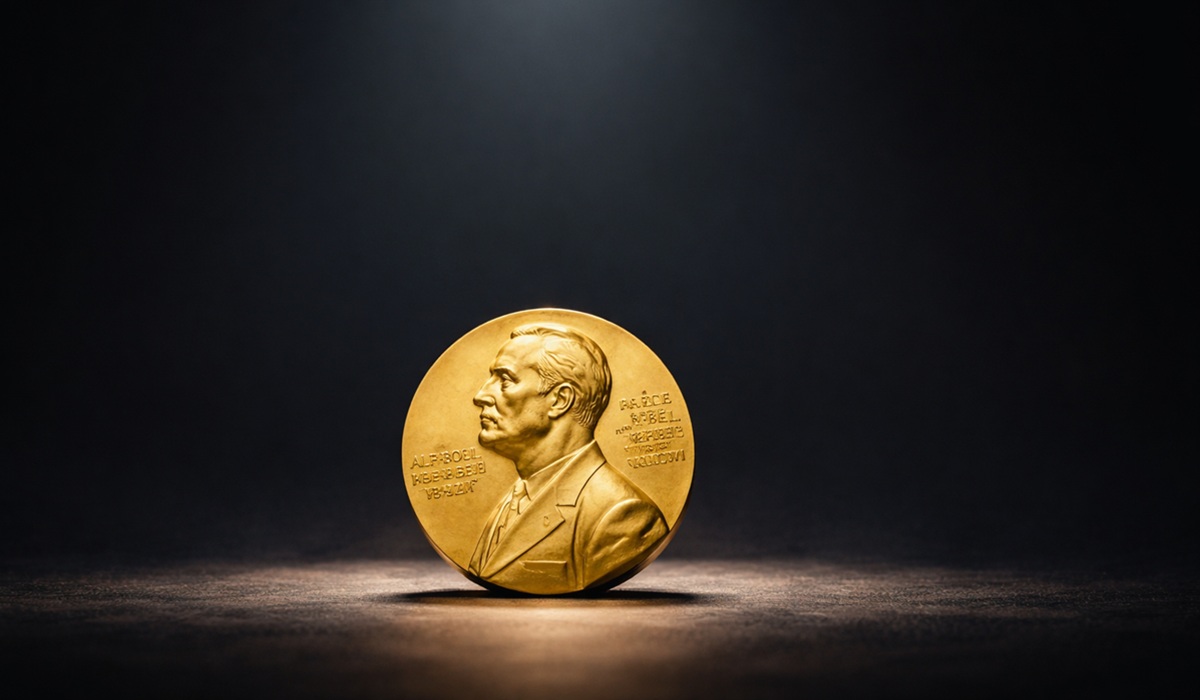
The latest 2026 PRIO Director’s list has reignited an old question: what does the Nobel Peace Prize even mean anymore? On Wednesday, PRIO released its annual independent list of preferred candidates, naming Mykola Kuleba and Save the Children, Sudan’s Emergency Response Rooms, the World Trade Organization, the Committee to Protect Journalists, and the International Court of Justice alongside the International Criminal Court. But PRIO’s list is not the Nobel Committee’s official shortlist. The real nominees remain secret for 50 years under Nobel rules, which means what the public gets every year is not transparency, but speculation layered on prestige.
That matters because the Nobel Peace Prize was not originally imagined as a vague medal for whatever cause Norway’s political class or the wider Western establishment finds fashionable in a given year. Alfred Nobel’s will was much narrower. He said the prize should go to the person who had done the most or best work for fraternity between nations, for the abolition or reduction of standing armies, and for the holding and promotion of peace congresses. The first Peace Prize was awarded in 1901, and in its early decades it was much more closely tied to organized peace movements, arbitration, diplomacy, and disarmament.
Over time, the definition of peace widened dramatically. Nobel’s own historical materials acknowledge that the committee gradually adopted a broader interpretation of peace, expanding beyond anti-war activism and arbitration into humanitarian causes, human rights, democracy advocacy, and international institutions. That broadening helped keep the prize relevant, but it also opened the door to something else: ideology, fashion, and politics. Once peace can mean almost anything good, the prize can be used to signal almost any political message.
Even the Nobel Foundation’s historical overview admits some of the most controversial decisions came when the committee awarded the prize to hard-line political figures. Its own century review points to Theodore Roosevelt as an early example of a controversial laureate, noting he was internationally known for a bellicose posture even as he was rewarded for mediation. That same history shows a committee increasingly willing not only to honor completed achievements, but to use the prize as an instrument, a nudge, or an incentive to push events in a desired direction. In other words, the prize stopped being only a reward and became, at times, an intervention.
That is the core of the credibility problem. A peace prize is supposed to represent moral clarity. Instead, it has too often come to reflect the worldview of those judging it. The Norwegian Nobel Committee is appointed by the Norwegian Parliament, even though it operates as a private prize-awarding body. Its record has long been shaped by a distinctly Norwegian and broader Western liberal-internationalist outlook. That does not automatically make every award wrong, but it does make the process far less neutral than the public image suggests.
Last year’s award to Venezuelan opposition leader Maria Corina Machado only deepened that perception for many observers. The Nobel Committee said it was honoring her for promoting democratic rights and a peaceful transition in Venezuela. Critics, however, saw the prize less as a universal peace statement and more as the committee taking a side in a bitter geopolitical and domestic power struggle. Whether one supports Machado or opposes Maduro, that is precisely the problem: the prize increasingly reads not as a recognition above politics, but as a decision made from inside politics.
That is why the new PRIO list lands differently than it might have decades ago. On paper, several of the names are easy to defend. Save the Children, Sudan’s Emergency Response Rooms, CPJ, and international courts all fit within the modern humanitarian reading of peace. PRIO argues that these candidates protect children in war, sustain civilians in Sudan, defend journalism under lethal assault, and uphold international law. But the very fact that the World Trade Organization also appears on the same list shows how elastic the category has become. If peace can mean aid work, press freedom, international courts, trade systems, and democracy advocacy all at once, then the prize risks meaning everything and therefore meaning less.
That does not mean every recent laureate is undeserving, or that humanitarian work is unimportant. It means the Nobel Peace Prize no longer carries the singular moral force it once claimed. A prize that was born from a clear ideal has become a stage for broad political messaging. It is still globally famous. It is still influential. But significance and credibility are not the same thing. The Nobel Peace Prize remains prestigious because of its name, its history, and its platform. The harder question is whether it still commands the same respect.
More and more, the answer appears to be no. The prize has not become meaningless, but it has become diluted. What began as a distinction tied to peace between nations and the reduction of war has evolved into a highly interpretive, highly political statement about which causes, institutions, and actors the committee wants to elevate at a given moment. That may satisfy activists, diplomats, and editorial boards. It may even shape public debate. But it is a long way from Alfred Nobel’s original vision.
About The Author