Pakistan and Afghanistan Slide Into Open Conflict as Border Crisis Erupts
- Hami Aziz
- Tiger's Eye Advisory Group - Trending News
- Middle East
- March 17, 2026
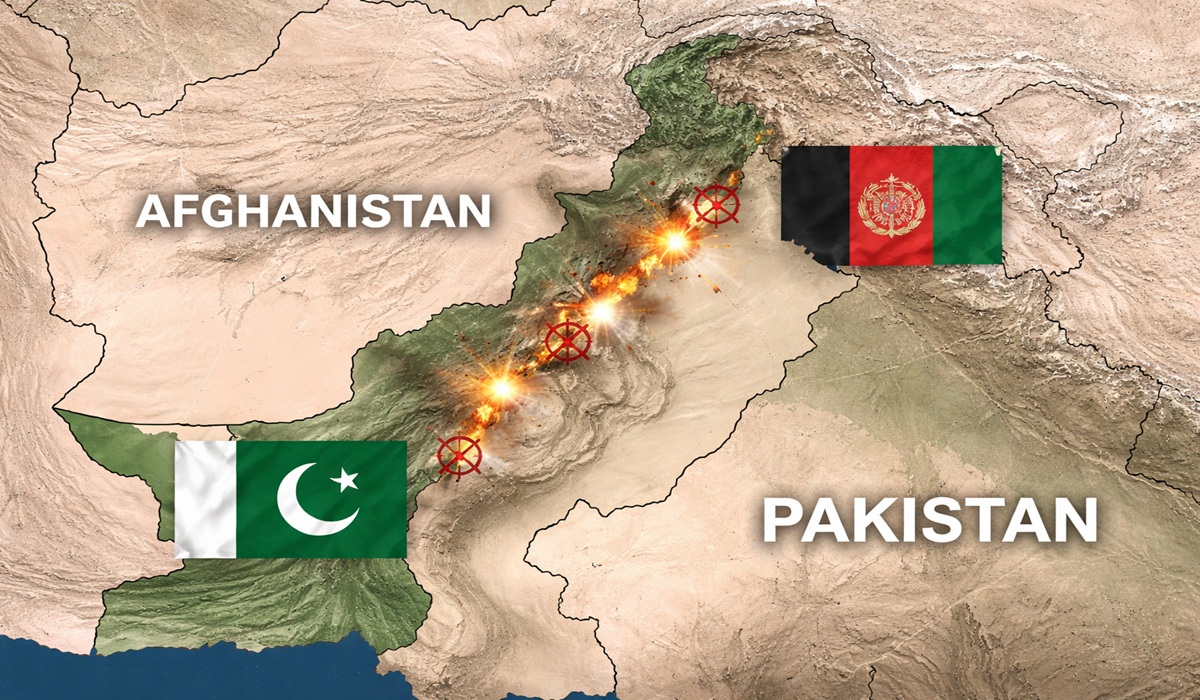
A long-simmering dispute between Pakistan and Afghanistan has escalated into open conflict, marking a dangerous turning point in a region already burdened by instability. What had for years been a cycle of accusations, border skirmishes, and diplomatic strain has now crossed into sustained military confrontation, raising immediate concerns about civilian safety and wider regional consequences.
At the center of the crisis is the disputed frontier known as the Durand Line. Drawn during the colonial era, the boundary has never been formally recognized by Kabul, and it has remained a source of tension through successive governments on both sides. While clashes along the border are not new, the scale and intensity of the current escalation signal something far more serious than previous flare-ups.
The latest round of fighting followed a series of cross-border incidents that rapidly spiraled beyond control. Islamabad has accused armed groups operating from Afghan territory of launching coordinated attacks inside its borders, while Afghan officials have pointed to retaliatory strikes and incursions as evidence of aggression from across the line. With each side framing its actions as defensive, the cycle of escalation has accelerated into sustained engagements between regular forces.
For civilians living near the border, the consequences have been immediate and severe. Entire communities have been forced to flee, often with little warning and limited resources. Displacement numbers are rising quickly, and humanitarian agencies are warning of a deepening crisis as access to food, clean water, and medical care becomes increasingly strained. Families who were already living on the edge are now facing a level of uncertainty that is both sudden and overwhelming.
Efforts to de-escalate the situation have so far struggled to gain traction. Calls for restraint from regional actors and international organizations have been issued, but they have yet to translate into meaningful dialogue between the two sides. The absence of a stable diplomatic channel has made it difficult to slow the momentum of the conflict, let alone reverse it.
From a military standpoint, the balance between the two countries is uneven, but far from straightforward. Pakistan possesses a larger and more technologically advanced force, giving it a conventional advantage. However, Afghanistan’s terrain, combined with the presence of various armed factions, creates a complex battlefield that could prolong the conflict and complicate any attempt at a decisive outcome. What might appear as a short confrontation risks becoming a drawn-out and costly struggle.
The broader regional implications are difficult to ignore. South Asia is already a fragile geopolitical environment, and any prolonged instability along this border has the potential to ripple outward. Neighboring countries are watching closely, aware that spillover effects—whether in the form of refugee flows, disrupted trade routes, or shifting security dynamics—could quickly extend beyond the immediate conflict zone.
Economic pressures are also mounting. Both countries face significant internal challenges, and the redirection of resources toward sustained military operations threatens to deepen existing vulnerabilities. Infrastructure projects, cross-border trade, and regional connectivity initiatives are all at risk as the situation continues to deteriorate.
Despite the intensity of the current moment, there remains a narrow path toward de-escalation. Analysts point to the possibility of backchannel negotiations, potentially facilitated by neutral intermediaries, as one of the few viable options for reducing tensions. However, such efforts require a level of political will and compromise that has so far been absent.
What is unfolding between Pakistan and Afghanistan is a stark reminder of how unresolved historical disputes can erupt into modern conflict with little warning. The speed at which tensions have escalated underscores the fragility of the situation, while the human cost continues to rise with each passing day. The longer the fighting continues, the more difficult it will be to contain both its immediate and long-term consequences.
For now, the region stands at a critical juncture. Without a meaningful shift toward dialogue, the conflict risks entrenching itself further, leaving civilians to bear the brunt of a crisis that shows few signs of slowing.
About The Author