When the Gates Close: What Happens if Bab-el-Mandeb Is Blocked
- TDS News
- Breaking News
- Middle East
- March 15, 2026
By: Donovan Martin Sr, Editor in Chief
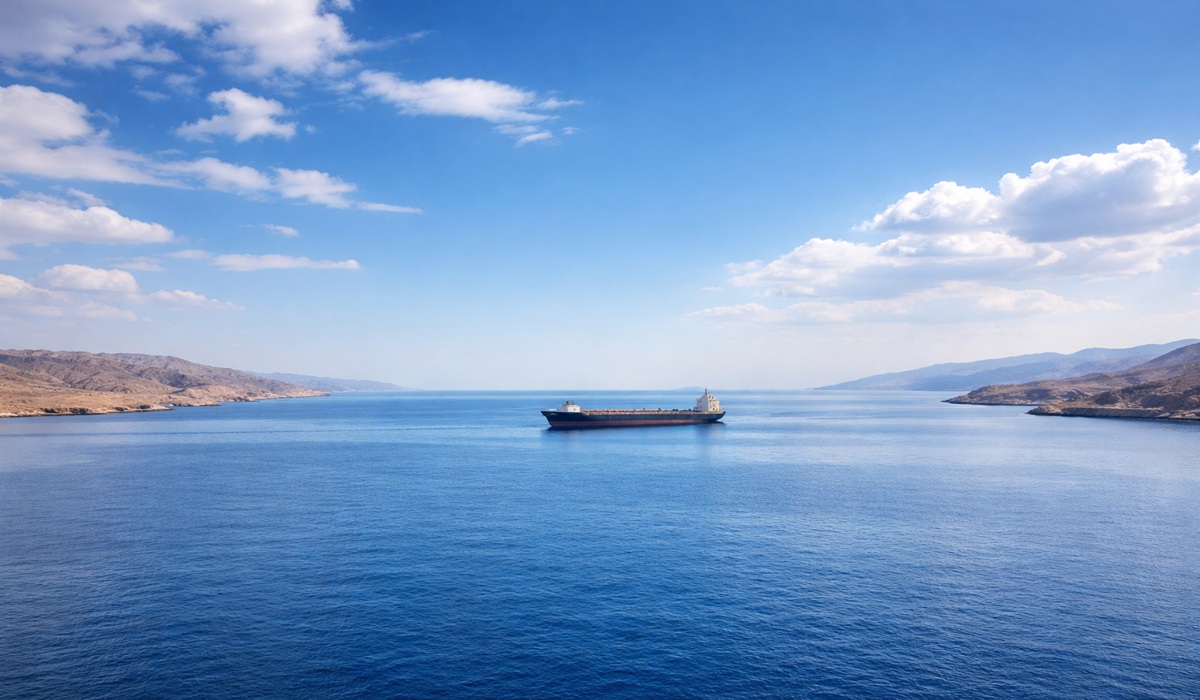
There are moments in global politics when a single geographic location suddenly becomes the hinge on which the entire world economy swings. The Bab-el-Mandeb Strait is one of those places. For decades it has quietly served as one of the arteries of global trade, a narrow maritime corridor linking the Red Sea to the Gulf of Aden, and ultimately to the Suez Canal.
Now imagine that artery suddenly being cut off. The Houthi movement has repeatedly signaled that it could block the Bab-el-Mandeb Strait as part of the widening regional confrontation tied to the wars surrounding Israel, Gaza, and Iran. The group already controls large sections of Yemen’s Red Sea coastline and has demonstrated the ability to strike shipping with drones, missiles, and naval mines. If that threat were ever carried out in a coordinated and sustained way, the consequences would not simply be regional. They would cascade through the entire global economic system.
Every day, roughly six to seven million barrels of crude oil and refined petroleum products pass through the Bab-el-Mandeb Strait. Tankers moving from the Persian Gulf toward Europe and North America rely on this route to reach the Mediterranean. If that gateway closes, those shipments cannot simply vanish. They must detour thousands of kilometres around Africa’s Cape of Good Hope, adding weeks to travel times and dramatically increasing shipping costs.
Energy markets are extremely sensitive to disruptions of this scale. Oil prices do not wait for physical shortages to occur; they react to the expectation of shortages. If traders begin to believe that millions of barrels per day could be trapped or delayed, prices spike almost instantly. The psychological threshold of $200 per barrel, once dismissed as unimaginable, suddenly becomes part of serious market calculations when two major chokepoints appear at risk simultaneously.
That is where the situation becomes truly dangerous. The Bab-el-Mandeb Strait is only one half of the equation. The other is the Strait of Hormuz, the narrow passage between Iran and Oman through which roughly a fifth of the world’s seaborne oil supply travels. If instability spreads and both chokepoints become effectively blocked, the global energy system would experience a shock unlike anything seen since the oil crises of the 1970s—except on a far larger scale.
The effects would move quickly from energy markets into every corner of the global economy. Oil is not simply a fuel for cars and airplanes. It is the foundation of modern logistics, agriculture, plastics, manufacturing, and shipping. When energy prices surge, transportation costs rise. Food prices follow. Airlines cut routes. Factories slow production. Inflation spikes. Central banks tighten monetary policy. Economies already weakened by debt and geopolitical tensions begin to contract.
In the Middle East itself, the consequences would be even more severe. Regional economies rely heavily on maritime trade through the Red Sea corridor. A prolonged closure would disrupt exports, imports, and humanitarian supply routes at the same time. Fragile states already struggling with conflict and economic stress could face deeper instability. The result would not simply be a military crisis but a cascading humanitarian and economic breakdown across the region.
What makes the situation even more troubling is the political dynamic surrounding it. In many capitals, the discussion remains focused on escalating military pressure against Iran rather than examining the chain of events that could push the region toward this scenario. Critics argue that aggressive policies by leaders such as Donald Trump and Benjamin Netanyahu have intensified tensions across the region, increasing the risk that local conflicts spill into the maritime chokepoints that keep the global economy functioning.
The irony is stark. Governments whose economies depend on stable oil prices and uninterrupted shipping lanes could find themselves supporting policies that destabilize those very routes. Instead of de-escalation, the political reflex often remains further confrontation, even as the economic consequences of that confrontation become increasingly obvious.
History shows that global economic crises often begin not with a dramatic collapse but with the closing of a few critical bottlenecks. The Bab-el-Mandeb Strait, whose Arabic name roughly translates to the “Gate of Grief,” earned that title centuries ago because of the dangers faced by sailors navigating its waters. In the modern era, the danger is no longer limited to ships and storms. The real threat lies in how a narrow strip of sea can suddenly expose the fragility of an entire global system.
If that gate closes while tensions simultaneously choke the Strait of Hormuz, the world will discover just how dependent the modern economy remains on a handful of maritime corridors. And by the time markets, governments, and institutions react to the shock, the damage may already be spreading far beyond the Red Sea.
About The Author