Civilians Bear the Brunt as Conflict Escalates Along the Afghanistan–Pakistan Border
- Hami Aziz
- Breaking News
- March 13, 2026
A rapidly escalating conflict along the Afghanistan–Pakistan border is triggering a growing humanitarian crisis, with civilians paying the highest price as violence spreads across eastern Afghanistan. Aid organizations warn that the fighting has already forced more than 115,000 people from their homes since late February, leaving thousands of families struggling to survive amid worsening humanitarian conditions.
According to humanitarian officials monitoring the situation, the first eight days of the conflict alone resulted in at least 56 civilian deaths and 129 injuries. Airstrikes, shelling, and border clashes have affected large parts of eastern Afghanistan, damaging homes, suspending critical services, and pushing already vulnerable communities into deeper crisis.
Humanitarian groups say the latest wave of violence is unfolding in a country already facing severe hardship. Afghanistan has spent years grappling with overlapping crises including economic collapse, natural disasters, and deep cuts to international aid. The renewed conflict is now intensifying the pressure on families who were already struggling to meet basic needs.
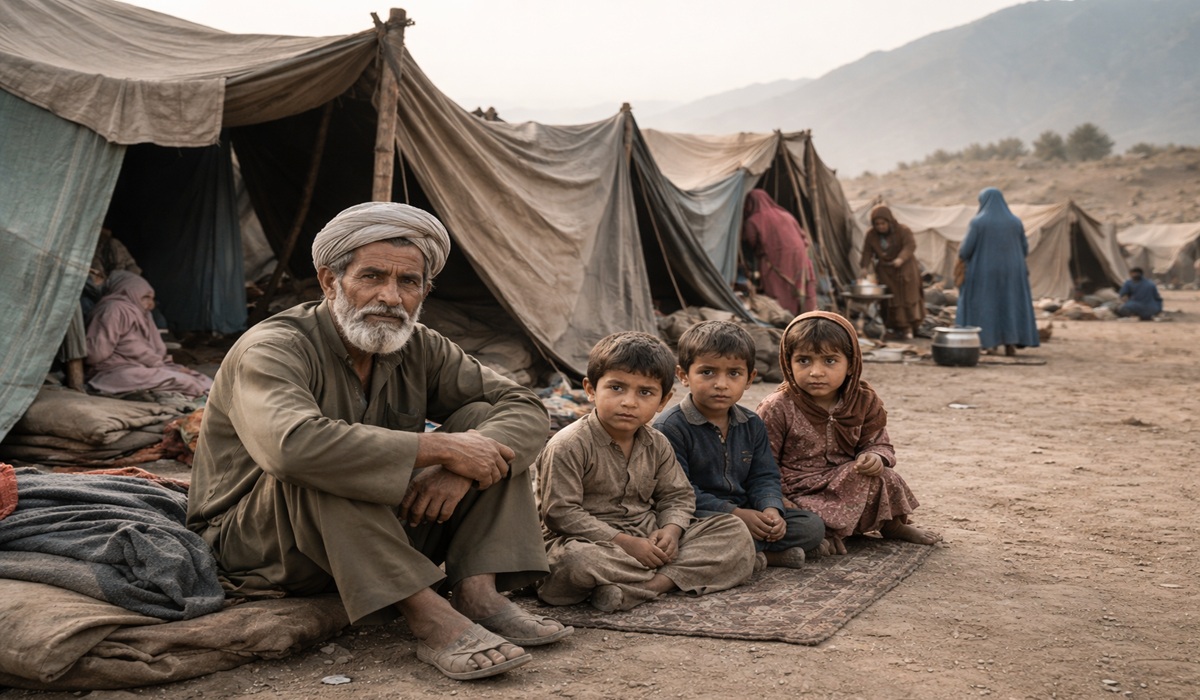
Aid workers operating in affected provinces describe widespread displacement as families flee their homes in search of safety. Many of those displaced have taken shelter in makeshift camps or crowded into the homes of relatives and strangers. Others have been forced to rent substandard housing that they can barely afford. In many cases, families have lost access to clean drinking water, health care services, and education for their children.
Humanitarian teams working in the eastern provinces of Kunar and Nangarhar report that some of the most vulnerable households include those led by women, children, or elderly relatives. Many of these families say they have received little or no assistance so far.
The physical destruction caused by the fighting has also been significant. At least 826 homes have been damaged or destroyed, with more than one hundred of those completely flattened. Entire communities have seen their living conditions collapse almost overnight.
The situation is especially dire for families already displaced by previous disasters. More than 25,000 people who had been living in temporary settlements after a major earthquake struck Kunar province last year have now been ordered to evacuate the areas where they had taken refuge. These families are being forced to return to places where infrastructure is limited and essential services are either damaged or nonexistent.
Humanitarian agencies warn that another 14,500 people could soon face a second displacement if the fighting continues or expands.
The conflict is also disrupting access to basic services across the region. More than 20 health facilities have suspended operations because of insecurity, and several clinics have been damaged in airstrikes or artillery shelling. With medical services interrupted, families are being left without access to treatment at a time when injuries from the fighting continue to rise.
Education has also been severely affected. Aid groups have suspended classes in parts of Khost province because of the deteriorating security situation. As a result, more than 600 children have already lost access to schooling.
Food assistance programs have also been disrupted. Humanitarian organizations working to distribute essential supplies have been forced to temporarily halt food deliveries in some areas because of security concerns, further compounding the crisis facing displaced communities.
In response to the growing humanitarian emergency, relief organizations are attempting to scale up assistance as quickly as possible. Thousands of displaced people have begun receiving emergency cash assistance intended to help families purchase food, shelter materials, or other basic necessities. Additional distributions are planned in the coming days as aid groups work to reach more communities affected by the violence.
For families who have fled the border region, however, the assistance is often only a temporary lifeline. Bakhtiar, a father of six who fled his home near the border crossing at Torkham, described the chaos of leaving everything behind as violence intensified. The family escaped with almost nothing.
They left behind their clothes, their belongings, and their home, uncertain whether anything remained standing. While emergency assistance has provided some relief, Bakhtiar says it will only help for a short time if the conflict continues. Families like his are now calling on the international community not to overlook their situation as attention shifts to other global crises.
The regional instability is also affecting Afghan communities beyond the country’s borders. Iran currently hosts more than 4.4 million Afghan nationals, including approximately 1.4 million people without official documentation. Many of those individuals face the risk of forced return.
At the same time, some Afghans who had previously sought refuge in Iran are now returning to Afghanistan because of safety concerns or worsening living conditions. Reports suggest roughly 1,700 people are currently returning each day.
For many returnees, the decision is not voluntary but driven by desperation. One returning Afghan explained that survival abroad had become impossible once the broader regional conflict began to intensify. The humanitarian outlook inside Afghanistan remains extremely fragile. Aid agencies estimate that more than 21.9 million people across the country require some form of humanitarian assistance this year, with over 17 million facing food insecurity.
Despite the enormous scale of need, funding for humanitarian operations remains critically low. Only a small fraction of the billions of dollars required to support relief efforts has been delivered so far, leaving aid organizations struggling to respond fully to the growing crisis.
With fighting continuing along the border and displacement rising, humanitarian groups warn that the situation could deteriorate further unless violence subsides and additional assistance reaches those affected. For thousands of families already displaced and living in uncertain conditions, the coming weeks may determine whether the crisis deepens into an even larger humanitarian emergency.
About The Author