Canada to Reinter Partial Remains of 12 First World War Soldiers Returned From U.S. Museum
- Ingrid Jones
- Canada
- March 10, 2026
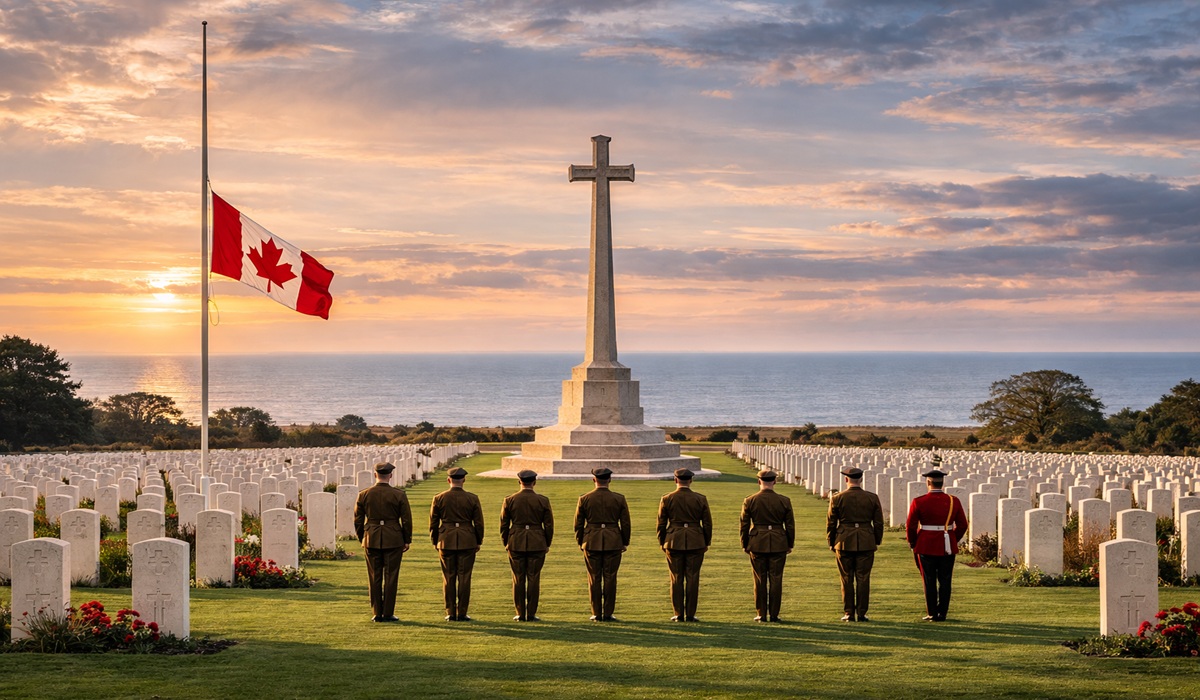
More than a century after the First World War, partial human remains belonging to 12 Canadian soldiers have been returned to Canada following their repatriation from a medical museum in Philadelphia. The specimens, originally collected during wartime medical treatment, will now be respectfully interred with the graves of the individual soldiers from whom they were taken, bringing a long-overdue measure of dignity and closure to their memory.
The remains were returned following a collaborative international effort involving Canada, Australia, New Zealand, the United Kingdom, and the Commonwealth War Graves Commission. Canadian officials confirmed that the specimens were part of a historical medical collection that had been held for decades by the Mütter Museum and Historical Medical Library in Philadelphia, Pennsylvania. The museum recently began dismantling the collection as part of a broader reassessment of historical medical specimens and their ethical handling.
The remains trace back to Pennsylvania Base Hospital No. 10 in Le Tréport, France, where American medical personnel treated wounded Allied soldiers during the First World War. At the time, it was considered an accepted practice for doctors to collect medical specimens from injured or deceased soldiers for the purpose of advancing medical knowledge. More than one hundred samples from soldiers of multiple nationalities were ultimately gathered during the war.
In 1919, shortly after the conflict ended, these specimens were transferred to the Philadelphia museum for continued medical research and education. While the practice reflected the norms of the early twentieth century, modern ethical standards surrounding consent, commemoration, and the treatment of human remains have evolved significantly. Today, governments and institutions increasingly emphasize the importance of returning remains to their proper resting places and honouring those who served with full dignity.
Twelve Canadian soldiers have now been identified among the specimens that were returned. Ten of the soldiers died from their wounds during the war and are buried at Mont Huon Military Cemetery in Le Tréport, France, near the hospital where they were treated. The returned remains will be interred with their existing graves at that cemetery. Two of the soldiers survived the war and later died elsewhere, and their remains will be respectfully returned to the appropriate burial sites.
The soldiers whose remains were identified include:
Private Edward Lea, who enlisted in Vancouver, British Columbia, and served with the 7th Battalion of the Canadian Expeditionary Force.
Private Charles Lorne Parkin, who enlisted in Caledonia, Ontario, and served with the 1st Battalion.
Private Somerville MacPherson, who enlisted in Vernon, British Columbia, and served with the 47th Battalion.
Private Charles Arthur Boyce, who enlisted in Edmonton, Alberta, and served with the 10th Battalion.
Private Fred James Williams, who enlisted in Windsor, Ontario, and served with the 18th Battalion.
Private John Kincaid, who enlisted in Toronto, Ontario, and served with the 58th Battalion.
Corporal Frank Jancey, who enlisted in Fort Frances, Ontario, and served with the 4th Battalion.
Corporal John Kincaid, who enlisted in Kingston, Ontario, and served with the 58th Battalion of the Canadian Field Artillery.
Sergeant Thomas William Jones, who enlisted in Kingston, Ontario, and served with the 9th Brigade of the Canadian Field Artillery.
Sergeant Martin James Murphy, who enlisted in Edmonton, Alberta, and served with the 4th Battalion of the Canadian Machine Gun Corps.
Two additional soldiers whose medical specimens were included survived the war but later passed away: Private Kenneth Dougal Crawford of the 192nd Battalion and Private Norman McNeill of the 189th Battalion.
Officials say the return of the remains represents an important moment of remembrance and reconciliation with the past. While the specimens were originally taken for legitimate medical research during a time of global conflict, contemporary values emphasize the need to ensure those who served are commemorated appropriately.
Founded in 1917 as the Imperial War Graves Commission, the Commonwealth War Graves Commission now maintains the graves and memorials of war casualties at more than 23,000 sites across over 150 countries and territories. The organization has played a central role in coordinating the effort to identify and return remains associated with this historical collection.
The Department of National Defence says families seeking further information about the returned remains or the soldiers involved may contact the Directorate of History and Heritage through the federal government’s military history inquiry service. Officials note that the work of identifying and honouring the fallen continues more than a century after the war, reflecting Canada’s enduring commitment to those who served.
For the soldiers whose remains have now been returned, the journey that began in the trenches of Europe has finally reached its proper conclusion. More than one hundred years after the war that claimed millions of lives, these Canadians will now rest fully among their comrades, honoured not as medical specimens of the past but as soldiers whose sacrifice remains part of the nation’s history.
About The Author