The Citizenship Fast Lane: How a Crane, a Whale, Santa, and Olympians Beat Real Canadians to the Front of the Line
- TDS News
- Canada
- March 5, 2026
By: Donovan Martin Sr, Editor in Chief
Canada grants citizenship so efficiently that if a tumbleweed crossed the border with enough confidence, it would likely receive a passport, a health card, and a ceremonial toque before it even stopped rolling. Somewhere in Ottawa, there appears to be an express lane marked “Fictional Characters, Marine Mammals, Deceased Birds, and Medal Contenders This Way,” and that lane seems to move like a Ferrari. The regular human line, by comparison, moves with the steady rhythm of a government fax machine from 1983, humming along patiently while paperwork circulates.
This is not malfunction. It is choreography. When the system decides it wants to move, it glides, accelerates, and performs with remarkable efficiency. When it does not, it suddenly discovers archival reviews, legacy provisions, and a deep emotional attachment to microfilm records that appear to require careful examination before anything else can proceed.
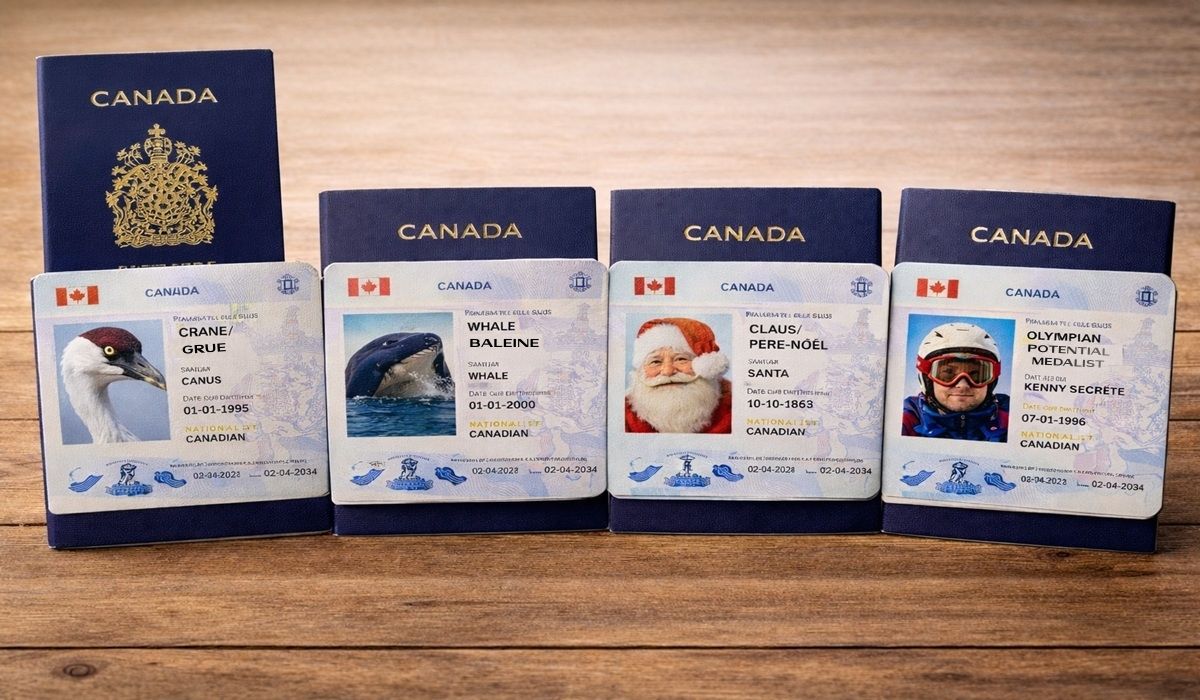
Take the crane. Not a metaphor, not a construction machine, but an actual bird. His name was Canus, cleverly combining “Can” for Canada and “us” for the United States, which somehow turned him into the most diplomatic creature ever to flap its wings. He migrated across borders, reproduced enthusiastically, and eventually died in the United States. In most places, that would have quietly concluded the story, but here it launched what could only be described as a legal opera.
Court filings followed one after another, strategy sessions were convened, and tens of thousands of dollars in legal costs accumulated. Somewhere along the way, someone typed the words “deceased crane repatriation” into an official government document and pressed send without hesitation, as though this was the most routine administrative matter imaginable.
The return unfolded like a state visit. Wellington Street shut down to traffic. Ambassadors assembled in formal attire. Cameras rolled. Fighter jets carved sweeping arcs across the sky. A twenty-one-gun salute thundered through the capital for a crane who, respectfully speaking, was no longer in a position to appreciate the acoustics.
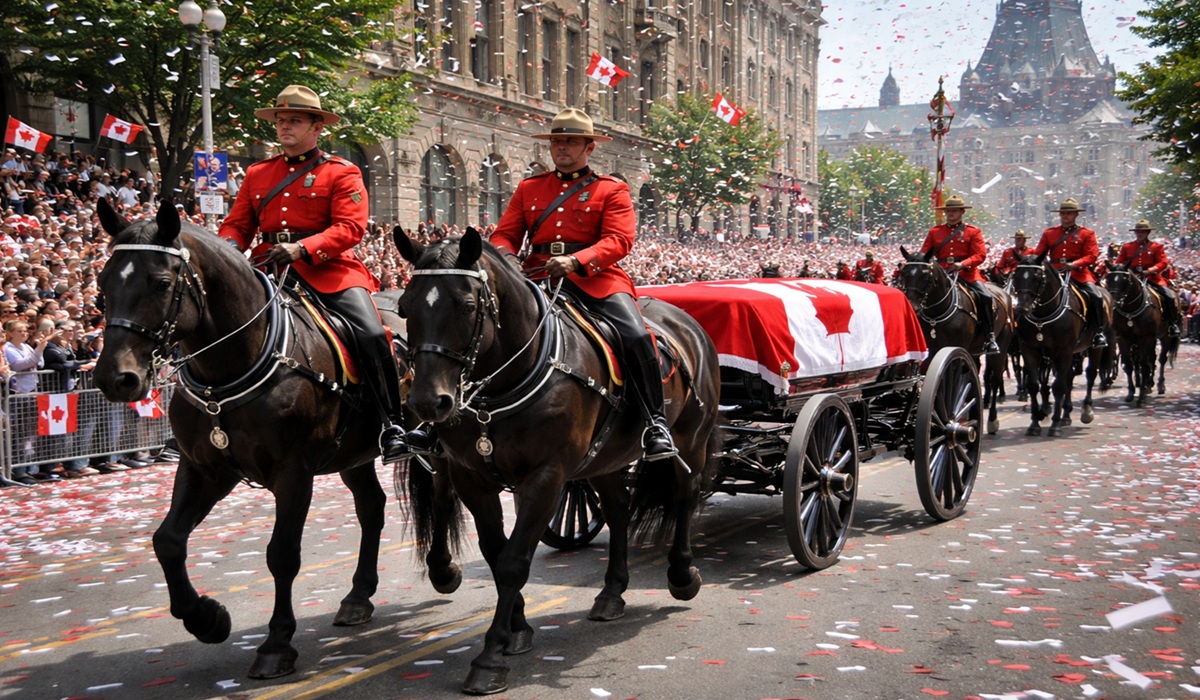
A parade followed with synchronized boots and polished medals gleaming under the afternoon light. The Canadian flag was folded with ceremonial precision and presented solemnly to a Parks Canada ranger, because when a crane achieves constitutional importance it seems only fitting that the guardians of the nation’s landscapes accept responsibility for the moment. The silence that followed felt unusually deep, and even the pigeons seemed to stand a little straighter.
The whale soon followed with equal enthusiasm. This particular whale moved freely between Canadian and American waters as though borders were merely decorative suggestions. No passport was requested, no residency requirement applied, and no documentation was required. The whale simply existed, and the nation tracked his movements like a floating national treasure. Updates circulated, alerts appeared, and it is not difficult to imagine that somewhere a whale liaison officer was quietly drafting reports.
Before long a custom tank appeared on the Rideau Canal. It was not merely a tank but something closer to a waterfront palace, carefully prepared and ready for speeches and cameras. A ribbon was cut. Officials delivered remarks about the moment. A ceremonial water salute erupted because, if fighter jets could salute a crane, synchronized splashes could certainly salute a whale. Nearby, a beaver may have paused for a moment to reconsider its career path.
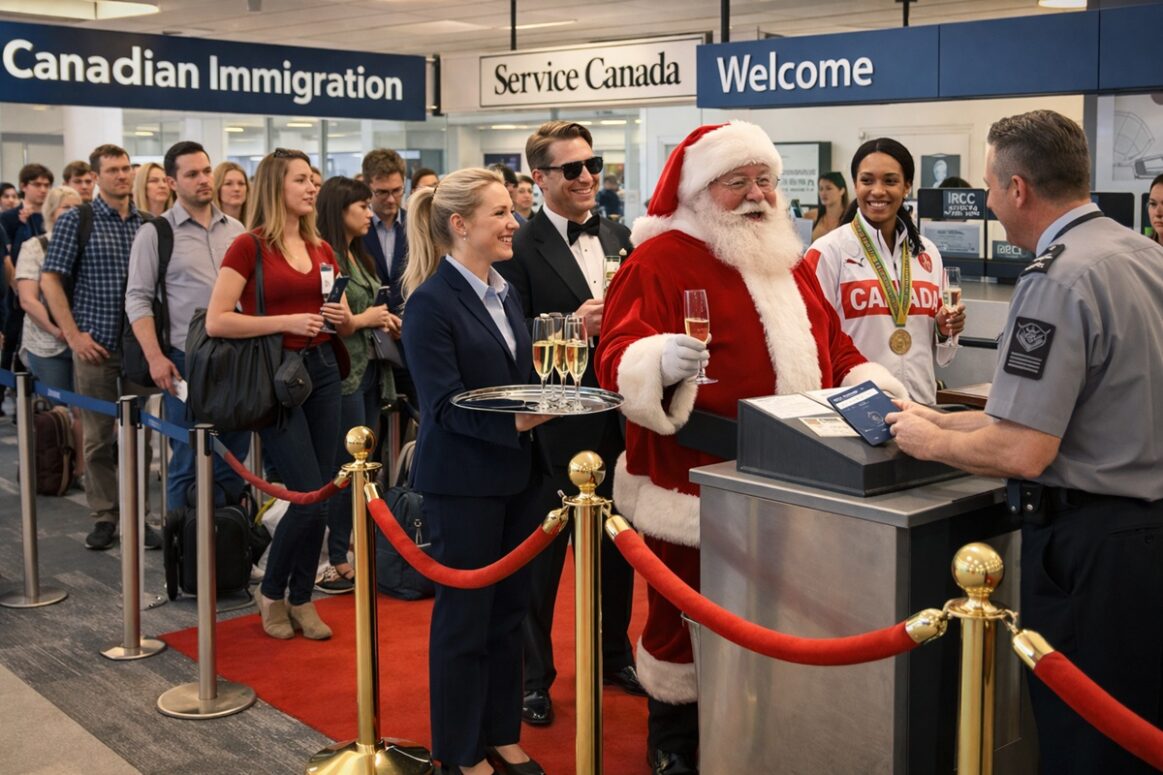
Santa Claus required even less effort. A North Pole address raised no concerns whatsoever. Reindeer-powered transportation passed inspection without question. The global practice of rooftop entry prompted no regulatory debate. Approval arrived quickly. A passport holder appeared, a gold-framed certificate was presented, and a ceremonial key to the city was delivered with warm applause. Lifetime hot chocolate privileges seemed entirely reasonable, and the press conference concluded without a single follow-up question.
Then the Olympians arrived, and the system appeared to discover warp speed. Medal potential entered the room, and printers immediately remembered their purpose. Telephones were answered before the first ring. Citizenship activated almost like a premium subscription service. Custom jackets appeared, ceremonial toques were distributed, and flag photographs were taken under lighting so dramatic it felt like the opening of a film trailer. What unfolded was less a bureaucratic procedure and more a carefully staged branding exercise.

Celebrities experienced something similar. If a connection to the country was faint, it quickly became historic. If the link was distant, it was suddenly described as ancestral. The country embraced them with the enthusiasm of a proud relative determined to win a family debate.
All of these symbolic gestures eventually converged into a single celebratory sweep. Heritage tributes were produced, praise flowed generously, plaques were unveiled, and photo opportunities multiplied. A maple-leaf imprint appeared on the Walk of Fame, permanently set into cement while visitors snapped pictures and sipped Tim Hortons double-doubles.
Up to this point the entire story reads like a national comedy sketch about how enthusiastically belonging can be celebrated. The ceremonies are grand, the symbolism generous, and the machinery of government appears capable of moving mountains, oceans, sleighs, and entire parades when it decides something deserves recognition.
That contrast becomes important because it leads to another story that sits just behind the laughter. For decades there has been another group connected to this same system whose experience has been very different, and these individuals are commonly known as Lost Canadians.
Lost Canadians are not people who failed to qualify for citizenship. They are individuals who had their citizenship taken away or denied due to technicalities buried within older legislation. The group is far larger and more varied than many people realize. It includes children of diplomats, military families posted abroad, aid workers, academics, and globally mobile professionals. It includes people born overseas to Canadian parents who were themselves born outside the country, even if those parents later returned and built their lives in Canada. It also includes individuals affected by older, now-abandoned rules that stripped citizenship because of marriage, age, or technical filing requirements.
Before 1947, the legal framework treated wives and children very differently from how rights are understood today. They were not considered independent rights-holders under the law; instead were treated as chattel, legally dependent on the husband or father, which effectively meant their citizenship status rose or fell with his.
Many people only discovered this loss when applying for a passport, attempting to return home, or seeking access to basic services. Identity vanished on paper without warning. Years passed, and in many situations decades followed. Files were reopened, appeals were submitted, and families experienced separation. Employment opportunities were denied, and healthcare access became uncertain. In severe circumstances individuals were stranded in unstable regions, unable to leave and unable to return while someone reviewed records from another era.
Savings disappeared into legal fees. Lawyers debated immigration law while citizenship law remained tucked away in another statute entirely. Parents passed away before matters were resolved, and children grew up uncertain about their legal standing.
Much of this confusion traces back to January 1, 1947, when citizenship became formalized under Prime Minister William Lyon Mackenzie King. On paper that date carries significance. In real life people lived here long before it. Families established homes and communities long before it. Soldiers fought and died long before it. Belonging did not begin at midnight on a calendar.
Important progress has been made to address these injustices. Parliament has introduced reforms over time, including legislation such as Bill C-3, which restored citizenship to many people affected by discriminatory provisions in earlier laws. These steps helped correct some of the historical mistakes and allowed thousands of individuals to reclaim the citizenship they should never have lost. Although progress continues, the broader story still illustrates how complicated belonging can become when laws fail to keep pace with real lives.
This remains a beautiful country that is deeply loved and worth believing in. Progress continues, laws evolve, and institutions improve, yet the contrast remains difficult to ignore. A crane received a flyover and a state-style farewell. A whale received waterfront property. Santa received express clearance. Olympians received warp speed. Celebrities received instant adoption. Meanwhile, real people sometimes received letters informing them they no longer belonged.
The irony is that the crane’s paperwork appeared to move faster than the Lost Canadians. At the end of the day the principle itself is simple. If belonging were extended with the same enthusiasm used for ceremonies, every one of those people would already be home and would receive a Canadian passport, a health card, and a celebratory loot bag. Not the illegal kind occasionally discovered in Winnipeg, but a proper welcome package containing a 2025 Stanley Cup toque of the Toronto Maple Leafs, a gift card for a medium Timmy’s double-double, a bowl of poutine, a bottle of genuine maple syrup from Montreal rather than the bootleg versions, and a copy of Rick Mercer’s newest book titled Newfoundlanders Guide to Understanding What the Hell the People of Toronto Are Saying When They Speak.
Because at the end of the day the principle really is that simple.
A Canadian is a Canadian is a Canadian.
About The Author