The Quiet Return of Industrial Strategy
- Xuemei Pal
- Tiger's Eye Advisory Group - Trending News
- March 4, 2026
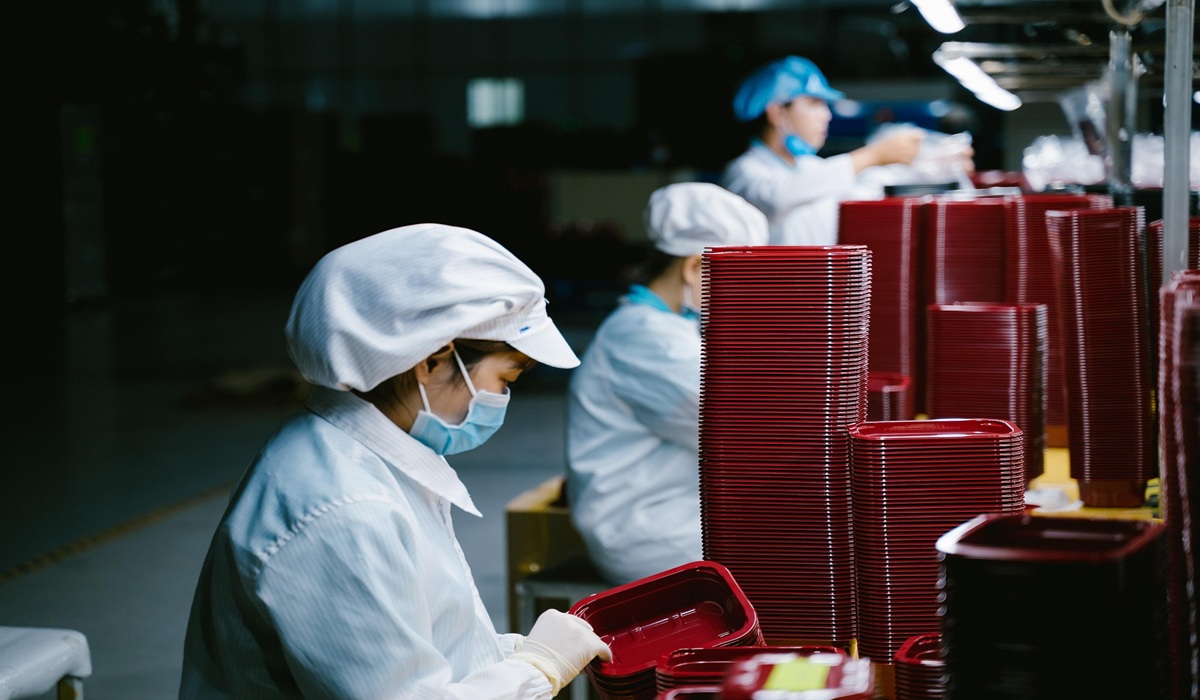
Image Credit: Quân Lê Quốc
For decades, governments in many Western economies insisted that markets alone would determine the winners and losers of the global economy. Politicians spoke the language of deregulation, privatization, and globalization as if they were natural laws rather than policy choices. Factories moved overseas, supply chains stretched across oceans, and national industrial capacity quietly hollowed out. What was once dismissed as protectionism or state interference is now returning with surprising speed. Industrial policy—once considered an outdated relic—is quietly becoming the organizing principle of economic strategy again.
The shift did not happen overnight. It began with small warning signs that many policymakers initially ignored. Financial crises revealed that complex global systems were far more fragile than economists had believed. When banks failed in 2008, governments that had long preached minimal intervention suddenly intervened on a massive scale to stabilize their economies. That moment cracked open the ideological certainty that markets could regulate themselves. Still, it was not enough to fundamentally change policy thinking.
Then came the supply chain shocks of the early 2020s. A pandemic exposed just how dependent modern economies had become on distant manufacturing hubs. Essential products—from medical equipment to semiconductors—were suddenly scarce. Nations discovered that efficiency had come at the expense of resilience. When ships stopped moving and factories closed abroad, entire sectors at home ground to a halt. The realization was unsettling: critical industries had migrated far beyond national control.
What followed has been a slow but unmistakable recalibration. Governments are once again asking a question that had nearly vanished from economic discourse: which industries must exist within a country’s own borders to ensure stability and prosperity? The answer increasingly includes sectors such as advanced manufacturing, rare earth minerals, energy infrastructure, and semiconductor production. These are not simply commercial industries anymore. They are viewed as pillars of national security and economic sovereignty.
The new industrial strategy does not look exactly like the policies of the past. Rather than direct state ownership of factories, modern governments are deploying more sophisticated tools. Subsidies, tax incentives, research funding, and public-private partnerships are being used to steer investment toward strategic sectors. Governments are not replacing markets, but they are no longer pretending that markets alone will shape national economic outcomes.
This shift has sparked fierce debate. Supporters argue that rebuilding domestic industrial capacity is essential in an era defined by geopolitical rivalry and fragile supply chains. Critics warn that industrial policy risks wasting taxpayer money on politically favored projects that may never become competitive. The truth likely lies somewhere between those positions. History shows that industrial policy can fail spectacularly when poorly designed, but it also shows that many of the world’s most successful economies—from postwar Japan to modern South Korea—rose with the help of strategic state guidance.
What is different today is the scale of global competition. Major powers are now racing to dominate the industries that will define the next century: artificial intelligence, advanced materials, quantum computing, and renewable energy technologies. These are not merely commercial prizes. They shape military capability, economic influence, and technological leadership. In this environment, governments increasingly see neutrality as a luxury they cannot afford.
There is also a political dimension to the return of industrial policy. Communities that lost manufacturing jobs over the past thirty years never fully recovered. Economic displacement created deep social and political fractures that still echo through elections and public debates. Rebuilding industrial capacity is now seen not only as an economic necessity but as a path toward restoring stability in regions left behind by globalization.
The resurgence of industrial strategy does not mean the end of global trade. International commerce will remain a central feature of the world economy. What is changing is the assumption that efficiency alone should determine where critical goods are produced. Resilience, security, and national capability are becoming equally important considerations.
In many ways, the global economy is entering a new phase that blends market forces with strategic planning. Governments are rediscovering that economic power has always been intertwined with political choices. The era of completely hands-off economic policy is quietly fading, replaced by a more deliberate approach to shaping national industries.
Whether this transformation ultimately strengthens economies or creates new inefficiencies remains uncertain. What is clear is that the debate over industrial policy is no longer theoretical. It is unfolding in real time, reshaping how nations think about prosperity, security, and the balance between state and market.
About The Author