From Davos To Disappointment: How Carney’s Weekend Statement Derailed Momentum
- TDS News
- Canada
- March 2, 2026
By: Donovan Martin Sr, Editor in Chief
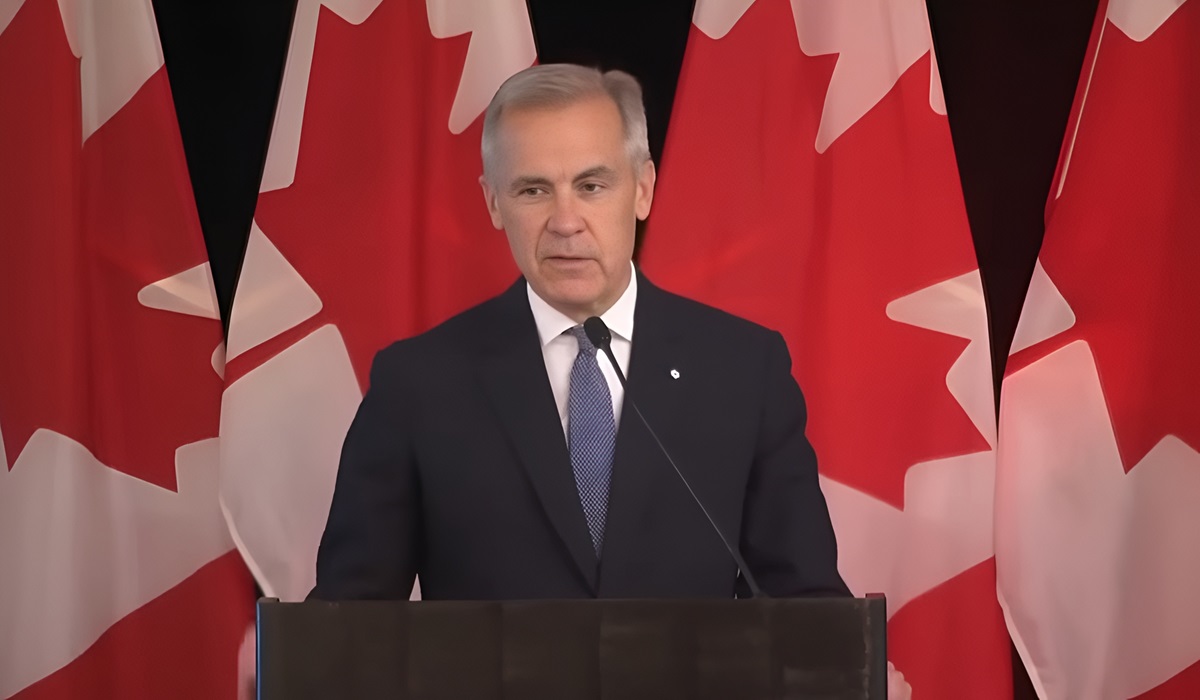
From Davos to this weekend, the contrast has been stark. Only weeks ago, Mark Carney stood before the world and emerged, in the eyes of many commentators, as the leader of a new world order in the making. He was not simply delivering another routine address. He projected discipline, independence, and the promise that things would be different. He positioned Canada as a principled middle power capable of thoughtful judgment rather than reflexive alignment. That moment created momentum and expectation. Then he issued his statement on the escalating conflict in the Middle East, and much of that momentum dissipated.
In his statement, Carney condemned Iran, reiterated that it must never obtain nuclear weapons, reaffirmed support for allied efforts to prevent that outcome, and urged the protection of civilians. On its surface, it was firm and familiar. What unsettled many Canadians was not only what he included, but what he omitted.
An elementary school had been destroyed. Children were killed. That fact was not named directly. Instead, the tragedy was absorbed into a generalized appeal about protecting civilians. When children die in a bombed school, leadership requires specificity and moral clarity. Broad phrasing at such a moment reads as distance. It feels like “nothing to see here, move along,” when the world has just witnessed something that demands solemn acknowledgment.
Even more consequential was the assassination of a sovereign head of state and one of the most significant religious authorities in the Shiite world. The supreme political and spiritual leader of a nation was eliminated. That is not a minor escalation. It is a historic rupture. Imagine if another country assassinated the Pope. Imagine if another country eliminated the President of the United States. Would allied governments respond with restrained language urging the targeted nation to de-escalate? Would anyone expect that country to quietly absorb the blow? The reaction would be immediate and framed as an assault on sovereignty itself. Yet when this occurred elsewhere, the tone adopted here appeared measured to the point of detachment.
The nuclear argument in Carney’s remarks also lacks critical historical context. Under the Obama administration, a multilateral nuclear agreement placed verifiable limits on Iran’s program. Inspectors were present. Enrichment levels were capped. The arrangement held for years. It was dismantled when President Trump withdrew unilaterally despite compliance verification at the time. A functioning diplomatic framework was discarded. Escalation followed. A problem that had been contained through negotiation was reignited through political decision. That sequence matters when prevention is cited as the central justification.
Claims of imminent nuclear threat to Western nations similarly require precision. Iran does not possess operational intercontinental ballistic missiles capable of reaching North America. Western defense systems are layered precisely to intercept long-range threats. Preventing proliferation is legitimate policy. Presenting the situation as an unavoidable and immediate existential threat to Western soil distorts the strategic landscape.
Negotiation must also be discussed honestly. Military strikes occurring while diplomatic engagement is publicly described as ongoing do not reflect good faith bargaining. Bombardment during negotiation undermines the credibility of that negotiation.
The economic consequences underscore how serious this moment is. More than five trillion dollars in global market value vanished immediately following the escalation. When markets reopened, trillions more were erased as oil prices surged and energy corridors destabilized. The Strait of Hormuz tightened, placing pressure on global supply chains and energy markets. These are not abstract geopolitical tremors. They translate into higher fuel costs, inflation, and strain on households.
Shortly after Carney issued his statement, Foreign Affairs Minister Anita Anand released her own. Anand is widely regarded by political analysts and commentators as a significant upgrade to the foreign affairs portfolio compared to her predecessor, Melanie Joly. She has earned a reputation for steadiness and competence. That reputation made her language particularly important.
In her statement, Anand strongly condemned Iranian strikes targeting neighboring Gulf states, explicitly referencing Qatar, the United Arab Emirates, Bahrain, Kuwait, and Saudi Arabia. The framing presented these nations as innocent bystanders caught in aggression. Civilian harm is never acceptable. However, what was not acknowledged is equally important.
Several of the Gulf nations she listed host significant United States military bases and installations. Qatar hosts Al Udeid Air Base, one of the largest U.S. military facilities in the region. Bahrain is home to the U.S. Navy’s Fifth Fleet. Kuwait houses major logistical and forward-operating installations. Saudi Arabia has hosted rotational deployments and air defense systems tied to broader regional strategy. These are operational hubs that assist and coordinate military actions throughout the Middle East.
Presenting these countries solely as neutral victims without acknowledging the embedded military infrastructure simplifies a far more complex strategic reality.
The same applies to Dubai within the United Arab Emirates. Anand’s framing treated the UAE as an innocent Gulf state under attack. Yet multiple credible national and international sources have reported that one of the buildings struck in Dubai was believed to house the CIA’s Middle East headquarters. Dubai is widely recognized as a regional intelligence and logistical hub. It has long been viewed as a transit point for intelligence operatives and covert financial networks operating in and around Iran and other Gulf states. It has also faced repeated scrutiny over financial opacity and the movement of funds linked to questionable actors. None of this justifies civilian harm. It does mean that portraying Dubai as entirely detached from regional operations ignores widely reported realities.
Diplomacy is often defined less by what is said than by what is left unsaid. By condemning strikes against Qatar, the UAE, Bahrain, Kuwait, and Saudi Arabia without acknowledging the presence of U.S. bases, radar installations, missile defense systems, and intelligence hubs within those states, only part of the picture is presented.
It is also not unrealistic to ask whether Canadians may have been present in various capacities at or near those facilities. Canada works closely with the United States. Canadian personnel have historically participated in joint operations, advisory roles, and logistical coordination at allied bases. Intelligence cooperation flows through Five Eyes. Strategic coordination flows through NATO. It would not be extraordinary if Canadians were serving in support, advisory, or intelligence capacities connected to those installations. Clarity would strengthen public trust.
Other governments have taken a more openly critical stance regarding the escalation. Spain has publicly condemned the actions that triggered this crisis. Nordic countries such as Norway and Sweden have expressed strong criticism of the destabilizing precedent set by targeted assassinations and escalatory strikes. These leaders have managed to condemn repression while also condemning actions that threaten regional stability.
There is historical precedent for independence. Jean Chrétien refused to involve Canada in the Iraq War despite intense pressure from Washington. That decision strengthened credibility. Alliance does not require automatic participation. Under no circumstances should Carney allow Canada to be drawn into direct involvement in a widening conflict born from dismantled agreements, performative negotiations, and escalating strikes.
As President Trump, alongside Prime Minister Netanyahu, escalates this confrontation toward what many now fear could evolve into a broader regional or even global war, reports indicate that as many as six to eight Gulf nations have begun participating in attacks against Iran. Britain, France, and Germany have signaled alignment. The next few days will reveal whether Carney intends to follow that path or stand apart from it. The choice before him is stark. Will he preserve Canadian lives and assert independent judgment, or will he allow Canadian blood to be treated as collateral in a war framed elsewhere as an unavoidable cost? History will not remember the careful phrasing of press releases. It will remember whether a leader had the resolve to keep his country out of a conflict it did not start and does not need to fight.
About The Author