In The Month of Ramadan, We Honor, HE Shaykh Abdullah Quilliam
- TDS News
- Tiger's Eye Advisory Group - Trending News
- Ramadan
- February 27, 2026
The Founding of Britain’s First Mosque
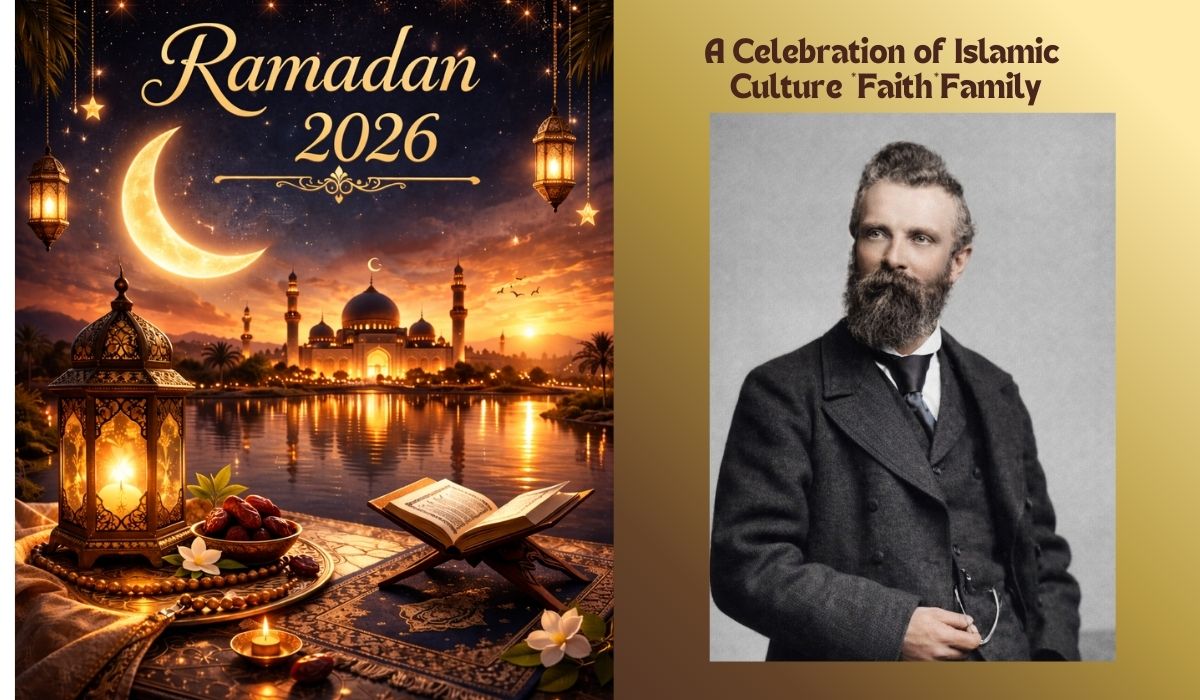
Ramadan invites reflection not only on faith, but on the foundations that make faith visible in public life. One of the most remarkable yet overlooked figures in British Islamic history is William Henry Quilliam, who later took the name Abdullah Quilliam, and in later chapters of his life also used the names Henri Marcel Leon and Haroun Mustapha Leon. Long before Islam became a regular feature of Britain’s national conversation, Quilliam was building institutions that would anchor Muslim life in England.
Born on 10 April 1856 at 22 Eliot Street in Liverpool to a prosperous local family, Quilliam grew up between Liverpool and the Isle of Man. He was raised as a Methodist and educated at the Liverpool Institute and King William’s College on the Isle of Man. His early life reflected the confidence of Victorian Britain. He trained as a solicitor, qualified in 1878, and established a legal practice at 28 Church Street in Liverpool, specializing in criminal law. He handled high-profile cases and earned a reputation as a capable and articulate advocate. At the time, he was a committed Wesleyan Methodist and active in the temperance movement, which sought to curb alcohol consumption in British society.
The turning point in his life came not in a courtroom but during a period of illness. In 1887, Quilliam traveled to Morocco to recover his health. What began as convalescence became transformation. Immersed in North African Muslim society, he encountered Islamic practice not as an abstraction but as a living civilization. The discipline of prayer, the coherence of belief, and the social structure he observed deeply affected him. By the time he returned to Britain, he had embraced Islam and taken the name Abdullah.
Conversion in Victorian England was not a quiet or neutral act. It carried social cost and public scrutiny. Quilliam did not retreat into private devotion. Instead, he began openly teaching and organizing. At 8 Brougham Terrace in Liverpool, he established what became known as the Liverpool Muslim Institute. That building would house what is recognized as England’s first functioning mosque and Islamic center. It was not merely a prayer room. It became a hub for education, lectures, publishing, and social support.
Quilliam founded the Association of British Muslims, regarded as Britain’s oldest Muslim organization. Through this association, he created formal structure for a community that was still small but growing. He published literature explaining Islamic belief to English audiences, addressed misconceptions, and corresponded internationally. His work placed Liverpool on the map as an unlikely early center of organized Islam in Britain.
Ramadan, with its emphasis on discipline, charity, and knowledge, mirrors Quilliam’s approach to faith. He understood that belief without structure struggles to endure. He established educational programs for children, outreach initiatives, and charitable efforts that embodied Islamic principles in a British context. His mosque welcomed sailors, converts, and visitors from across the Muslim world. It was both local and global in outlook.
His life was not without controversy. Public hostility, legal pressures, and social backlash mounted over time. Eventually, he left England and adopted different names during later chapters of his life. Yet the institutions he built did not vanish. They left a historical imprint that modern British Muslim communities still acknowledge. When contemporary discussions frame Islam in Britain as a recent arrival, Quilliam’s legacy stands as quiet evidence to the contrary.
Understanding his story during Ramadan adds depth to the month’s reflection. Fasting is about restraint and clarity. Quilliam’s journey required both. He moved from a respected Christian solicitor within the Victorian establishment to a Muslim community leader navigating suspicion and resistance. He exchanged comfort for conviction.
Today, the narrative of Islam in Europe is often framed in political tension. Quilliam’s life reminds us that Muslim civic presence in Britain predates modern migration debates. It began with a Liverpool lawyer who, after illness and travel, returned home with a transformed worldview and the determination to build something enduring.
Ramadan asks believers what they are constructing that will outlast them. Abdullah Quilliam’s answer was concrete: a mosque, an organization, a published body of work, and a community that insisted it belonged. His legacy is not loud, but it is foundational.
About The Author