Black History 365 Honors, Dr. Charles Richard Drew
- TDS News
- Tiger's Eye Advisory Group - Trending News
- Black History 365
- February 25, 2026
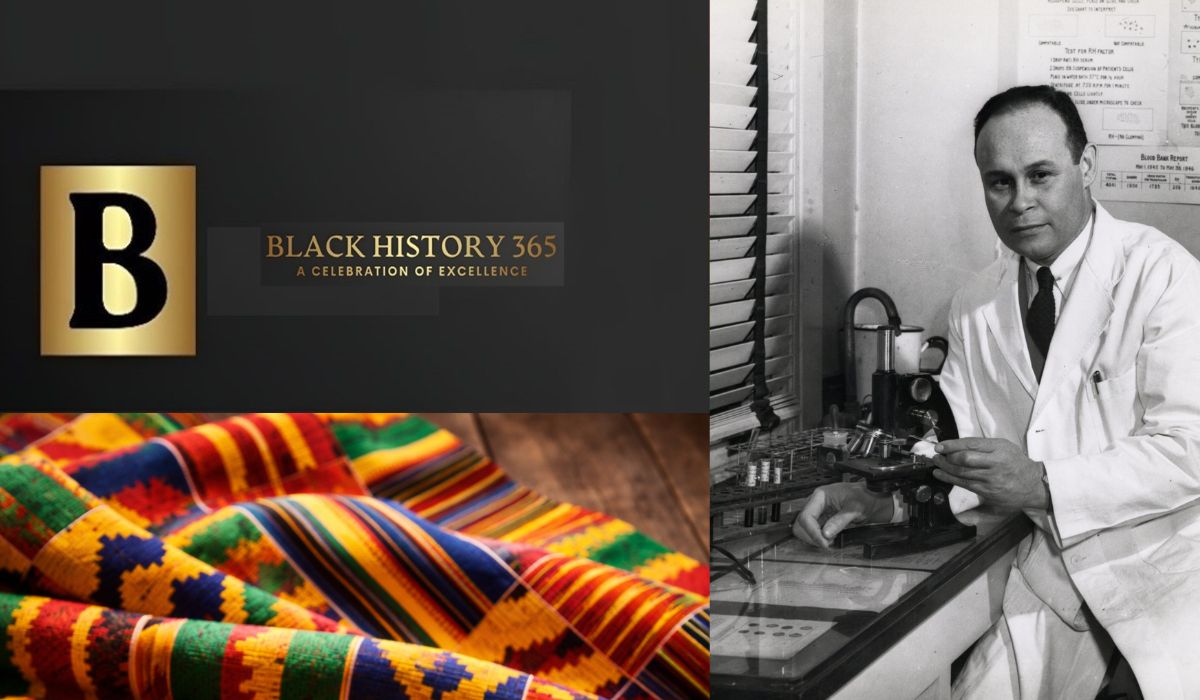
There are moments in history when a single idea quietly saves millions of lives. Not through politics. Not through spectacle. But through science that works.
Dr. Charles Richard Drew was born in 1904 in Washington, D.C., at a time when segregation shaped every aspect of American life. He was an exceptional student and athlete, earning a scholarship to Amherst College before pursuing medicine at McGill University in Montreal. Opportunities for Black physicians in the United States were severely limited, so he looked beyond its borders to sharpen his craft.
It was during his doctoral research at Columbia University that Drew began focusing on blood transfusion science. At the time, blood banking was chaotic and inefficient. Whole blood spoiled quickly. Storage was limited. There was no large-scale system to collect, preserve, and distribute it safely.
Drew’s breakthrough was deceptively simple yet transformative. He developed improved methods for separating plasma from whole blood and preserving it for extended periods. Plasma, unlike whole blood, could be stored longer and did not require matching blood types in the same way. That meant it could be transported across long distances and used rapidly in emergencies.
When World War II erupted, Drew was appointed director of the “Blood for Britain” project, which shipped thousands of units of plasma overseas to treat wounded soldiers and civilians. His systems became the model for modern blood banks. The organized collection, refrigeration, processing, and distribution methods we take for granted today were built on his research and leadership.
There was bitter irony in his story. As his systems were saving lives abroad, the U.S. military initially enforced racial segregation in blood donations, separating blood by the race of the donor despite no scientific basis for doing so. Drew openly criticized the policy, calling it unscientific and morally wrong. Eventually, the policy was abandoned, but his willingness to challenge discrimination within his own field marked him as more than a scientist. He was a man of principle.
After leaving his wartime leadership role, Drew became chief surgeon at Freedmen’s Hospital in Washington and a professor at Howard University. There, he trained generations of Black physicians at a time when medical schools were still largely closed to them. His influence multiplied not only through his research but through the people he mentored.
Dr. Drew died tragically in a car accident in 1950 at just 45 years old. In the decades since, myths have circulated about the circumstances of his death, often tied to racial injustice in hospitals. The historical record shows he received medical care, but the symbolism people attached to those stories reflects how deeply his life resonated within communities that understood systemic inequity all too well.
Black History 365 is about recognizing contributions that shape everyday life. Every time someone donates blood. Every time a trauma victim survives because plasma was available. Every time a hospital coordinates emergency transfusions with precision. There is a direct line back to Charles Drew.
He did not invent compassion. He engineered a system that made compassion scalable. His work turned blood donation into a reliable public health infrastructure, one that continues to save lives across continents every single day.
History often celebrates generals and presidents. It should also remember the scientist who figured out how to store hope in a refrigerated bag and deliver it wherever it was needed most.
About The Author