When Justice Paused in Morocco: Lawyers Stand to Defend Their Independence
- Mariya EL amraoui
- Breaking News
- Africa
- February 17, 2026
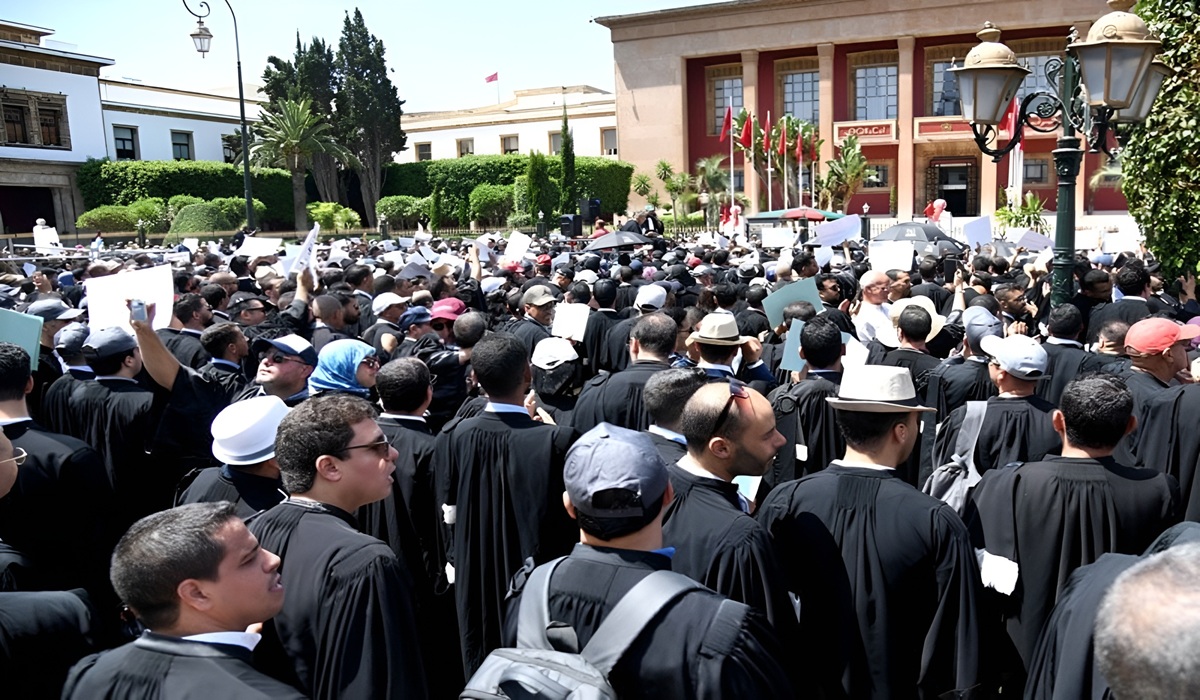
For weeks across Morocco, courtrooms slowed, hearings were delayed, and legal work came to a near standstill as lawyers walked off the job to protest a proposed government law they believed threatened their independence. The nationwide strike has now been suspended after the government agreed to halt the draft legislation and open formal talks with the legal profession. For many watching closely, this moment is not just about one law being paused. It is about who controls the practice of law and how far the state can go in reshaping a profession that plays a central role in protecting citizens’ rights.
The dispute began with a draft law prepared by Minister of Justice Abdelatif Ouahbi. Officials described it as a necessary step to modernize the legal profession and strengthen anti corruption mechanisms. On paper, the goals sounded reasonable. A more transparent system and clearer regulations could, in theory, improve public trust. Yet within the legal community, the proposal triggered immediate concern and, eventually, resistance.
Many lawyers believed the draft law crossed a line. They saw it not as an update, but as a measure that could weaken the independence and immunity that allow them to defend clients without fear or pressure. In conversations that unfolded in law offices, court corridors, and public spaces, the concern was repeated in different ways but always returned to the same core idea. If the role of the defense is weakened, even slightly, the impact could reach every person who depends on a fair trial.
Some described the proposal as a human rights setback. The draft law introduced new conditions tied to access to the profession, which raised fears about barriers for future lawyers and the direction the field might take. For younger people hoping to enter law, it created uncertainty. For those already practicing, it felt like a shift that could change the balance between lawyers, courts, and the state.
At the heart of the protest was the belief that the changes could undermine the right to a fair trial by altering the role and protections of defense lawyers. The legal profession is not only about legal procedure. It is about standing between power and the individual. That idea gave the strike its urgency and its meaning.
As the strike spread, its effects became visible. Legal services slowed. Court activity was disrupted. The absence of lawyers was a reminder of how essential their presence is to the functioning of the justice system. This was not a symbolic action. It had real consequences, and that visibility helped push the issue to the forefront.
The turning point came when the government agreed to suspend the draft law and form a joint committee to begin dialogue with representatives from the legal profession. The decision created a path away from confrontation and toward negotiation. Around the same time, Minister of Justice Abdelatif Ouahbi was summoned to the palace for accountability, a sign that the situation had reached the highest levels of concern.
With the law put on hold and talks promised, lawyers agreed to suspend their strike and return to work. The decision was not framed as a final victory, but it was seen as a meaningful step. The profession had made its voice heard and forced a pause on changes it believed could reshape the system in ways that might not be easily reversed.
Across Morocco, the outcome is being viewed as a demonstration of unity. Lawyers stood together, not over wages or working conditions, but over the future of their role in the justice system. They pushed back against what they saw as a threat to their independence and secured a chance to take part in shaping whatever reforms come next.
There is a sense that something important has been tested and, for now, held in place. Courtrooms are returning to their usual rhythm, but the larger conversation has only just begun. The joint committee will now carry the weight of finding common ground between reform and protection, between modernization and independence.
For many observing this moment, the message is clear. The strength of a justice system is not measured only by its laws, but by the independence of the people who defend them.
About The Author