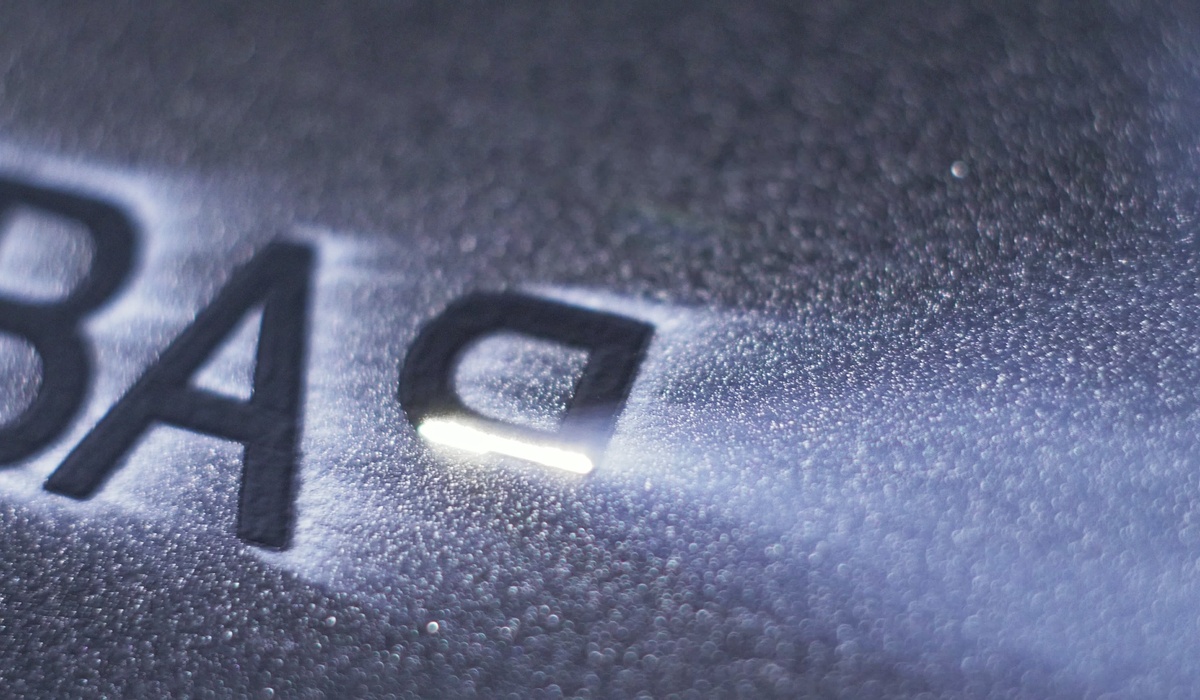
Marking lightweight polymers can seem easy—until you need the mark to stay readable through real handling, weather, and wear. Polymer parts are everywhere in Michigan’s manufacturing ecosystem, from automotive and appliance components to consumer goods, outdoor equipment, and industrial housings. Many of these parts need identification for branding, traceability, safety information, or quality control.
The challenge is that polymers don’t respond like metals. A process that produces crisp marks on steel can smear, fade, crack, or distort a polymer surface if the material and method aren’t aligned. Below, we examine the key considerations for marking lightweight polymers, from marking challenges to best methods and more.
“Marking” is any way of putting information on a part so a person or scanner can read it later. That might be a logo, model number, warning symbol, serial number, lot code, or a scannable barcode or 2D code. A successful mark stays legible as long as necessary and doesn’t compromise the part. With lightweight polymers, you typically must balance readability and appearance with part integrity, because heat, pressure, and chemicals can change the surface or weaken it.
Common lightweight polymers include polypropylene (PP) and polyethylene (PE), along with ABS, polycarbonate (PC), nylon (PA), and higher-performance materials like PEEK. Many products also use glass-filled or fiber-reinforced plastics to improve stiffness without adding much weight. These materials are popular because they’re moldable into complex shapes, corrosion-resistant, and lighter than metals.
But they can be harder to mark consistently. Many plastics soften at lower temperatures, and some are sensitive to heat or friction. Additives, fillers, pigments, and recycled content can also change how the surface reacts, so a setup that works on one batch may not behave the same on the next.
Before choosing a marking method, define what “good” means for the part. For some products, a simple brand mark that lasts through packaging and shipping is enough. For others, the mark must remain readable for years and survive abrasion, oils, cleaners, sunlight, or outdoor exposure. Traceability is a major driver in industrial supply chains because lot and serial information support quality control and limits the scope of recalls. In those cases, the mark isn’t cosmetic—it’s functional.
There are many considerations when marking lightweight polymers. Heat is a major one, which makes it crucial to choose a laser marking system for heat-sensitive materials like lightweight polymers. Too much heat can melt or deform the surface, create raised edges, or leave discoloration. Even without visible damage, excessive energy can change the material locally and make it more brittle.
Surface properties matter too. Low surface energy plastics—especially PE and PP—naturally resist inks and adhesives. Without preparation, printed marks may wipe off, and labels may lift. Texture and gloss also affect readability, especially for scannable codes: heavy texture breaks up fine lines, while glossy surfaces can reflect light and reduce scan reliability.
Fillers and colorants add variability as well. Dark pigments can reduce contrast, and glass-filled polymers may mark unevenly if the process isn’t tuned. Another concern is stress: some plastics can show stress whitening or microcracking if a mark is too deep or in a high-stress area.
Most polymer marking methods fall into a few categories: laser marking, ink-based printing, labels/nameplates, and thermal or mechanical approaches such as hot stamping or molded-in embossing/debossing. Each can work well, but the best choice depends on polymer type, durability needs, how much information must be shown, and production realities like volume and downstream handling.
Laser marking offers speed, automation, and traceability. Depending on the polymer and settings, a laser can create contrast through a surface color change, a foaming effect, or a shallow etch. The advantages are consistency and permanence without consumables like ink or labels. Lasers are also ideal for serial numbers and machine-readable codes because they can be integrated into production lines and controlled precisely.
Contrast is frequently the deciding factor, particularly for barcodes and 2D codes. In some cases, you can adjust material formulations with additives that respond better to laser energy, improving clarity and consistency. Laser marking may be less ideal for very thin-walled parts, optically clear components that must remain transparent, or applications where the mark must be a specific color or graphic effect.
Ink printing can be cost-effective and flexible, especially for logos, text, and simple codes. But ink performance depends on adhesion and resistance to the environment. Smearing can occur if handling or stacking the parts before curing. Fading and abrasion can show up during shipping and assembly.
Chemical resistance matters too, since oils, cleaners, and solvents can soften or remove certain inks. Low surface energy plastics complicate printing because the surface resists wetting and bonding, so cleaning and surface preparation may be necessary to improve adhesion. If you choose printing, the process should account for curing time, handling steps after marking, and the exposures the product will face.
Labels and nameplates are popular because they provide a strong contrast and can carry more information than most direct-mark methods. They’re useful for warnings, instructions, compliance panels, multilingual text, or variable data that changes frequently.
However, labels introduce their own failure modes: edge lift, wrinkling on curves, bubbling in humidity, and delamination with repeated temperature swings. Adhesion can be especially challenging on textured or low-energy polymer surfaces unless you select label materials and adhesives for that specific substrate and environment. Labels are typically a strong choice if there’s little to no abrasion or chemical exposure, but they can be risky in high-wear zones, near heat sources, or on parts where a label layer could interfere with fit.
Part design can make marking easier or create problems. A dedicated marking zone—flat or gently curved, with consistent texture—helps almost any method. For scannable codes, avoid heavy texture and consider finishes that reduce glare. Keep marks away from thin ribs, snap fits, sharp corners, and other stress concentrators, especially if the method involves heat, pressure, or depth. If it is a molded part, molded-in embossing or debossing can be appealing because it’s permanent and eliminates a secondary step, but it requires tooling decisions upfront and makes later changes harder.
Verification is where you can prevent many issues if you’re not too late. A mark can look good on the production floor and still fail after shipping, wiping, or exposure. Visual inspection matters, but for traceability, it’s also important to confirm scan performance using a similar scanner type and lighting conditions. Simple rub tests, temperature cycling, humidity exposure, and chemical wipe tests can reveal weaknesses early. This matters because polymer batches, additives, molding conditions, and surface finishes can vary, and those variations can change marking performance even when equipment stays the same.
Marking lightweight polymers isn’t about finding one “best” technology. It’s about matching the method to the material and the product’s real demands. A sharp, high-contrast mark only helps if it stays readable for as long as needed without compromising the part. For Michigan manufacturers and suppliers dealing with seasonal swings and demanding industrial environments, that balance—readability, durability, and part integrity—is what makes a marking strategy successful.
About The Author