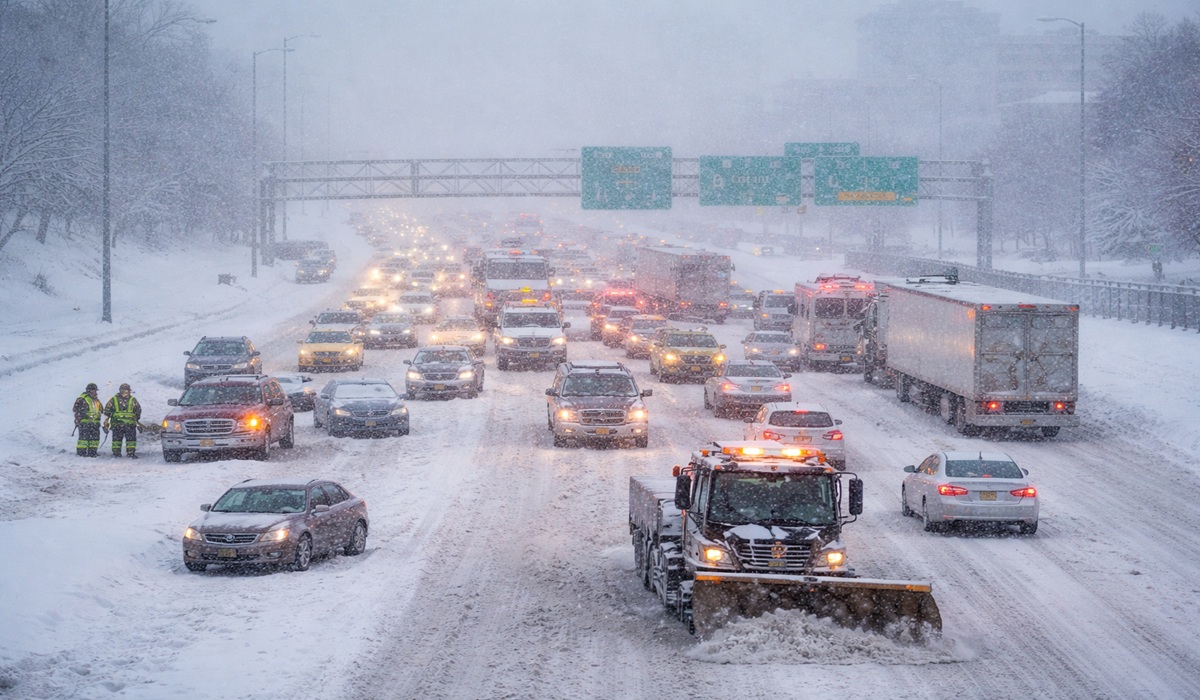
A major winter storm sweeping across the United States this week has paralyzed travel, shut down schools, and strained emergency services across several states, with the hardest impacts reported in the Midwest and Northeast. The system began intensifying late Monday night and into Tuesday morning, bringing heavy snowfall, freezing rain, and powerful winds that created dangerous conditions from Illinois and Indiana through Ohio, Pennsylvania, and into parts of New York and New England. Officials in multiple jurisdictions issued travel advisories and emergency alerts as road conditions deteriorated rapidly.
In Chicago, where the storm arrived early, several inches of snow fell within hours, forcing the city to deploy hundreds of plows overnight. Traffic slowed across major routes including Interstate 90 and Interstate 94, where spinouts and minor collisions were reported during the morning commute. City officials urged residents to stay home unless travel was necessary, while Chicago Public Schools announced closures for safety reasons. O’Hare International Airport experienced cascading delays and cancellations as crews struggled to keep runways clear amid steady snowfall and blowing winds.
Further east in Ohio, conditions worsened as freezing rain coated highways and residential streets. State troopers responded to dozens of crashes along sections of Interstate 71 and Interstate 75, particularly near Columbus and Dayton. Emergency officials said ice accumulation was one of the most dangerous aspects of the storm, making even short-distance travel hazardous. In several communities, power outages began appearing by Tuesday afternoon as tree branches weighed down by ice snapped onto power lines. Utility crews were dispatched, but restoration efforts were slowed by road conditions.
In Pennsylvania, snow and ice hit both urban and rural areas. Philadelphia saw steady snowfall combined with strong winds that reduced visibility and made plowing more difficult. Commuters faced delays on regional rail lines, while several major bus routes were temporarily suspended due to unsafe conditions. State emergency management officials warned that drifting snow in rural counties could isolate some communities, especially where road access is limited. In western parts of the state, snowfall totals were reported to be higher, with several towns receiving more than half a foot in a short span.
New York State experienced a mix of heavy snow and gusty winds, particularly in areas north of New York City. In Buffalo, which is no stranger to severe winter weather, local officials reported whiteout conditions during the peak of the storm. Schools in several districts were closed, and local authorities urged residents to avoid unnecessary travel as plows worked continuously to keep primary roads open. In parts of upstate New York, wind gusts created snowdrifts that blocked side streets and made it difficult for emergency vehicles to pass.
The storm’s impact extended beyond transportation. In parts of Indiana and Michigan, scattered power outages left some households without heat during sub-freezing temperatures. Community warming centers were opened in a number of towns to give residents a safe place to stay while power crews worked to restore service. Emergency responders reported an increase in calls related to stalled vehicles, minor crashes, and people needing assistance after becoming stuck in deep snow.
The timing of the storm, arriving during the middle of the workweek, caused widespread disruption. Businesses closed early in some areas, while others struggled with reduced staffing as employees were unable to safely commute. Delivery services and supply chains were also affected, with delays reported across several states as trucks were slowed by icy highways and poor visibility. Airlines warned passengers to check flight status before heading to airports, as schedules were changing rapidly throughout the day.
Local and state officials emphasized the importance of preparation and caution. Governors in several affected states issued statements urging residents to monitor weather updates, avoid unnecessary travel, and check on vulnerable neighbors, especially the elderly. Emergency management agencies coordinated closely with local governments to deploy plows, salt trucks, and first responders where they were most needed. Despite those efforts, officials acknowledged that the sheer size and speed of the system made it difficult to stay ahead of conditions in every area.
Meteorologists say the storm developed as cold air from the north collided with a moisture-heavy system moving across the country, creating a wide band of intense winter weather. Snowfall totals varied depending on location, but many communities saw significant accumulation within a short period. Winds added to the danger, blowing snow back onto freshly cleared roads and reducing visibility for drivers.
As the system continues moving eastward, conditions are expected to improve gradually in some areas, though cleanup will take time. Crews are expected to continue clearing roads and restoring power through the coming days. For many residents, the storm has meant school closures, missed work, and a temporary halt to normal routines. For emergency workers and utility crews, it has been a demanding stretch of long hours in difficult conditions.
The latest storm has once again demonstrated how quickly severe winter weather can affect multiple states at once. From Chicago to Buffalo, the combination of heavy snow, ice, and wind created a chain reaction of disruptions that touched transportation, power systems, and daily life. While winter storms are a seasonal reality, this week’s system stood out for both its reach and its impact, leaving communities focused on recovery and bracing for whatever weather may follow next.
About The Author