Australia: New Security Pact Signals Regional Shift
- Ingrid Jones
- Oceania
- Breaking News
- February 6, 2026
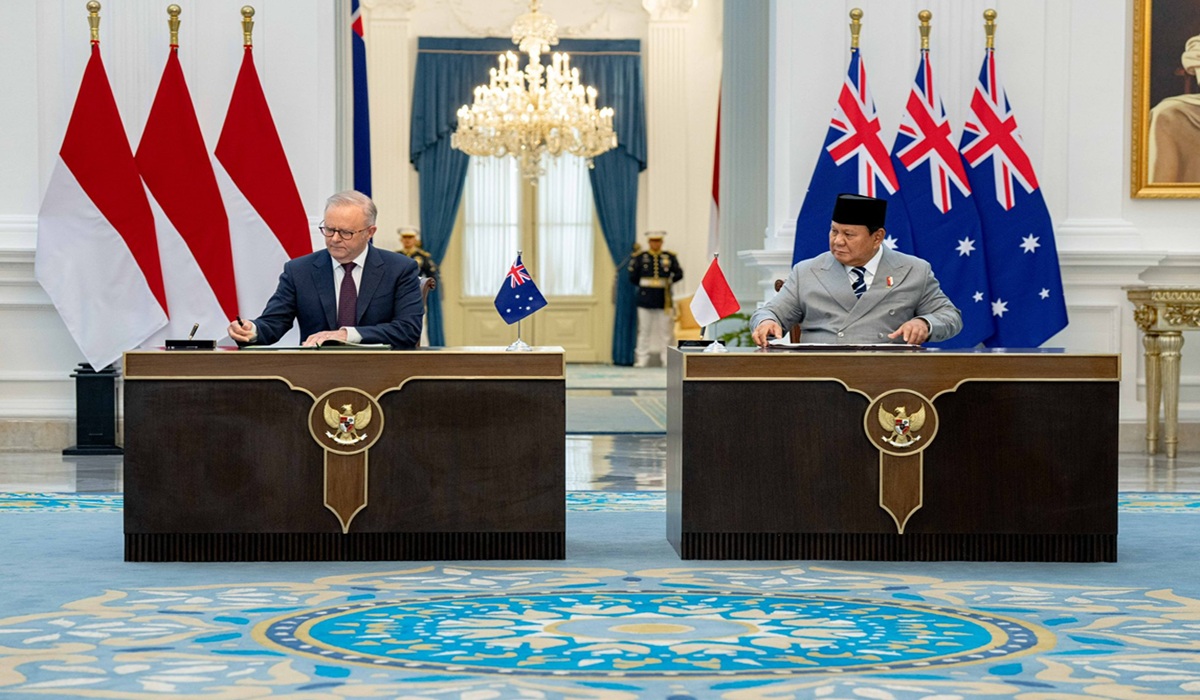
Australia has taken a significant step in reshaping its strategic role in the Asia Pacific, signing a new security treaty with Indonesia that signals deeper military and diplomatic coordination between the two neighbours. The agreement, announced during high level talks in Jakarta, is being described by leaders on both sides as a renewal of trust and a signal of shared stability in an increasingly tense region. While Australia has long maintained strong alliances with Western partners, this move reflects a conscious effort to reinforce relationships closer to home.
The pact focuses on consultation and cooperation if either country faces a security threat, building on earlier frameworks but giving them renewed political weight. For Australia, the move reflects a growing focus on regional partnerships as geopolitical competition intensifies across the Indo Pacific. For Indonesia, it represents a balancing act, maintaining its traditional non aligned stance while strengthening ties with a major neighbour that plays a significant role in regional defence and trade.
The timing is notable. Security dynamics across Southeast Asia have shifted rapidly in recent years, and both governments are positioning themselves to respond to changing threats, economic uncertainty, and the reality of a more crowded strategic landscape. Leaders emphasized the treaty as a practical partnership rather than a formal military alliance, but its symbolism is unmistakable. It marks a return to structured defence cooperation similar to arrangements that existed decades ago before diplomatic tensions cooled the relationship.
Back home, the announcement is being watched closely by Australians who are increasingly aware that global events have local consequences. Rising living costs, pressure on housing, and debates over national priorities continue to dominate domestic politics, yet foreign policy decisions like this one are becoming part of everyday conversation. People want to know what these agreements mean for national security, trade stability, and Australia’s long term place in the region.
There is also a deeper strategic calculation behind the scenes. Australia sits in a region where major powers are competing for influence, and partnerships with neighbours are seen as a way to maintain stability without escalating tensions. Strengthening ties with Indonesia, the world’s fourth most populous country and a key regional player, sends a message that cooperation will be a central pillar of Australia’s approach moving forward.
The new agreement is not expected to bring immediate changes to daily life, but it represents a shift in tone and direction. In an era where uncertainty feels constant, the goal appears to be building relationships strong enough to withstand whatever challenges may emerge next. For many observers, this marks a steady and deliberate step toward a more regionally focused foreign policy that could shape Australia’s role for decades.
About The Author